Key Takeaways
- Most under-650 score stalls come from repeatable process mistakes, not one isolated event.
- Disputing errors without adding positive data usually limits progress.
- High utilization and unstable payment controls are still the most common score drags.
- Authorized user tradelines may help visibility for some files, but results vary and are not guaranteed.
- Strong recovery usually requires monthly monitoring plus consistent behavior in your own accounts.
Mistake 1: Chasing Overnight Fixes
One of the most expensive mistakes is believing in instant repair promises. If someone guarantees fast removal of accurate negatives or guaranteed score jumps, that is a red flag.
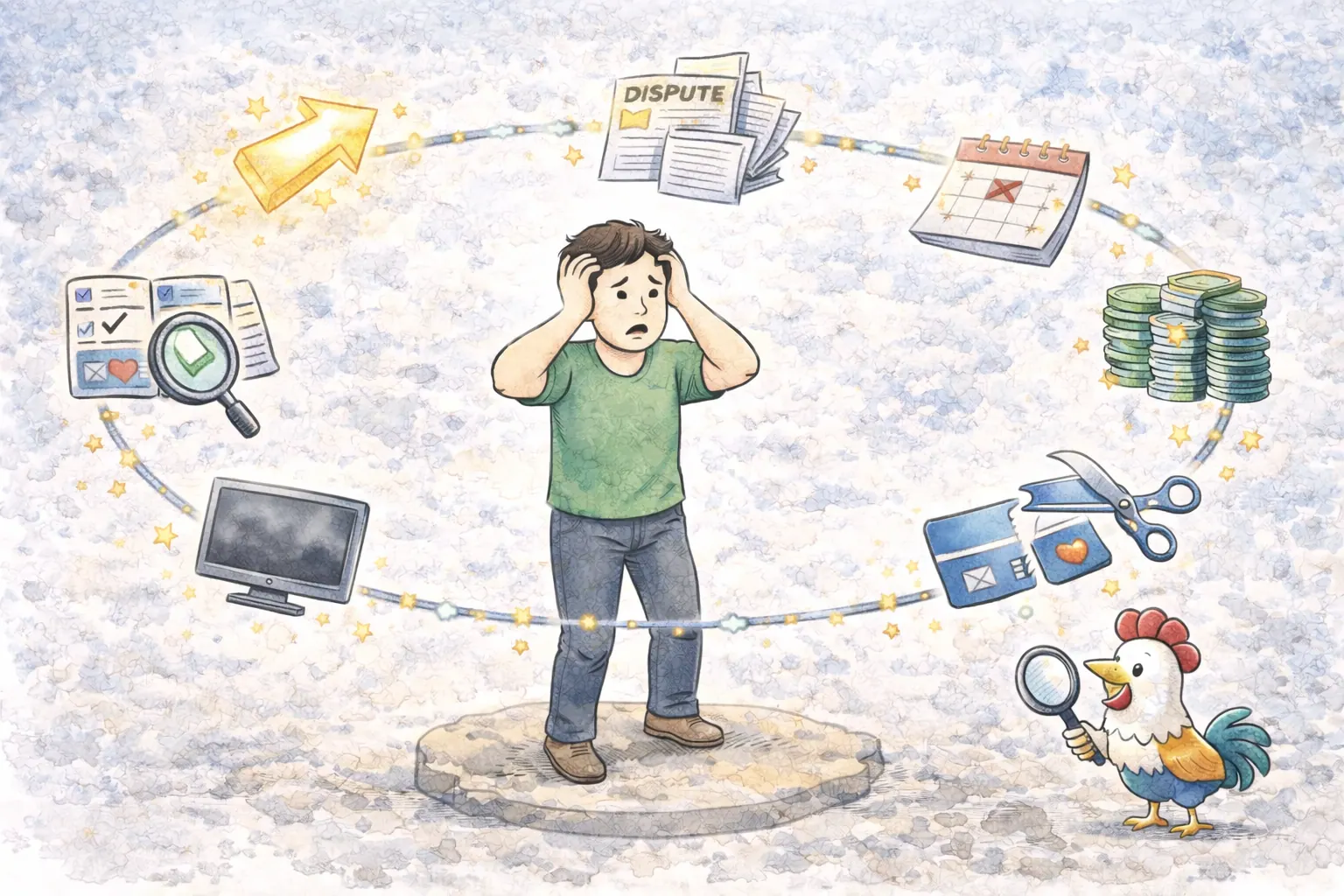
If someone promises any of the following, treat it as high risk:
- Removing accurate negative items in days
- Creating a new credit identity or CPN
- Demanding large upfront fees before any documented work
"If I pay for a quick repair service, my score will rise immediately."
Durable score gains usually come from accurate data, on-time payments, and controlled utilization over multiple cycles.
Why?
Marketing promises may sound fast, but scoring models respond more to consistent reported behavior than one-time claims.
Mistake 2: Not Reviewing All Three Reports
You would not try to fix an engine without opening the hood first. Credit recovery works the same way.
When you compare all three bureaus, you can prioritize disputes and repayment actions with better accuracy.
Simple rule: do not build strategy from partial data.
Once you can see all three bureaus clearly, cleanup and rebuild steps are much easier to order.
Mistake 3: Disputing Everything, Building Nothing
Disputing errors matters, but disputes alone rarely move a file far enough.
Many under-650 profiles need both cleanup and forward-building:
- Clean inaccurate data using a structured dispute process
- Add positive data with self-owned accounts
- Maintain low utilization long enough for updates to post
Mistake 4: Ignoring Payment History
Even with other improvements, missed payments can keep dragging the file down.
Payment history is often the largest scoring factor. If you open new accounts during recovery and then miss payments, you can reset your own progress quickly. The objective is simple but strict: every account, every month, on time.
If that target is not stable yet, lock in payment systems before adding new credit complexity.
Mistake 5: Letting Utilization Stay High
Many under-650 files remain stuck because high balances are still being reported, even when payments are technically on time.
The practical targets:
- Under 30% as the minimum control threshold
- Under 10% for stronger score behavior when possible
Example: A $1,000 limit card reporting a $900 balance is 90% utilization. Even if you pay later, that reported value can suppress your score until the next cycle.
Week 1
Identify high-utilization cards and statement close dates.
Week 2
Lower balances before statement close, not only due dates.
Week 3
Stabilize minimum payments with automation across accounts.
Week 4+
Repeat monthly and verify updates across all three bureaus.
Mini-Stories: Why People Stay Stuck
Nico: He paid an expensive service that promised to erase all debt quickly. The disputes failed, the valid accounts stayed, and interest kept growing.
Riley: He disputed for months but ignored 80% utilization. One inaccurate line came off, but his score barely moved because the biggest drag stayed in place.
Mistake 6: Account Decisions Without a Plan
Opening too many new accounts or closing older accounts without impact checks can hurt utilization, account age, and overall file stability.
Closing older accounts can hurt for two reasons:
- It reduces average account age.
- It reduces total available credit, which can raise utilization instantly.
Length of history is not a small detail. It is about 15% of a classic FICO model, so closing older lines can hurt more than expected.
Quick math example:
- Two cards, $1,000 limit each, one card has $500 balance
- Total utilization is 25% ($500 / $2,000)
- Close the unused card and utilization jumps to 50% ($500 / $1,000)
Disclosure
Some lenders and credit scoring models may filter out, discount, or weigh authorized user tradelines differently in their underwriting decisions. Results vary based on lender policies, the specific scoring model used, and your unique credit profile. An AU tradeline does not guarantee loan approval or any specific credit score outcome.
Mistake 7: Not Monitoring and Adjusting
Without regular monitoring, you cannot tell what is actually working.
You also cannot catch new reporting errors early, and small issues get larger when they sit across multiple cycles.
Report review
Compare bureau updates and confirm balances are reporting as expected.
Risk review
Catch new inquiries or data errors before they compound.
Strategy review
Adjust one variable at a time so score changes stay measurable.
Budget pressure reset
If cash flow tightens, stabilize spending before adding credit complexity.
At minimum, pull full reports at least annually and monitor scores monthly so you can catch drift early.
Under-650 Recovery Checklist
Getting Unstuck: Action Path
Moving above 650 usually requires a clear order:
- Diagnose three-bureau data and isolate the primary drag.
- Stop new damage: no missed payments, no unnecessary applications.
- Reduce reported utilization and verify updates after statement cycles.
- Build positive depth in your own accounts while monitoring monthly.
A practical way to execute that order is to run a short cycle:
First 90 Days Recovery Rhythm
| Window | Primary Focus | Control Metric |
|---|---|---|
| Days 1-30 | Stabilize payments and dispute accuracy errors | 0 missed payments |
| Days 31-60 | Lower reported utilization before statement close | Under 30% utilization |
| Days 61-90 | Maintain clean reporting and monitor all bureaus | No unreviewed bureau changes |
This keeps recovery measurable and avoids changing too many variables at once.
If you need fast initial visibility, AU can help some files. Pair that gateway with durable behavior in self-owned accounts so gains hold.
For durable depth, add one builder you own if needed, such as a secured card, a small credit-builder loan, or rent reporting you can sustain.
Timelines and Pre-Application Check
Most people want exact timelines. Realistically, timelines vary by root cause:
- If utilization is the main issue, movement can appear in one to two reporting cycles.
- If disputes are central, progress depends on response timelines and bureau refresh cycles.
- If payment history damage is recent, durable recovery usually takes longer because trust has to be rebuilt through repeated on-time behavior.
Before submitting any major application, run this short control check:
Before You Apply
Legal Disclosure and Boundary Check
This guide is educational and does not provide legal, tax, lending, or personalized financial advice.
Credit reporting timelines, underwriting policy, and debt-collection rules can vary by lender, scoring model, and state law.
No step in this article guarantees a specific score increase, loan approval, pricing tier, or reporting outcome.
If you are facing active legal action, wage garnishment, identity-theft liability questions, or state-specific disputes, consult a licensed attorney in your state before relying on generalized online guidance.
Frequently Asked Questions
1. Why does my score stay under 650 even after disputes?
- Disputes help, but most files also need new positive data and tighter utilization and payment controls.
2. What is the most common under-650 mistake?
- Lack of system controls: no reporting calendar, unstable utilization, and weak monitoring cadence.
3. Do AU tradelines work for everyone?
- No. They can help some profiles, but outcomes vary by lender policy, scoring model, and profile details.
4. What should I do first to improve?
- Start with three-bureau diagnosis, then stabilize utilization and payments, then add one durable builder if needed.
5. How long does improvement usually take?
- Some utilization-driven gains appear in one to two cycles. Durable gains usually require several months of clean reporting behavior.
6. Should I open multiple new accounts to recover faster?
- Usually no. Multiple new applications can increase risk signals and slow progress.
If you have limited bandwidth, prioritize controls in this order:
Recovery Priority Order
Move to the next priority only after the current one stays stable through at least one full reporting cycle.
7. How do I avoid getting stuck again?
- Keep monthly controls active, review all bureaus on schedule, and make strategy changes only from verified data.
8. Should I close old negative accounts?
- Usually no. Closure can reduce account age and available credit. In many cases, controlled management is better than immediate closure.
9. What if I cannot pay bills right now?
- Contact creditors early and ask about hardship options. Early communication is usually safer than silence and delinquency; if needed, review debt management plans and nonprofit credit counseling options.
10. Can debt consolidation help under-650 recovery?
- It can improve cash-flow management but can also add inquiry and new-account effects. Use it when repayment math is clear.
11. How often should I check reports during recovery?
- Monthly light monitoring plus deeper three-bureau checks every few months is a practical cadence.
12. Can I rebuild after severe negative history?
- Yes. Progress is possible with consistent on-time behavior, low utilization, and enough clean reporting cycles.
Getting above 650 is not about one trick. It is about removing repeat mistakes and holding a stable sequence long enough for your reports to reflect a stronger pattern.
Patience matters here. The score usually follows your reporting behavior with a lag. Focus on controls you can repeat, then let confirmed cycles do the heavy lifting.
Think of this like building a nest that actually holds under pressure: each on-time cycle is another strong branch, and each clean report update tightens the structure.
Disclaimer: The information provided in this article is for educational purposes only and does not constitute financial, legal, or professional advice. Credit reporting practices and scoring models may change over time. Please consult a qualified professional for personalized guidance.