Key Takeaways
- Revolving credit, like credit cards, allows you to borrow and repay funds repeatedly up to a credit limit.
- Installment credit, such as loans, involves borrowing a fixed amount and repaying it over a set period with scheduled payments.
- Revolving credit offers flexibility in borrowing and repayment, whereas installment credit provides a predictable payment schedule.
- Authorized User (AU) accounts typically appear on revolving credit lines, which can help you build credit faster.
- Choosing the right mix of revolving and installment credit can positively impact your credit score.
- Understanding the benefits and drawbacks of each type of credit is essential for responsible credit management.
The Revolving Feeder: Dipping Into Credit Card Flexibility
Let's start with revolving credit. Picture an open feeder tray filled with seeds. You can dip in and grab a few seeds (borrow money), and as you gather more, the tray empties a little. As you replenish the seeds (make payments), the tray fills up again.
Credit cards are the most common form of revolving credit. You have a credit limit, and you can borrow up to that limit, repay it, and borrow again. This flexibility is a major advantage. You can use your credit card for everyday purchases, emergencies, or even to earn rewards like cashback or travel points.
However, this flexibility also comes with responsibility. If you don't manage your spending and repayments carefully, you can quickly rack up debt and high-interest charges. For example, let's say you have a credit card with a $1,000 limit. You spend $300 on groceries, $200 on gas, and $100 on a new gadget. Your available credit is now $400. When you make a payment of $200, your available credit goes back up to $600. You can then borrow up to that amount again.
The Steady Ration: Predictability With Installment Loans
Now, let's talk about installment credit. Imagine a steady ration, carefully measured out and delivered on a schedule. This is what installment credit is like. You borrow a fixed amount of money and repay it over a set period with scheduled payments.
Loans, such as auto loans, mortgages, and student loans, are examples of installment credit. With installment credit, you know exactly how much you owe each month and when the loan will be paid off. This predictability can make it easier to budget and manage your finances.
For example, let's say you take out a $10,000 auto loan with a 5-year repayment term. Your monthly payment will be a fixed amount, say $200, and you'll make that payment every month for 60 months. At the end of the 5 years, the loan will be paid off.
Piggybacking Pitfalls: Are You Building on Shaky Ground
It's essential to understand that adding an AU account, or 'piggybacking' onto someone's credit, is not a guaranteed solution. While it can provide a possible short-term lift, it's crucial to remember that lenders and credit scoring models may treat AU accounts differently.
Disclosure: Some lenders and credit scoring models may filter out, discount, or weigh authorized user tradelines differently in their underwriting decisions. Results vary based on lender policies, the specific scoring model used, and your unique credit profile. An AU tradeline does not guarantee loan approval or any specific credit score outcome.
AU Risk Factor
If the primary cardholder misses a payment, it can show up on your report too.
Credit in Action: Nico, Riley, and the AU Advantage
Let's look at a few examples to illustrate the difference between revolving and installment credit and how AU accounts can play a role.
- Newcomer Nico: Nico is new to the US and has a thin credit file. They want to get approved for an apartment and a mobile phone. They are added as an AU to a family member's credit card with a long history of on-time payments and low utilization. This quickly boosts Nico's credit score, allowing them to get approved for the apartment and phone.
-
Rebuilder Riley: Riley had some financial difficulties in the past and has a few late payments and collections on their credit report. They want to stabilize their credit score and save on borrowing costs. Riley takes out a credit-builder loan, an installment loan designed to help people with poor credit build a positive payment history. Over time, the consistent on-time payments help Riley strengthen the factors behind their credit score and qualify for better interest rates.
-
Time-Sensitive Taylor: Taylor is planning to buy a home in six months and needs to strengthen the factors behind their credit score quickly to get approved for a mortgage. They open a secured credit card (revolving) and diligently keep the utilization low and payments on time. At the same time, a family member adds them as an AU to their credit card. The combination of responsible revolving credit use and the AU account helps Taylor support their score in time to qualify for the mortgage.
Your Credit Roost Action Plan: Take Flight
So, what are the key takeaways? Here's a quick action plan:
Credit Mix Action Plan
-
Understand the difference: Revolving vs. installment credit-know the pros and cons of each.
-
Manage your revolving credit: Keep credit utilization low (under 30%) and pay your bills on time.
-
Consider installment credit: Explore loans (secured, credit-builder) for long-term credit building.
-
Evaluate AU accounts: Understand the risks and benefits before becoming an Authorized User.
-
Monitor your credit report: Regularly check your credit report for errors and track your credit progress. By understanding the nuances of revolving and installment credit, you can build a strong and sustainable credit profile.
The Fast Track Vs. Longterm Strength: Your Credit Strategy
Weaving Your Financial Roost: A Credit Success Story
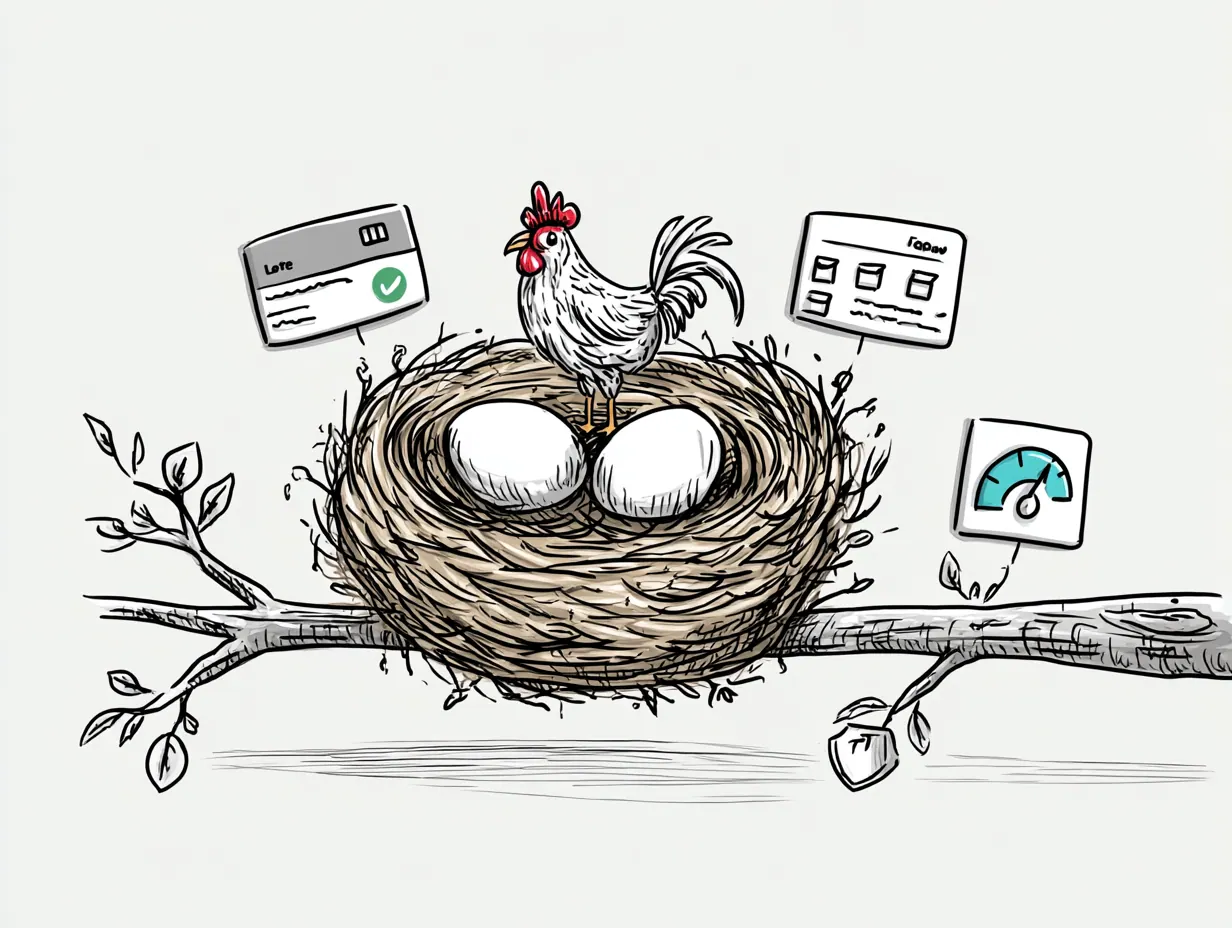
Just as a bird meticulously gathers twigs and weaves them into a secure nest, you too can build a strong financial roost by understanding and managing the different types of credit available to you. With a clear understanding of revolving and installment credit, you can confidently navigate the world of credit and build a solid foundation for your financial future.
Where Credit Mix Fits After the Basics
Frequently Asked Questions
1. Which is better for building credit: a credit card or a loan?
- Both are important. Revolving credit (cards) is better for long-term history, while installment loans add to your credit mix.
2. Do I need an installment loan to have a good credit score?
- Not strictly necessary, but having a "credit mix" of both revolving and installment accounts can boost your score.
3. Does paying off an installment loan early help my score?
- Sometimes it can actually cause a small drop because the account is closed, reducing your credit mix and open accounts.
4. Are student loans considered installment credit?
- Yes. Student loans, auto loans, and mortgages are all types of installment credit with fixed repayment schedules.
5. What is a "credit mix" and why does it matter?
- It's having both revolving (cards) and installment (loans) accounts. It shows lenders you can handle different types of debt responsibilities.
6. Can I build credit with just installment loans?
- Yes, but it's slower. Revolving credit is generally more effective for long-term score building because it doesn't "end" like a loan does.