Key Takeaways
- A bureau verifying an error as "accurate" is not final. You have the right to a reinvestigation when you submit new information.
- Send a Method of Verification (MOV) request to ask the bureau exactly how it confirmed the disputed item and who it contacted.
- Dispute directly with the furnisher in writing, since the FCRA gives them their own investigation duty separate from the bureaus.
- If a corrected error reappears, the furnisher may be re-reporting it, which carries its own FCRA obligations you can challenge.
- File a CFPB complaint when a bureau or furnisher stalls, gives a vague answer, or repeats a result you have already disproven.
- For persistent errors causing real financial harm, an FCRA attorney or small claims court may be your next step. A statement of dispute can also document your side.
"Verified as Accurate" Is Not the Final Word
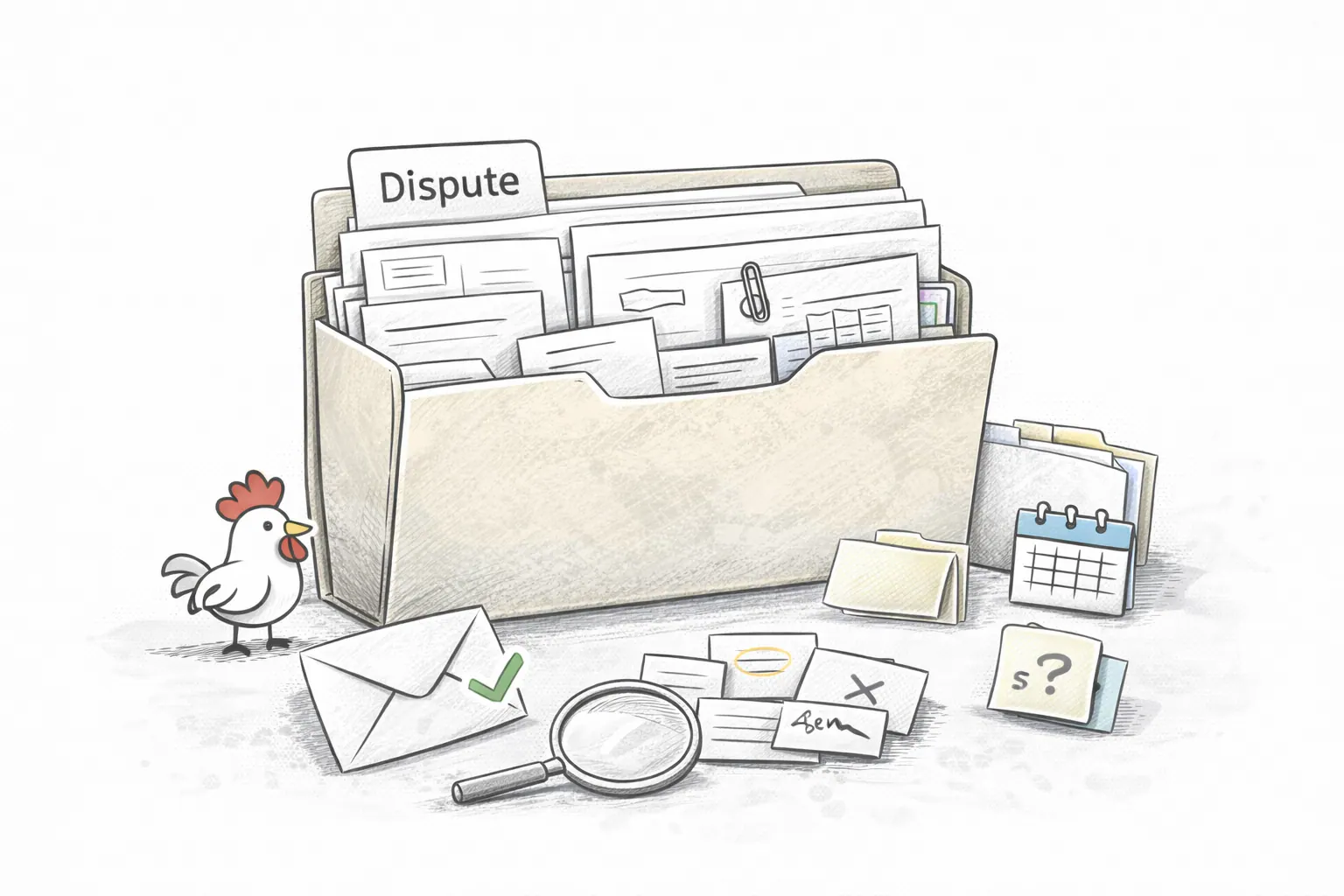
Consider Devon, who disputed a charged-off account he had actually paid in full. The bureau came back in 28 days: verified accurate. Nothing had changed. Devon's mistake was assuming "verified" meant the matter was closed. Under the FCRA it does not. He still held the payoff letter that disproved the entry, which meant he had grounds for a reinvestigation with new evidence, not a repeat of the same dispute.
Verified Accurate
Bureau closed the dispute but you have proof it is wrong.
Error Reappeared
A corrected item came back on a later report.
No Response
The 30 to 45 day window passed with no result.
Repeat Re-Reporting
The same furnisher keeps re-reporting the bad data.
Your Reinvestigation Right: Disputing Again with New Information
When a bureau verifies a disputed item, your strongest move is a reinvestigation request built on information they did not have the first time. Under the FCRA, a bureau must reinvestigate when you submit a dispute that includes new, relevant evidence. Resending the exact same letter rarely changes the outcome, because the bureau will treat it as duplicative. The key word is new: a document, a date, or a detail the first investigation never weighed.
What counts as new information that strengthens a reinvestigation?
- A payoff or settlement letter the furnisher ignored the first time, showing the account was paid or closed.
- Dated bank records or canceled checks that pin a "late" payment to an on-time date.
- An FTC Identity Theft Report or police report for an account that is not yours, if you did not include it before.
- A side-by-side of two reports proving a duplicate or an inconsistency between bureaus.
In your reinvestigation letter, state plainly that the item was previously verified, that you are submitting new information, and that you are requesting a reinvestigation under the FCRA. Reference the prior dispute by date so the bureau cannot dismiss it as a repeat. Keep copies of everything and never send originals, and log every date and tracking number, because this paper trail becomes your evidence if you later escalate to the CFPB or court.
Make the New Information Obvious
Bureaus can refuse to reinvestigate a dispute they consider frivolous or a duplicate of one already resolved. Avoid that by labeling your new evidence clearly and stating in the first sentence that you are providing information the prior investigation did not consider.
Demand the Receipts: The Method of Verification Request
If a bureau insists the item is accurate, you can ask how they reached that conclusion. The FCRA gives you the right to request the Method of Verification (MOV): a description of the procedure the bureau used, including the business it contacted and, where available, the name, address, and phone number of the furnisher it relied on. You generally have to request this within a reasonable time after being told the result.
A MOV request is powerful because it exposes weak verifications. If a bureau "verified" an account simply by running an automated field match and the furnisher never actually pulled the underlying records, that thin process is hard to defend if you later complain to the CFPB or consult an attorney.
What to Ask For in a MOV Request
Send the MOV request by certified mail and keep the return receipt. The response, or the lack of one, tells you whether the verification was genuine or just a rubber stamp, and that shapes your next escalation step.
When the Error Comes Back: Challenging Re-Reported Data
One of the most maddening outcomes is a correction that does not stick. The bureau deletes the bad entry, your next report looks clean, and then a month or two later the same item is back. This is usually because the furnisher re-reported the data in its next monthly file feed, and the bureau accepted it again.
The FCRA addresses this directly. Once a furnisher has been notified that information is inaccurate and you have disputed it, it generally cannot keep re-reporting the same disputed information without noting the dispute or correcting it. A corrected item that reappears is not just a nuisance, it can be its own FCRA violation by the furnisher.
Document the Round Trip
Keep the report that showed the item deleted and the later report that shows it back. That before-and-after pair is the cleanest possible evidence that a furnisher re-reported disputed data, and it is exactly what a CFPB complaint or an attorney will want to see.
Always use certified mail with a return receipt for these escalation letters. The timestamps and tracking numbers prove what you sent and when, which matters far more once a dispute has already gone a round or two. Use this cadence to keep an escalation from stalling:
Send escalation letter
Reinvestigation, MOV, or furnisher notice with the new evidence attached.
Confirm receipt
Save the certified-mail tracking and return receipt in your case file.
Review the response
Check whether the item was corrected, re-verified, or ignored.
File CFPB complaint
If the result is unchanged or unexplained, escalate to the CFPB.
Sticking to this cadence keeps your escalation moving instead of dying in a stack of unanswered letters.
Riley had corrected a duplicate collection account, only to see the identical entry resurface on her TransUnion report two months later. Rather than refiling the same bureau dispute, she wrote the furnisher directly, attached both reports (the one showing deletion and the one showing it back), and cited the re-reporting rule. The duplicate came off and stayed off, and she kept the paper trail in case it returned a third time.
Hold the Furnisher to Its Own Duty
When a bureau dispute stalls, going straight to the furnisher (the original creditor or collection agency that reported the data) is more than a convenience, it triggers a separate legal obligation. Under the FCRA, once you dispute directly with a furnisher in writing, that company must conduct its own investigation, review the information you provided, and report the results, including correcting or deleting inaccurate data with all three bureaus. This duty exists independently of whatever the bureau concluded.
That matters during an escalation. If a bureau verified the item but the furnisher never truly examined the records, a direct, documented dispute to the furnisher forces a real look and creates a clear record of who failed to act. If the furnisher confirms the data is inaccurate, the correction is supposed to flow to every bureau, not just the one you originally fought with.
Make the furnisher dispute formal: identify the account, state exactly what is wrong, attach copies of your proof, and note any prior bureau dispute and its result. Send it certified mail with a return receipt and keep everything. If the furnisher ignores its investigation duty or keeps reporting data it cannot substantiate, that failure becomes part of your CFPB complaint or any legal claim.
Pressing both the bureau and the furnisher closes the gap they sometimes use to point at each other.
Reading an Escalation Response, and Filing a Statement of Dispute
A reinvestigation, MOV request, or furnisher dispute still runs on the same statutory clock: generally 30 days, or up to 45 if you submitted new information. The difference at the escalation stage is what you do with each possible answer, because you have already used your simplest move.
- Corrected or deleted: The item is fixed. Pull all three reports to confirm the correction reached every bureau, and keep watching the next two cycles in case it tries to reappear.
- Verified accurate again: This is where many people give up, but you have two more levers. You can file a CFPB complaint (covered next), and you can add a statement of dispute to your file: a brief, permanent note future creditors will see explaining your side when an item stays on the report.
- No timely response: If the window closes with silence, the certified-mail receipt you saved becomes your proof. A missed deadline is itself something the CFPB will ask about.
Use this reference to decide your move based on the answer you got:
Escalation Response Action Table
| Response | Meaning | Your Next Move |
|---|---|---|
| Corrected/Deleted | Your new evidence worked | Verify all three bureaus, then watch for re-reporting |
| Verified Again | Bureau is standing by the furnisher | File a CFPB complaint and add a statement of dispute |
| No Timely Response | Statutory window closed with no result | Cite the missed deadline in a CFPB complaint |
A statement of dispute does not remove the item, but it travels with your report and gives a human reviewer context. Keep it short, factual, and free of emotion: state what is inaccurate and that you have disputed it. It is a useful backstop while you press the harder channels.
Filing a CFPB Complaint, and When to Bring in a Lawyer
When direct disputes and reinvestigations stall, the Consumer Financial Protection Bureau (CFPB) is your most effective next lever. It is a federal agency that supervises credit bureaus and furnishers, and a complaint forces a documented, on-the-record response.
Filing is free and done online at consumerfinance.gov/complaint. To make your complaint land, do four things: name the company (the specific bureau or furnisher), describe the error and exactly what you have already tried (your prior dispute dates and their results), attach your evidence and certified-mail receipts, and state the resolution you want (delete or correct the item). The company generally must respond within about 15 days, and the bureau or furnisher knows the response is being tracked. This is often what finally produces the genuine review your earlier letters did not.
Another avenue for escalation is your State Attorney General's office. Many states offer consumer protection divisions that can assist with credit reporting disputes. They may intervene on your behalf or provide guidance on further legal steps.
When escalation becomes necessary, this decision set can keep your next move focused:
Which escalation path fits your situation?
CFPB complaint
Best when a bureau or furnisher response is incomplete or unclear.
State Attorney General
Useful when broader consumer-protection support is needed.
Consumer law attorney
Consider for persistent errors with measurable financial harm.
Choosing based on evidence strength and urgency can save time and reduce repeated filings.
If the error is significant, persistent, and causing real financial harm (a denied loan, a higher rate, a lost rental), it may be time to consult an FCRA attorney. The FCRA lets consumers recover damages and, in many cases, attorney fees from bureaus or furnishers that fail their obligations, which is why many consumer-law attorneys take these cases on contingency and offer a free initial review. Bring your full paper trail: every dispute, every response, the MOV reply, and proof of harm.
For smaller, well-documented disputes you can also consider small claims court, where you do not need a lawyer and filing costs are modest. It is most realistic when you can clearly show the inaccurate reporting and a concrete loss tied to it. Whether you go the attorney or small-claims route, the case is only as strong as the records you kept at each earlier rung of this ladder.
For example, consider Maria, who was attempting to secure a mortgage. Days before closing, an old, inaccurately reported late payment suddenly appeared on her Experian report. She disputed it, but Experian initially verified it as accurate. With her mortgage rate hanging in the balance, Maria quickly filed a complaint with the CFPB, providing all her payment records. This swift escalation prompted a re-investigation, and the error was corrected in time, saving her a higher interest rate.
After You Win: Make the Correction Stick
Winning an escalation is not quite the finish line, because a corrected error can quietly return. Once a stubborn item is finally removed, watch the next two or three monthly cycles on all three reports. If the same furnisher re-reports it, you already have the strongest possible evidence (proof it was deleted, then reappeared) and can move straight back to a furnisher dispute or a CFPB complaint without starting over. Pull your reports from all three bureaus on a recurring schedule so a relapse never sits unnoticed for months.
- Re-pull all three reports for two to three cycles after a correction
- Keep every escalation letter, MOV reply, and CFPB confirmation on file
- Move straight to the furnisher or CFPB if a fixed error reappears
- Assume a verified-accurate result is final
- Refile the identical dispute with no new information
- Discard your paper trail once the item is corrected
A reappearing error is not bad luck, it is usually a re-reporting failure you can document and challenge again with the same proof.
When to Stop Disputing and Start Documenting Harm
If a bureau or furnisher keeps re-reporting data they cannot substantiate, the goal shifts from convincing them to building a record. Save every response, note each denial or missed deadline, and track concrete harm such as a denied application or a higher rate. That record is the foundation of a CFPB complaint or an FCRA legal claim. This article is general education and does not constitute legal advice.
Escalation Action Checklist
A denied dispute or a recurring error can feel like the system is stacked against you, but the FCRA gives you a ladder of escalating rights, and each rung adds real pressure. By documenting every step, demanding the verification method, holding the furnisher to its own duty, and bringing in the CFPB or a lawyer when needed, you can hold the bureaus accountable and restore the accuracy of your credit report even after the easy route failed.
Frequently Asked Questions
1. My dispute was verified as accurate but I know it is wrong. What now?
- A verified-accurate result is not final. Submit a reinvestigation request that includes new information the first dispute did not have, send a Method of Verification request to learn how the bureau confirmed the item, and dispute directly with the furnisher. If those stall, file a CFPB complaint.
2. The credit bureau ignored or missed the dispute deadline. What can I do?
- If the 30 to 45 day window closes with no result, your certified-mail receipt is your proof. Cite the missed deadline directly in a CFPB complaint, since a failure to investigate within the statutory window is itself something the bureau must answer for.
3. The error was corrected, then it came back. Why, and how do I stop it?
- This usually happens because the furnisher re-reported the item in its next monthly file feed. Dispute directly with the furnisher, attach the report showing the deletion and the later one showing it back, and note that re-reporting disputed data it cannot substantiate carries its own FCRA obligations.
4. What is a Method of Verification request?
- It is a request asking the bureau exactly how it verified a disputed item, including the business it contacted and the procedure used. A thin or automated verification is hard for the bureau to defend, which strengthens a later CFPB complaint or legal claim.
5. When should I involve the CFPB or a lawyer?
- File a CFPB complaint when a bureau or furnisher stalls, answers vaguely, or repeats a result you have already disproven. Consult an FCRA attorney or consider small claims court when a persistent error causes real financial harm, since the FCRA allows damages and often attorney fees against parties that fail their duties.
6. The bureau still will not remove it. Can I add my side to the report?
- Yes. If the item stays after the bureau verifies it, you can add a brief statement of dispute to your file. It does not remove the entry, but it travels with your report so future creditors see your explanation while you continue pressing the harder channels.
7. I have not actually filed a dispute yet. Is this the right guide?
- Start with the first-time walkthrough instead. It covers what to gather, how to file with the bureau and furnisher, and includes a free sample letter. Return here if that first attempt is denied or the error reappears.