Key Takeaways
- A single hard inquiry usually costs about 1-5 FICO points, a small and temporary dip.
- Hard inquiries stay on your report for two years but stop affecting your score after about 12 months.
- A hard pull happens when you apply for credit; a soft pull (checking your own report) does not affect your score.
- Recovery is mostly time plus on-time payments; there is no special trick that erases a legitimate inquiry.
- You can dispute unauthorized or fraudulent hard inquiries with the bureau and have them removed.
What a Hard Inquiry Actually Is (and How It Differs From a Soft Pull)
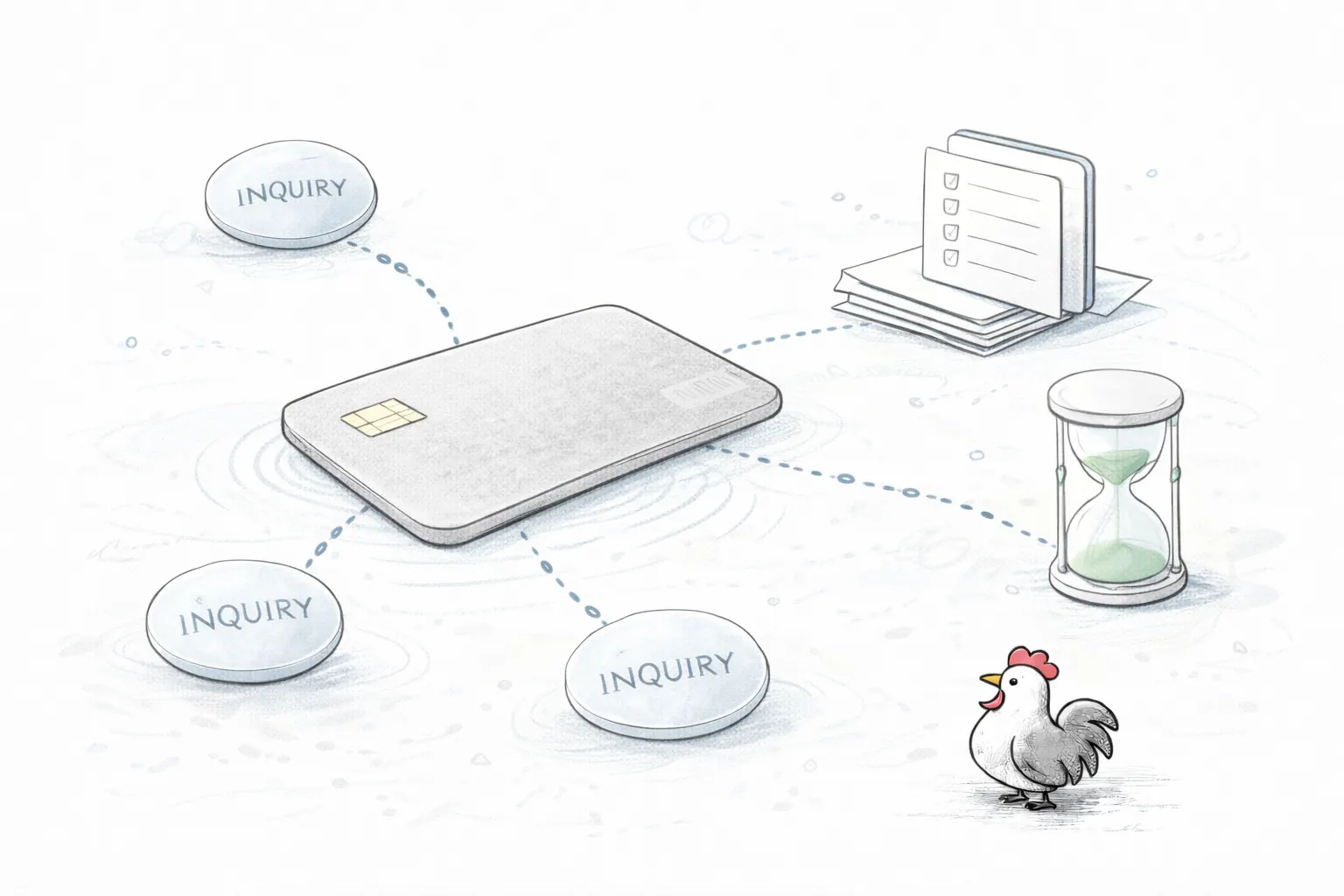
Every time you formally apply for new credit, a credit card, a personal loan, a car loan, or a mortgage, the lender performs a hard inquiry (also called a hard pull) on your credit report. It is a deep look into your payment habits, existing debts, and overall creditworthiness, and you authorized it by submitting an application.
Hard Inquiry
A formal request by a lender to review your full credit report when you apply for new credit, such as a credit card, loan, or mortgage. It is recorded on your credit report and can temporarily lower your credit score.
How Much Does One Hard Inquiry Really Cost?
Here is the number you came for: a single hard inquiry typically causes a small dip in your FICO Score of about 1-5 points. For many people with an established history, the change is so small it is hard to even spot against normal month-to-month movement. Hard inquiries live in the New Credit category, which makes up just 10% of your FICO Score, so they simply cannot do the kind of damage that late payments or high balances can.
"One hard inquiry will tank your credit score."
A single inquiry typically costs about 1-5 points and fades within 12 months.
Why?
Hard inquiries live in the New Credit category, which is only 10% of your FICO Score, so the dip is small and temporary.
How Long Hard Inquiries Last (and When They Stop Counting)
Two timelines matter here, and people constantly confuse them.
First, a hard inquiry stays visible on your credit report for two years. Anyone reviewing your file during that window can see that you applied for credit.
Second, and far more important, the inquiry stops affecting your FICO Score after about 12 months. So even though a lender can still see the entry in months 13 through 24, it is no longer pulling your number down. After two years, the inquiry drops off the report entirely.
This is why panic over a single pull is misplaced. The score impact is front-loaded into the first few months, lightens steadily through the first year, and is gone for scoring purposes long before the entry itself disappears.
years visible, ~12 months of score impact
How Many Hard Inquiries Are "Too Many"?
A single inquiry is harmless to most files. The risk comes from clustering many of them in a short window, especially across different kinds of credit. If a lender sees that you applied for five credit cards in three months, they may read it as a warning sign and assume one of the following:
- Financial distress: you may need money urgently and are being turned down elsewhere.
- Rising debt load: several new credit lines raise your potential exposure even before you spend a dollar.
- Credit hunger: a borrower chasing every available offer can look less measured to underwriters.
Financial Distress
Urgently seeking credit
Debt Load Risk
Too many new credit lines
Credit Hungry
Perceived as less measured
Higher Denials
Reduced approval odds
How to Recover From Hard Inquiries
The honest truth is that recovery from a legitimate hard inquiry is mostly about time and steady habits, not a secret trick. No reputable service can wipe an authorized inquiry early, and anyone promising to do so is a scam. Here is what actually moves the needle:
-
Let time do its work. Because the score effect fades after about 12 months, the single most reliable recovery step is simply to wait while the inquiry ages out of relevance.
-
Keep payments on time. Payment history is 35% of your FICO Score, far more than the 10% New Credit slice. A run of consistent on-time payments does more to offset an inquiry dip than anything else.
-
Keep balances low. Your utilization ratio is the second-largest factor. Paying down balances helps your number recover while the inquiry fades in the background.
-
Avoid stacking new pulls. Give your file room to settle. Pausing further applications for a few months lets the existing inquiry lose weight without new ones piling on.
-
Let new accounts season. If the inquiry came with a new account, the account itself starts building positive history over time, which can help offset the initial dip as it matures.
- Keep every payment on time, every month
- Pay balances down to lower utilization
- Give your file a few months to settle
- Let new accounts season and build history
- Pay a service to erase legitimate inquiries
- Pile on more applications during recovery
- Panic over a single small dip
- Run up balances on new accounts
How to Avoid Unnecessary Hard Pulls
The best inquiry is the one you never trigger. A little planning keeps your New Credit factor clean.
-
Use pre-qualification first. Many issuers offer pre-qualification tools that show your likely approval odds with a soft pull only. Checking these before you formally apply saves you hard inquiries for cards you would not qualify for anyway.
-
Know your "why" before applying. Ask whether you genuinely need this account now, whether it is your first secured card, a consolidation move, or a planned purchase. A clear purpose prevents impulse applications.
-
Ask for a limit increase instead. Sometimes a credit limit increase on a card you already hold can be requested with a soft inquiry. Check with your issuer before opening something new.
-
Build a foundation before you spread out. Especially for newcomers, leaning on secured credit cards and consistent payments builds history without a string of fresh pulls from simultaneous applications.
-
Protect critical financing windows. If you are weeks from a mortgage closing, hold off on every new application. Lenders re-check your file before closing, and a surprise inquiry plus potential new debt can delay the deal or change your terms.
Which approach matches your situation?
Newcomer
Building credit for the first time
Recovering
A few recent inquiries on file
Pre-Mortgage
About to close on a home
Frequently Asked Questions
years on report
1. How much does a hard inquiry lower my credit score?
- A single hard inquiry usually causes a small, temporary dip of about 1-5 points on your FICO Score. The effect is larger for thin files and smaller for established ones, but it is always temporary.
2. How long does a hard inquiry stay on my credit report?
- A hard inquiry stays visible on your report for two years, but it stops affecting your credit score after about 12 months and drops off entirely at the two-year mark.
3. How many hard inquiries are too many?
- One inquiry is harmless for most people. The risk comes from clustering several unrelated inquiries in a short window. More than a handful in six months is where lenders often start to take notice.
4. How do I recover from hard inquiries?
- Mostly through time and steady habits. Keep payments on time, keep balances low, and pause new applications. The score impact fades within about 12 months on its own.
5. Can I get a hard inquiry removed early?
- Only if it was unauthorized or fraudulent. You can dispute an inquiry you did not authorize with the credit bureau, and it must be removed if it cannot be verified. Legitimate inquiries simply age out.
6. What is the difference between a hard pull and a soft pull?
- A hard pull happens when you apply for new credit, can dip your score, and is visible to other lenders. A soft pull happens when you check your own credit or a lender pre-screens you, and it does not affect your score or appear to others.
7. Does checking my own credit hurt my score?
- No. Checking your own credit is a soft inquiry, so it has zero effect on your score and is not visible to lenders. You can check as often as you like.
A hard inquiry is a small, temporary note on your credit history, not a lasting injury. Now that you know how much one really costs, how long it lingers, how many start to look risky, and how to recover, you can apply for credit with a clear head. Lean on time and on-time payments to bounce back, dispute anything you did not authorize, and reserve your hard pulls for the credit you actually need.