Key Takeaways
- The statute of limitations controls how long a collector can sue, not how long a debt can appear on your credit report.
- A small payment, a payment plan, or a clear promise to pay can restart the legal clock in many states.
- Before you respond, confirm the debt owner, the last activity date, and your state rule for that debt type.
- Do not argue, explain, or negotiate on the phone until you know whether the debt is still legally collectible.
- If a debt appears to be time-barred, a careful written response often protects you better than an emotional call.
- Cleaning up old debt works best when you pair defense with ongoing positive credit building.
What the Statute of Limitations Actually Does
The statute of limitations is the legal window during which a creditor or collector can sue you for a debt. It is a lawsuit deadline, not a forgiveness rule.
Statute of limitations
A state-law deadline that limits how long a creditor or debt collector can file a lawsuit to collect a debt.
That distinction matters because people mix up two separate clocks all the time:
- the legal clock for a lawsuit
- the credit reporting clock for how long the item can remain on your reports
"If a debt is old, it is automatically safe to discuss or pay because the damage is already done."
Age alone does not protect you. What matters is your state's rule, the account's last activity date, and whether your next action resets the legal clock.
Why?
Collectors count on confusion between old debt, credit reporting age, and lawsuit deadlines. You need the dates before you need a strategy.
The Mistake That Restarts the Clock
The most common mistake is making a payment before you verify whether the debt is time-barred.
Collectors know that a $10 payment can be more valuable than a long argument. A small payment can sometimes act like a reset button. In many states, it may give them a fresh period in which they could try to sue again. The same risk can come from entering a payment plan or clearly admitting that the debt is yours and will be paid.
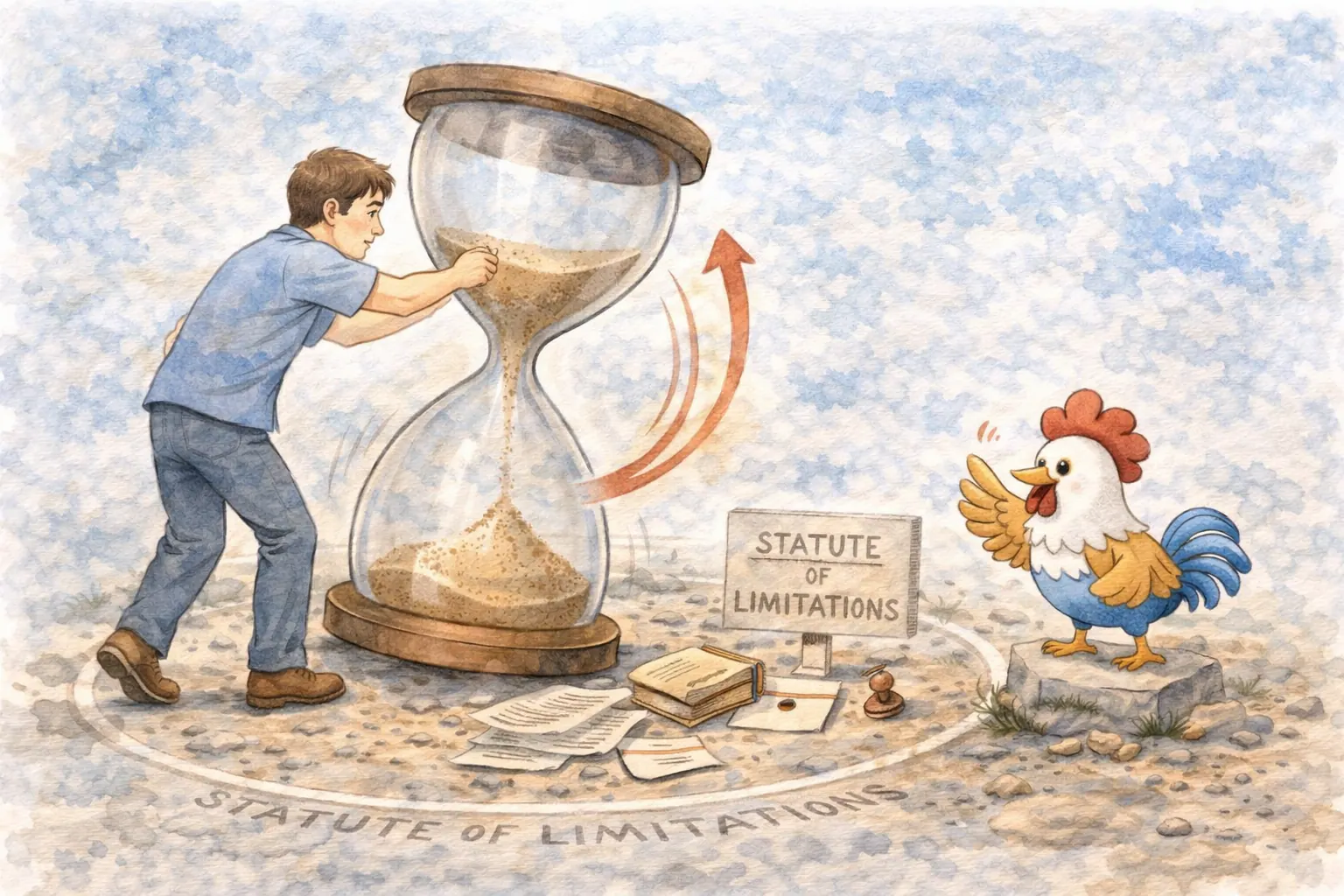
That does not mean every contact resets the clock. Asking for validation is not the same as admitting the debt. Requesting documents is not the same as promising money. The problem starts when you move from information gathering to reaffirming the obligation.
Old debt calls for a colder, slower approach than most people want to take. The collector wants momentum. You want facts.
What Can Trigger a Reset
The exact reset rules depend on state law, but these are the triggers that create the most trouble:
- a partial payment
- a new payment agreement
- a written admission that the debt is yours
- a verbal promise to pay, depending on the state
- signing settlement paperwork without understanding how the account is being revived
The risky part is that the call often sounds routine. The collector phrases it as a convenience: "Can you just pay something today?" or "If you cannot pay in full, we can start with a small amount." That is how people get boxed in.
Stage 1
You stop paying and the original legal clock starts based on state law and account type.
Stage 2
The debt gets older, and the collector has less time to sue if no reset happens.
Stage 3
A payment, payment plan, or clear promise may restart the clock in many states.
Stage 4
The collector may regain time to pursue legal action that was close to expiring.
Verify Before You Do Anything
Before you pay, negotiate, argue, or explain, confirm these details:
- who owns the debt now
- what type of debt it is
- the last activity date
- the original delinquency date
- whether the debt is still reporting on one, two, or all three bureaus
- your state's statute of limitations for that debt category
Start there, not with the collector's script.
When you do this review, pay attention to terms like date of last activity and date of first delinquency. They are not always presented the same way across reports, but they help you estimate both the reporting age and the legal timeline you need to research. If the collector cannot clearly explain the account history, that is one more reason to slow the process down and ask for validation in writing, ideally with a paper trail you can keep.
One practical rule helps here: if the debt might be old enough to be time-barred, treat every payment discussion as high risk until proven otherwise.
Why a Small Payment Is So Dangerous
The reason collectors push for a token payment is simple: it changes the conversation from "prove this account" to "this consumer is re-engaging with the debt."
That shift matters. Once you pay, the collector may argue that the account is active again. Once you agree to a plan, they may argue that you recognized the balance and accepted a fresh obligation. Even when the payment seems trivial, the legal effect can be bigger than the dollars involved.
This is part of why people get confused when the collector sounds helpful. They are not always trying to trap you in some dramatic way. Sometimes they are just following a script that rewards commitment. From your side, though, the result can still be costly. A polite collector can still walk you into the wrong move.
The practical takeaway is blunt: old debt is not the time to be casually cooperative. Be civil, be brief, and keep the focus on records. If you later decide the debt should be resolved, you can still do that. What you cannot always undo is a reset that gives the collector fresh legal leverage.
What to Say When the Debt Might Be Time-Barred
You do not need a dramatic script. You need a restrained one.
Try this:
- "Please send the validation and account details in writing."
- "I am not agreeing to payment on this call."
- "I need to review the dates and records first."
- "If I respond, I will respond in writing."
That keeps you away from the language that causes damage. It also pushes the collector back into documentation, where sloppy records and bad assumptions are easier to spot.
It also helps to keep a simple call log. Write down the date, the collector's name, the company, the account reference, and what was requested. When people feel pressured, memory gets fuzzy fast. A short written log keeps the timeline clean and makes it easier to compare later calls against what the collector first claimed.
Phone Rule for Old Debt
Do not turn uncertainty into a fresh legal obligation. Ask for documents first, then decide whether the debt should be disputed, negotiated, or left alone.
Three Real-World Cases
These examples show why the same debt can require completely different decisions depending on timing.
Nico thinks a small payment is harmless.
Nico gets a call on an old store card. The collector says he can show good faith by paying $25 today. Nico almost does it because the number is small and the pressure sounds reasonable.
The problem is that Nico has not confirmed whether the debt is already close to expiring under his state rule. That $25 could buy the collector much more than it costs Nico. It could buy time. His smarter move is to ask for validation and review the dates first.
Riley wants to clear the slate before applying for an apartment.
Riley sees an old collection and wants it gone fast. She is tempted to set up a payment plan because it feels responsible. But a payment plan may be exactly the wrong tool if the debt is near or past the lawsuit deadline.
Riley slows down, checks the last activity date, and reviews all three credit reports. Only after that does she decide whether the account is still worth settling. If it is, she negotiates in writing. If it is not, she avoids reviving it just because she felt urgency.
Tina receives a lawsuit threat on a stale account.
Tina is told, over the phone, that the collector is "about to escalate." She panics and starts explaining why she fell behind. Then she almost promises a payment next week.
That is the worst time to get emotional. Tina needs to document the threat, stop discussing payment, and verify whether the debt is even still legally collectible. If the debt is time-barred, the threat itself may be improper.
What is the right next move?
Debt might be old
You are not sure whether the lawsuit deadline has passed.
Debt is clearly active
The account is still within the legal collection window.
Collector is vague or aggressive
You are getting pressure but not much documentation.
If the Debt Is Time-Barred
If you confirm the debt is time-barred, your goal changes. You are no longer deciding how to catch up. You are deciding how not to wake the account back up.
That usually means:
- no token payments
- no payment plans
- no casual admissions
- no loose promises to pay later
Instead, keep the response narrow. Ask for written communication. Preserve records. If the collector keeps pressing, you may decide to send a cease-contact request, but only after you understand the tradeoff and keep copies.
Another point people miss: if a collector does sue, the statute of limitations is often a defense you may need to raise. Courts do not always fix that issue for you automatically. So if you ever receive actual court papers, do not ignore them because you assume the debt is too old. Time-barred debt and ignored lawsuits are a bad combination. You still need to respond, document dates, and protect the defense correctly.
Have you confirmed the debt is time-barred using the dates and your state's rule?
Once the dates and rules are confirmed, the strategy gets simpler. Your job is no longer to sound cooperative. It is to avoid turning uncertainty into new exposure.
Do Not Let Old Debt Freeze Your Progress
A lot of people spend so much energy reacting to stale debt that they stop building anything positive. That can stall progress just as much.
Even while you sort out old collections, you still need current wins on your credit file: on-time payments, low utilization, and accounts that are moving in the right direction. Old debt defense is one side of the strategy. Positive account behavior is the other.
That means if you are rebuilding, keep your attention on the habits that can strengthen the file over time. Do not let one old account absorb all your focus. A cleaner process matters, but so does forward motion.
Step 1
Pull all three reports and lock down the last activity, delinquency date, and current debt owner.
Step 2
Choose the right path: dispute bad data, negotiate in writing, or leave a confirmed time-barred debt alone.
Step 3
Build fresh positives with on-time payments, low utilization, and one manageable starter account.
Step 4
Recheck bureau updates and keep one evidence folder with every letter, log, and status change.
That rebuild sequence matters because old debt cleanup is rarely one move. The strongest outcomes usually come from pairing careful defense with boring, consistent positive reporting.
Action Checklist for Old Debt
Use the checklist as your monthly reset. It keeps the legal side, the documentation side, and the rebuilding side moving together instead of fighting for attention.
Disclosure
CreditRoost provides educational information, not legal advice or guaranteed credit repair results. Statute-of-limitations rules vary by state and by debt type.
Frequently Asked Questions
1. What usually restarts the statute of limitations on a debt?
- The biggest trigger is a payment, even a small one, but a new payment agreement or a clear promise to pay can also restart the clock in many states.
2. Does the statute of limitations remove the debt from my credit report?
- No. The statute of limitations affects lawsuits. Credit reporting follows a separate timeline.
3. Should I pay something small just to show good faith?
- Not until you verify the debt status. On an old account, a small payment can be the exact move that revives legal risk.
4. Can I still ask for validation without restarting the clock?
- Usually yes. Asking for records is different from admitting the debt or promising payment.
5. What if the collector says I need to act today?
- Pressure is not proof. Slow the process down and move it into writing before you discuss money.
6. What if I already made a small payment?
- Stop making assumptions and verify the account immediately. If you may have restarted the clock, get legal guidance specific to your state instead of guessing.
7. Can a collector still contact me after the statute of limitations expires?
- Usually yes. The expiration of the statute limits lawsuits, not ordinary collection contact. They generally should not threaten legal action they can no longer take.
8. How long can the account stay on my credit report?
- Usually, around seven years from the original delinquency timeline. That reporting period is separate from the statute of limitations, which is why an account can be too old to sue on and still appear on your reports.
9. Should I ignore calls about old debt?
- No. You should avoid casual phone conversations, but ignoring the issue completely is weaker than validating it in writing, documenting what happened, and deciding on purpose how to respond.