Key Takeaways
- Access your free reports annually from Experian, Equifax, and TransUnion via AnnualCreditReport.com.
- Staggering your requests (one bureau every four months) allows for year-round monitoring.
- Scan your reports carefully for accurate tradelines, limits, payment history, and any unfamiliar accounts.
- Spotting and disputing errors is crucial for maintaining a healthy credit profile.
- Regular check-ups are essential for building and protecting your financial well-being.
Why Your Credit Reports Are Your Nest's Blueprint
For someone new to credit, a clean, accurate report is your proof of financial trustworthiness. For those rebuilding, it’s a tangible record of progress and a critical tool for identifying and correcting past missteps. Without regular vigilance, errors can slip in, or worse, fraudulent accounts could be opened in your name, silently chipping away at your financial nest.
This regular check-up is particularly important because your credit profile is dynamic. It changes as you open new accounts, make payments, and pay off debts. Think of it as a living document that needs consistent attention to ensure its accuracy and health. The insights you gain from reviewing your reports empower you to take control of your financial narrative and ensure that every twig and branch in your nest is exactly where it should be.
At a glance, these are the core report zones that most directly shape lending decisions and your day-to-day credit visibility:
Use this as a scan priority map each time you review a bureau report so your effort stays focused and consistent.
How to Access Your Three Free Reports Annually
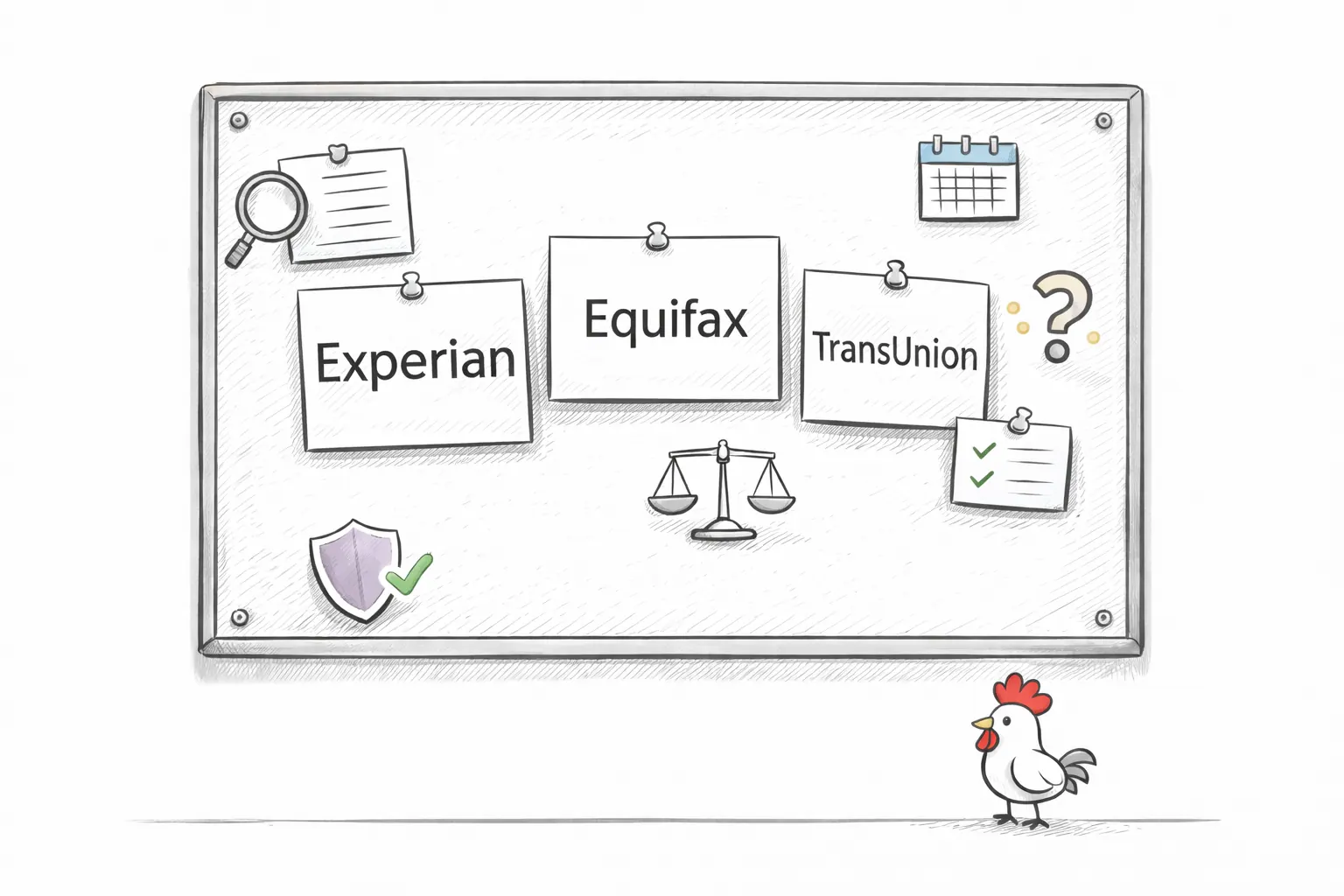
It’s important to use this official site to avoid look-alike websites that might try to sell you credit monitoring services or other products you don't need. When you visit AnnualCreditReport.com, you'll be asked to provide some personal information to verify your identity. This usually includes your name, address, Social Security number, and date of birth. You might also need to answer a few security questions related to your credit history that only you would know.
Once verified, you'll have the option to choose which credit report(s) you'd like to view. While you can pull all three at once, a smarter strategy, particularly for ongoing monitoring, is to stagger your requests. Think of it as distributing your nest inspections throughout the year, ensuring continuous oversight rather than a single annual snapshot.
Pull Experian
Confirm identity details, new accounts, and recent inquiries.
Pull Equifax
Re-check balances, account status, and dispute follow-ups.
Pull TransUnion
Verify updates posted correctly and close the annual loop.
Staggering Your Checks for Year-Round Vigilance:
Instead of pulling all three reports at once, consider this calendar cadence:
- January/February: Request your report from Experian.
- May/June: Request your report from Equifax.
- September/October: Request your report from TransUnion.
This strategy provides you with a fresh credit report every four months, giving you a comprehensive view of your financial health throughout the year. If you spot an error on one report, you have time to address it before checking another report a few months later. This proactive approach ensures that your nest remains inspected and secure at all times, rather than waiting a full year between check-ups.
What to Scan: Inspecting Your Nest's Tradelines and Details
Tradeline
An individual account listed on your credit report, such as a credit card, loan, or mortgage, reflecting your payment history and credit activity.
Here's what to meticulously scan for:
Identity Details
Name, address history, SSN, and date of birth must match your records.
Tradeline Accuracy
Account type, status, limits, balances, and open dates should be correct.
Inquiry Review
Validate each hard inquiry and flag unfamiliar lenders immediately.
Collections & Public Records
Check dates and ownership details for collections, judgments, or bankruptcies.
- Your Personal Information: Double-check your name, current and previous addresses, Social Security number, and date of birth. Any discrepancies here could indicate a mix-up with someone else's file or, more seriously, identity theft.
- Account Information (Tradelines): This is where the bulk of your credit history resides. Look at every single account listed:
- Account Names: Do you recognize every creditor? Unfamiliar accounts could be a sign of fraud.
- Account Numbers: Verify that these match your records.
- Account Types: Are they correctly labeled as credit cards, mortgages, auto loans, or authorized user (AU) accounts? For many newcomers and rebuilders, AU tradelines can be an early path to establishing credit visibility. To understand exactly how they post and get evaluated, see How AU tradelines work. While AU tradelines can be a useful starting point, durable credit strength ultimately comes from adding your own accounts like secured credit cards, credit-builder loans, and consistent rent reporting.
- Credit Limits/Loan Amounts: Ensure the limits or original loan amounts are correct for each account.
- Balances: Check if the reported balances are accurate as of the reporting date.
- Account Open and Closed Dates: Verify these dates. An account reported as open that you closed years ago, or an account opened on a date you don't recall, can be problematic.
- Payment History: This is arguably the most crucial section. Every account should reflect accurate payment status: "paid as agreed," "current," or unfortunately, "late" if applicable. One single late payment can significantly impact your credit health, so ensure any reported late payments are legitimate. For the scoring impact, review the payment-history 35% rule.
- Inquiries: This section lists who has requested to view your credit report. Hard inquiries (often associated with loan or credit card applications) can temporarily ding your score. Soft inquiries (like checking your own credit) do not. Ensure you recognize all hard inquiries, as too many unexplained ones could suggest fraudulent activity. For timing and strategy, see the hard inquiry dilemma guide.
- Public Records & Collections: If you have any bankruptcies, foreclosures, or accounts sent to collections, verify the accuracy of these details, including dates and amounts.
This careful review is your best defense against errors and fraud. It’s your chance to ensure that every detail contributing to your financial reputation is precise and true.
Spotting the Storms: Common Errors and How to Dispute Them
Here are some common types of errors to look out for:
- Incorrect Personal Information: Misspelled names, wrong addresses, or an incorrect date of birth.
- Misreported Accounts: Accounts that aren't yours, closed accounts reported as open, or accounts with incorrect balances or credit limits.
- Late Payments: Accounts incorrectly showing late payments when you paid on time.
- Duplicate Accounts: The same account listed multiple times.
- Fraudulent Accounts: Accounts opened in your name without your knowledge or consent.
What to do if you find an error:
If your nest inspection reveals a problem, don't panic, but act swiftly. You have the right to dispute inaccurate information with both the credit reporting agency and the company that provided the information (the furnisher, e.g., your credit card company or bank).
- Gather Your Evidence: Collect any documents that support your claim, such as payment confirmations, account statements, or letters from creditors.
- Contact the Credit Bureau: You can typically dispute errors online through each bureau's website (Experian, Equifax, TransUnion), by mail, or by phone. Clearly state the inaccurate information and provide your supporting documentation. The bureau has 30-45 days to investigate your dispute.
- Contact the Furnisher: It's often beneficial to also contact the creditor directly. They might be able to correct the error faster.
- Keep Records: Document everything: dates of contact, names of people you spoke with, copies of letters sent and received. This paper trail is vital if further action is needed.
Document the error
Save statements, letters, and account screenshots.
Submit bureau dispute
File with Experian, Equifax, or TransUnion and keep confirmation IDs.
Notify data furnisher
Contact the lender or servicer reporting the error.
Track deadlines
Follow investigation timing and verify final corrections.
Remember, your credit reports are your voice to the financial world. Ensuring they are accurate is a critical part of building and maintaining a strong financial nest.
Your Ongoing Nest Inspection: A Calendar Cadence for Financial Health
Just as a bird constantly maintains its nest, your financial health requires ongoing attention. The strategy of staggering your free credit report requests throughout the year isn't just a clever trick; it's a fundamental habit for financial well-being. This consistent cadence ensures that you're always aware of what's happening with your credit, allowing you to catch issues early and celebrate your progress.
Let's consider a couple of scenarios:
-
Nico, the Newcomer: Nico just started building credit, perhaps with an authorized user tradeline, which helped him establish an early credit file. He’s excited but also a bit nervous about doing everything right. Nico decides to pull his Experian report in January. He sees his AU account, his new secured credit card, and verifies all his personal details. Four months later, in May, he pulls his Equifax report. Here, he notices a hard inquiry he doesn't recognize; it turns out to be a misreported inquiry from an old rental application he never completed. Because he caught it early, he disputes it immediately, preventing it from lingering and potentially impacting his score. In September, he checks TransUnion, seeing everything in order and feeling confident about his progress. This staggered approach helps Nico manage his new credit journey proactively.
-
Riley, the Rebuilder: Riley is working diligently to strengthen her credit profile after some past challenges. She's been focused on paying down balances and making every payment on time. In February, she pulls her Equifax report, excited to see her utilization dropping and old negative marks slowly aging off. She spots an old collection account that should have been removed according to the seven-year reporting limit, but it’s still there. Riley immediately disputes it, knowing this cleanup may help her credit profile over time. In June, she checks Experian and confirms the collection is gone. In October, her TransUnion report shows great progress, and she even notices a new credit-builder loan she opened is reporting, further diversifying her positive payment history. Riley's consistent checks are her reassurance and her compass on the path to financial recovery.
These scenarios highlight the power of regular, staggered checks. They transform a yearly chore into a continuous, empowering process. By setting a reminder in your calendar for January, May, and September, you create an unbreakable habit that serves as your personal financial guardian. This isn't just about spotting errors; it's about seeing your progress, understanding the impact of your financial choices, and making informed decisions moving forward.
The staggered method usually creates better visibility and faster problem detection, because you review fresh data multiple times a year.
Beyond the Report: Building a Stronger, More Resilient Nest
While knowing how to get and read your free credit reports is a cornerstone of financial health, it’s just one part of building a truly robust nest. Your reports give you the facts, but your actions shape those facts. For newcomers, authorized user tradelines can represent an early gateway to establishing initial credit visibility. However, to cultivate durable, long-term credit strength, you must also focus on building your own accounts.
Consider adding tools like secured credit cards, where you put down a deposit as your credit limit, helping you establish a payment history. Credit-builder loans are another excellent option, designed specifically to help you save money while demonstrating responsible borrowing. And don't forget the impact of consistent rent reporting, which can turn your on-time rental payments into a powerful positive entry on your credit file.
- Keep every account current and automate due-date reminders.
- Maintain low utilization on revolving accounts.
- Review each bureau report on your staggered calendar.
- Ignore unfamiliar inquiries or unknown accounts.
- Assume all three bureaus show identical data.
- Stop building your own primary accounts over time.
Disclosure
Some lenders and credit scoring models may filter out, discount, or weigh authorized user tradelines differently in their underwriting decisions. Results vary based on lender policies, the specific scoring model used, and your unique credit profile. An AU tradeline does not guarantee loan approval or any specific credit score outcome.
Practical Review Rhythm for Each Bureau
One of the most useful ideas from the raw guidance is to treat each bureau pull as a repeatable audit, not a one-time event. When you open each report, run the same checklist in the same order so you can detect changes faster. Start with identity details, then move to account status, then inquiries, then collections or public records. This consistent rhythm helps you notice what is truly new versus what simply looks unfamiliar at first glance.
A practical monthly structure can look like this: keep one running notes file for all three bureaus, record the exact pull date, and list only changes since your last review. If you see a new inquiry, write down the lender name, date, and whether you authorized it. If a balance looks off, compare it to your latest statement and note the statement closing date, because timing differences can make balances look inaccurate when they are just reported on different days.
Monitor vs Dispute Quick Guide
| Tag | Use It When | Next Action |
|---|---|---|
| monitor | The item looks accurate but recently reported | Re-check next bureau pull and confirm update timing |
| dispute | Data is clearly inaccurate or unauthorized | File with bureau and furnisher immediately |
When you find a potential issue, tag it as either monitor or dispute and route it through this quick framework to keep your decisions consistent.
Over time, this process gives you a timeline of your credit health, not just snapshots. That timeline is powerful when you need to explain discrepancies to a lender, prove progress during a rebuild period, or quickly gather evidence for a bureau dispute.
Frequently Asked Questions
1. How often can I get my free credit reports?
- You are entitled to one free credit report from each of the three major bureaus (Experian, Equifax, TransUnion) every 12 months. During the pandemic, this was temporarily increased to weekly, but typically it's an annual entitlement from each bureau via AnnualCreditReport.com.
2. Is AnnualCreditReport.com truly free?
- Yes, AnnualCreditReport.com is the only website authorized by federal law to provide your free annual credit reports. You will not be asked for credit card information to access these reports, nor will you be enrolled in any paid services.
3. Do free credit scores come with the reports?
- No, AnnualCreditReport.com provides your credit reports, which contain all the data. Credit scores are typically a separate product offered by credit bureaus or other financial services, often for a fee, though many banks and credit card companies now offer free score access to their customers.
4. How long does it take to get a report after I request it?
- If you request your reports online, you can often view them instantly. If you request by mail, it can take up to 15 days for the reports to arrive.
5. What if I can't access my report online?
- If you have trouble verifying your identity online, you can request your reports by mail using the Annual Credit Report Request Form, or by phone. Instructions are available on the AnnualCreditReport.com website.
6. Will checking my own credit report hurt my credit score?
- No. Checking your own credit report is considered a 'soft inquiry' and does not impact your credit score. Only 'hard inquiries' from lenders when you apply for new credit can temporarily affect your score.
Action Items
Your Next Steps for a Stronger Nest
Taking charge of your financial health starts with knowledge, and your free credit reports are a goldmine of information. Don't wait for a problem to arise; make it a habit to regularly inspect this vital part of your financial nest.