Key Takeaways
- Always verify collection ownership, balance, and delinquency dates before discussing payment.
- Use written communication and request validation first so you can dispute errors with evidence.
- Pay-for-delete can be requested, but it is not guaranteed and must be confirmed in writing.
- If deletion is not available, a documented settlement and clean active-account behavior can still improve outcomes over time.
- Track all three bureaus after each step and escalate inconsistencies quickly with your records.
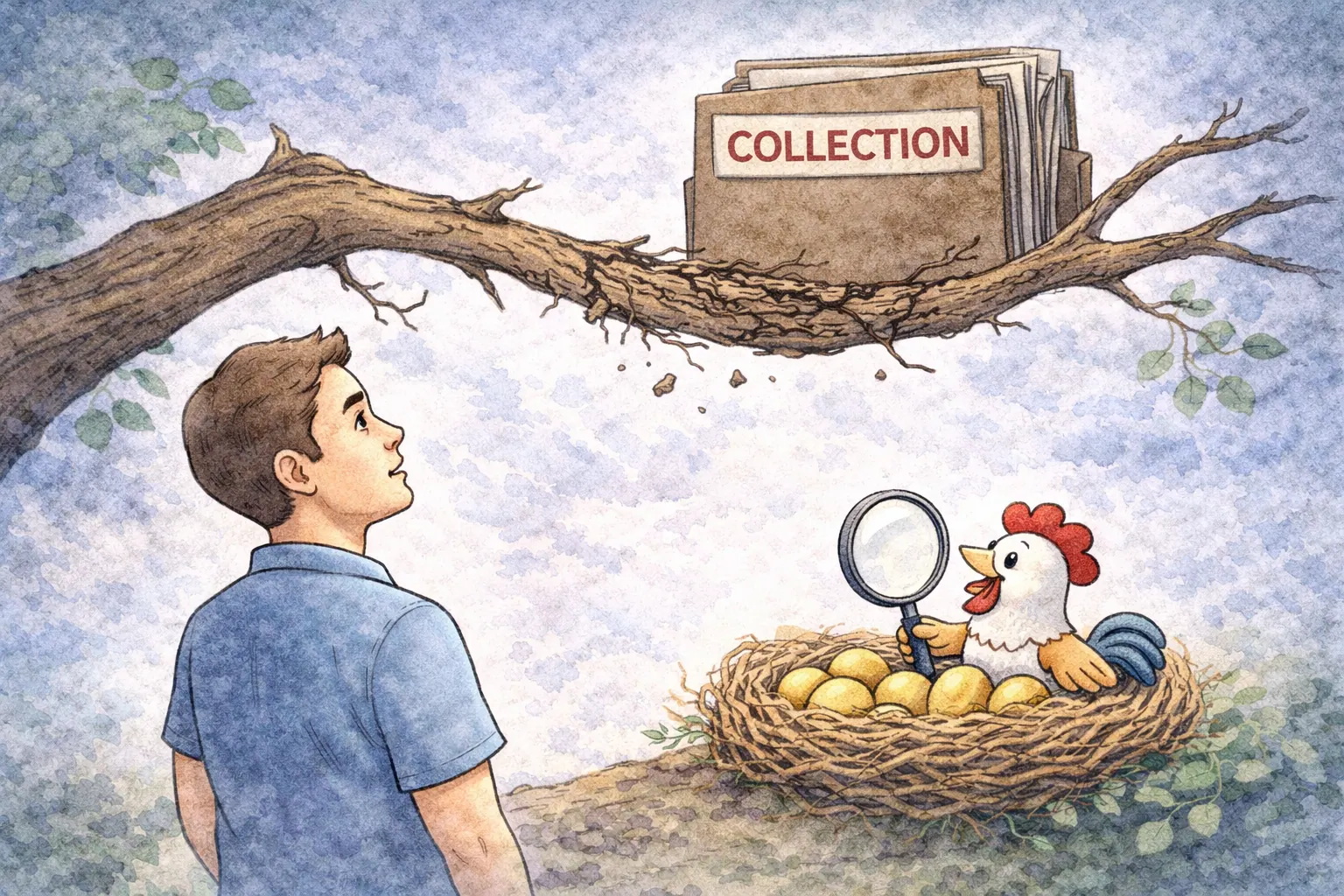
The Collection Account: A Shadow Over Your Nest
A collection account, at its core, is an unpaid debt that moved beyond normal internal billing. Once a collector reports it, your file may show a major negative signal that affects underwriting confidence.
collection account
A debt your original lender gave up on collecting and handed off to a third-party agency. Once reported, it appears as a separate negative item on your credit report — even if the original account is also listed.
The urgency is real, but so is the need for control. Before you contact anyone, you need to confirm ownership, dates, and balances across bureaus. That first verification step often determines whether your next move creates progress or creates new problems.
First Steps: Information Gathering Is Your Foundation
Before you send letters, negotiate amounts, or dispute data, build your baseline file.
Capture these fields for each collection tradeline:
- Original creditor: Who first owned the debt.
- Collector or debt buyer: Who is currently reporting.
- Account reference: The account number shown by each bureau.
- Date of first delinquency (DOFD): The timeline anchor for reporting duration.
- Date of last activity: Sometimes misreported and often misunderstood.
- Current balance: Including any fees that may have been added.
- Bureau coverage: Which bureaus are reporting the item.
This stage is not busywork. It is leverage. Inconsistencies in owner name, dates, or amounts can support disputes and improve your negotiation posture.
Verifying the Debt: Do Not Assume It Is Correct
Many borrowers skip this and move straight to payment. That is one of the most expensive mistakes in debt recovery.
When a collector first contacts you, you generally have a limited window to request validation under FDCPA rules. Use that window. Send a written validation request and keep copies of everything.
Ask for:
- Documentation showing the debt is yours.
- The original creditor name and account history.
- The amount owed and how it was calculated.
- Evidence that the collector has legal authority to collect.
Validation also protects you from paying the wrong party, paying an inflated amount, or weakening your legal position before facts are confirmed.
Strategic Approaches to Removal
Once you have validated facts, choose the approach that fits your file.
Option 1: Pay-for-delete request
This is the preferred outcome for many borrowers: payment in exchange for complete deletion. It can happen, but it is not guaranteed.
How to run it well:
- Negotiate the amount.
- Get deletion terms in writing before payment.
- Pay with a traceable method.
- Monitor all three bureaus for update completion.
Option 2: Dispute factual inaccuracies
If validation fails, dates are wrong, balances are wrong, or ownership data is inconsistent, dispute the specific field that is wrong. Targeted disputes with evidence usually outperform generic letter blasts.
Option 3: Settle without deletion
If deletion is unavailable and the debt is valid, a documented settlement can still reduce risk perception compared with leaving the account unresolved. It does not erase history, but status changes can matter depending on lender policy and scoring model behavior.
Option 4: Wait for reporting expiry
When accounts are near reporting expiration and alternatives are weak, aging out may be reasonable. But do this intentionally, not passively, and document your timing assumptions.
Week 1
Archive bureau snapshots and send validation requests before discussing settlement terms.
Week 2
Choose dispute, settlement, or deletion request based on evidence quality.
Weeks 3-6
Submit disputes or complete settlement with written terms and proof of payment.
Weeks 7-12
Confirm updates across bureaus and escalate unresolved mismatches.
Crucial Steps to Avoid Making It Worse
Collections are manageable, but there are common traps:
- Do not rely on phone promises: verbal terms are difficult to enforce.
- Do not pay before written terms: especially when deletion is part of the deal.
- Do not send broad, generic disputes: they often fail and consume time.
- Do not ignore timeline rules: legal timing and reporting timing are different.
- Do not stop tracking after one update: regressions happen.
Action Items
A practical way to protect yourself is to maintain one evidence folder with:
- Validation requests and responses.
- Settlement letters and payment confirmation.
- Dispute filings and acknowledgment numbers.
- Monthly screenshots from all three bureaus.
- Call notes with dates and reference IDs.
If you cannot show your paper trail quickly, escalation gets harder.
Mini Stories and Real World Examples
Nico's utility collection
Nico found a $350 utility collection he believed was already paid. Instead of paying again to "clear it fast," he requested validation. The collector replied, but account dates conflicted with his original records. Nico disputed the specific fields with documentation and the entry was removed after bureau review.
Riley's older card debt
Riley had a five-year-old collection around $1,200. Pay-for-delete was declined. He negotiated a documented settlement, kept all records, and monitored bureau updates until status reflected the agreement. The item was not deleted, but risk signals improved over time while he rebuilt active credit behavior.
Both cases show the same principle: speed without documentation creates risk. Controlled sequence creates options.
Beyond Collections: Rebuilding Your Credit Nest
Resolving a collection is only one part of recovery. You also need positive behavior compounding in the background.
Keep two tracks running at the same time:
- Resolve negatives with documentation.
- Strengthen active accounts with clean payment behavior.
Disclosure
Some lenders and scoring models may filter, discount, or weigh authorized user tradelines differently in underwriting. Outcomes vary by lender policy, model, and profile. No tradeline strategy guarantees approval or a specific score result.
Positive behavior does not erase negative history overnight. But it does create the trend lenders and models monitor most closely. That trend is where durable recovery comes from.
Your Action Plan: Remove Risk Without New Damage
A clear sequence reduces mistakes and keeps momentum measurable.
Step 1
Pull all three reports and document owner, amount, and dates.
Step 2
Send validation request and organize evidence in one folder.
Step 3
Choose dispute, settlement, or deletion request based on facts.
Step 4
Track updates monthly and escalate inconsistencies quickly.
Use this operating checklist:
- Verify first: do not negotiate from incomplete data.
- Confirm timeline context: separate reporting duration from legal enforcement windows.
- Document terms before payment: no written terms, no payment.
- Dispute exact fields with evidence: avoid broad, vague claims.
- Protect active accounts: keep payments on time and utilization controlled.
- Review monthly: confirm all updates match documented outcomes.
Most setbacks happen after people stop monitoring. To avoid that, run a 90-day review cadence.
Advanced Escalation and Documentation Playbook
If a collection account does not update correctly after you validate, dispute, or settle, the next phase is escalation. Most borrowers lose ground here because they rely on memory instead of records. Escalation works best when each claim is tied to a dated document and a clear request.
Build your escalation packet like a case file. Include a one-page timeline at the top, then attach evidence in order. Your timeline should show contact date, action taken, expected result, and current mismatch. When a reviewer can understand your case in two minutes, outcomes tend to improve.
A strong escalation packet usually includes:
- Original bureau snapshots showing the disputed fields.
- Validation request letter and delivery proof.
- Collector response, including any missing or conflicting details.
- Dispute submission confirmations from each bureau.
- Settlement terms and payment proof, if applicable.
- Follow-up screenshots that show unresolved or regressed reporting.
Many people skip the timeline and send a stack of attachments with no structure. That creates friction for the reviewer and delays decisions. A timeline plus indexed attachments reduces that friction.
How to Write a High-Quality Dispute Follow-Up
Your follow-up should be concise, specific, and evidence-led. Avoid emotional language and avoid broad claims like "everything is wrong." Instead, identify the exact field and state what you want corrected.
Use this format:
- Account identification: bureau, creditor/collector name, account reference.
- Field in dispute: owner, balance, date, status, or duplication.
- Evidence reference: document number from your packet.
- Requested correction: exact data you believe should appear.
- Response deadline request: ask for written confirmation of findings.
An example request line can look like this:
- "Please correct balance from $1,240 to $840 based on settlement terms in Attachment 4 and payment confirmation in Attachment 5."
Specific language lowers interpretation risk and makes it easier for investigators to validate your claim path.
Escalation Sequence When Updates Stall
If no meaningful update appears after standard timelines, run an escalation sequence rather than repeating the same request.
- Re-submit targeted dispute with your organized packet.
- Submit a direct dispute to the furnisher with matching attachments.
- Request written reinvestigation outcome details.
- If reporting remains inconsistent, file a formal complaint with supporting records.
- Continue monthly bureau checks until fields align with documented outcomes.
The key is consistency. If you change arguments each month, your case weakens. If you repeat the same documented claim with stronger evidence and cleaner organization, your case becomes harder to ignore.
Red Flags That Require Immediate Attention
Some patterns should trigger immediate action because they can materially affect approvals:
- A paid account still marked unpaid across one bureau.
- Different ownership names for the same account on different bureaus.
- A delinquency date that appears to move forward unexpectedly.
- Duplicate collection entries tied to one underlying debt.
- Status language that conflicts with your written settlement terms.
When you see one of these, do not wait for "next month to see if it fixes itself." Capture screenshots that day and escalate with documentation.
Protecting New Credit During Collection Cleanup
Collection cleanup is stressful, but new mistakes on active accounts can offset your progress quickly. While disputes or settlements are in process, follow a temporary protection protocol:
- Keep utilization lower than your normal target if possible.
- Avoid unnecessary hard inquiries while files are unstable.
- Use autopay and manual calendar reminders for every due date.
- Keep emergency cash buffer accessible to avoid accidental misses.
- Review statements before closing dates for reporting control.
This protocol is not permanent. It is a short-term stabilization system while your file is under repair pressure.
A Practical 30-Minute Monthly Review Routine
You do not need hours each week to stay in control. A focused monthly routine is usually enough:
- Pull current data from all three bureaus.
- Compare collection fields to your previous month snapshot.
- Log every change in one tracker with date and source.
- Flag unresolved mismatches for immediate follow-up.
- Confirm active-account payments and utilization trend.
- Archive all documents in one folder structure by month.
Consistency beats intensity. Small monthly reviews prevent large surprises during loan applications.
If you want a quick quality-control view, use this rubric:
90-Day Quality Control
| Checkpoint | What to Verify | Escalation Trigger |
|---|---|---|
| Day 15 | Validation or settlement acknowledgment is documented | No written confirmation received |
| Day 30 | Owner, balance, and status fields match expected updates | Any bureau still shows conflicting data |
| Day 60 | Reporting language matches written terms | Promised update language is missing |
| Day 90 | Open issues are archived with next action dates | Unresolved inaccuracies remain without follow-up |
Negotiation Boundaries That Reduce Risk
Before any collector conversation, decide your boundaries in writing so pressure does not change your plan.
Recommended boundaries:
- No same-day payment commitments.
- No bank-account sharing before written terms.
- No agreement to verbal-only reporting promises.
- No acceptance of unclear fee add-ons without documentation.
- No deviation from your prepared settlement range.
These boundaries keep your process stable when conversations become urgent or emotional.
What Success Looks Like in This Process
Success is not only deletion. In many real files, success looks like a combination of outcomes:
- Corrected account data across bureaus.
- Resolved status language aligned with terms.
- Reduced lender risk signals over time.
- Strong active-account behavior continuing in parallel.
- A documented record that supports future underwriting explanations.
Even when one negative item remains, a clean, consistent file can still improve financing options compared with a chaotic, inconsistent file.
Keep the Long View
Collection recovery is a systems problem, not a single transaction. You are managing data accuracy, negotiation execution, and behavior stability at the same time. That is why process discipline matters more than one isolated tactic.
When you keep records tight, escalate precisely, and protect active accounts, you create durable forward momentum. That is the difference between temporary relief and real profile recovery.
Frequently Asked Questions
1. Does paying a collection improve your score?
- It can, depending on model behavior, profile context, and update timing. Paying does not always mean deletion, but unresolved collections typically carry higher risk signals.
2. How long can a collection stay on reports?
- Many collections may remain up to seven years from original delinquency timing, depending on reporting rules.
3. Can I remove a collection account myself?
- Yes. Many borrowers can run validation, targeted disputes, and structured negotiation without third-party services.
4. What is debt validation?
- It is a documented request for the collector to prove ownership, amount, and authority to collect.
5. Is pay-for-delete guaranteed?
- No. It is a request, not a right. If offered, get terms in writing before payment.
6. Should I talk to collectors by phone?
- You can, but keep written follow-up for every material detail and avoid commitments without documentation.
7. What if deletion is refused?
- Use documented settlement, monitor update quality, and keep active-account behavior strong while the item ages.
8. How often should I monitor reports during cleanup?
- Monthly at minimum, and more frequently after disputes or settlement completion.
9. Should I still rebuild if one collection remains?
- Yes. Strong on-time history and controlled utilization can improve profile quality even while one item remains.
10. Where should I start if everything feels overwhelming?
- Start with report collection and evidence organization. Once facts are clear, the decision tree becomes manageable.
In Closing
Collection cleanup is rarely one dramatic action. It is a disciplined process: verify facts, document terms, execute carefully, and monitor relentlessly.
When you run that process well, you reduce preventable risk and improve your odds of durable progress.
Your goal is bigger than deleting one tradeline. You are building a resilient credit profile that can handle underwriting scrutiny over time.