Key Takeaways
- A thin credit file is viewed as high risk by lenders, not just a blank slate.
- The 'credit invisible' challenge can hinder access to housing, utilities, loans, and favorable rates.
- Authorized user (AU) tradelines offer the fastest way to gain initial credit visibility by leveraging established credit history.
- Durable credit growth requires adding your own accounts, such as secured credit cards and credit-builder loans.
- Consistently making on-time payments and managing credit responsibly are essential for long-term financial health.
- Results from any credit-building strategy can vary widely depending on the lender and specific credit scoring model used.
The Problem with an Empty Nest: What 'Credit Invisible' Really Means
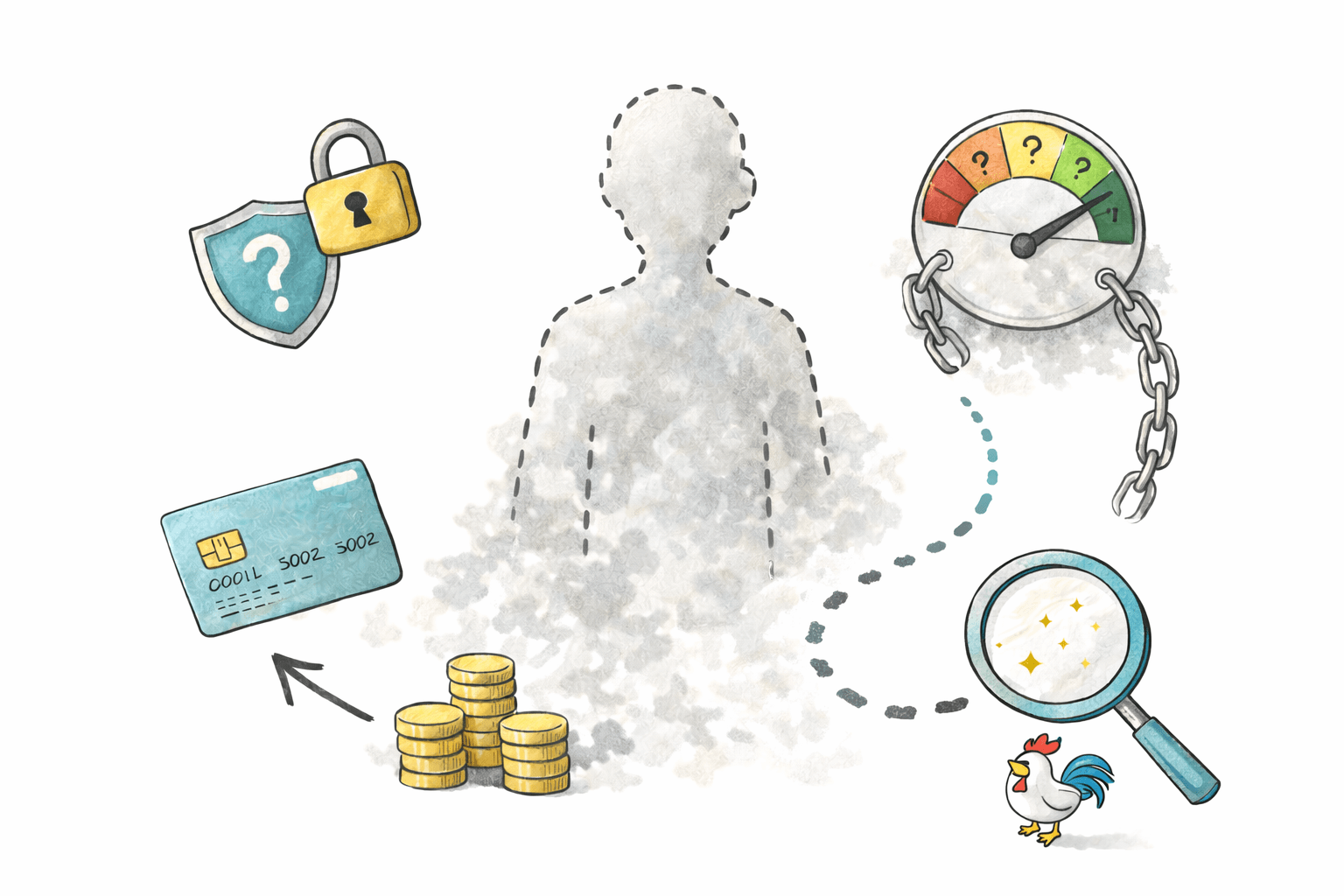
When we talk about being 'credit invisible,' we're referring to a situation where your credit report has very few accounts, or perhaps no accounts at all, that have been reported to the major credit bureaus (Experian, Equifax, and TransUnion). This is often called having a 'thin file' because there isn't enough information for credit scoring models, like FICO and VantageScore, to generate a reliable score.
Credit Invisible
A situation where an individual has little to no credit history reported to the major credit bureaus, making it difficult for lenders to assess their creditworthiness.
This often results in a "thin file" and can hinder access to financial services and favorable rates.
Here's the critical nuance: A thin file isn't neutral. It's often treated as a higher risk than even a file with some past mistakes. Think of it this way: a lender would rather see a bird that has successfully weathered a few storms in its nest (showing resilience and learning) than one with no nest-building history whatsoever. At least with a history, they have something to evaluate. With nothing, it's all guesswork.
"A thin credit file is a neutral starting point"
A thin file signals higher risk - lenders prefer some history over none
Why? Credit scoring models are designed to predict behavior based on past actions. Without any history, you're an unknown quantity, which often translates to 'higher risk' in lending decisions.
This challenge is particularly acute for newcomers to the United States. As we've discussed, your home country's credit history doesn't transfer, meaning you start with an entirely blank slate, regardless of your financial standing elsewhere. Understanding what's on your credit report, or what's not on it, is the first step. If you're curious about how to examine this crucial document, our guide on how to read your first credit report can help you decode the language of your financial past and present. Even if you have very little to see, knowing what each section would contain still matters.
The Hurdles of an Invisible Nest: Daily Impact
The consequences of being credit invisible can ripple through many aspects of your life. It's not just about big loans; it's about everyday necessities and opportunities that seem to require a credit score.
Where Credit Invisibility Hurts Most
- Housing: Landlords frequently check credit reports. A thin file can lead to demands for larger security deposits, requiring a co-signer, or outright rejection, making it harder to find a home for your family.
- Utilities: Setting up electricity, gas, or water often involves a credit check. Expect higher security deposits, sometimes hundreds of dollars, if your credit file is minimal.
- Phone Plans: Want to get a contract phone with the latest smartphone? Without a visible credit history, you might be limited to prepaid plans or forced to pay a hefty deposit.
- Car Loans & Insurance: Getting approved for a car loan, especially with favorable interest rates, becomes significantly harder. Even car insurance premiums can be affected by your credit-based insurance score.
- Employment: Believe it or not, some employers conduct credit checks, especially for positions involving financial responsibility. A thin file could be a quiet hurdle here too.
These aren't just minor inconveniences; they represent real barriers to establishing stability and achieving financial goals. The invisible nest can feel like a cage, preventing you from soaring.
Spreading Your Wings: Gaining Credit Visibility
The good news is that being credit invisible is not a permanent state. You can build a visible, strong credit file. The journey involves both quick starts for visibility and diligent, long-term building. At Credit Roost, we believe in a clear path: Authorized User (AU) tradelines are often the fastest gateway to initial credit visibility, while adding your own accounts ensures durable, sustainable growth.
Building a Sturdy Roost: Durable Credit Builders
Once you have that initial visibility, or if you prefer to start entirely on your own, the next step is to cultivate your own primary accounts. These are the strong, foundational branches of your credit nest that show you are capable of managing credit independently.
AU Tradelines
Quick visibility start
Secured Cards
Build your own history
Credit-Builder Loans
Forced savings + credit
Rent Reporting
Leverage existing payments
- Secured Credit Cards: These are an excellent starting point. You put down a deposit, which becomes your credit limit. You use the card like a regular credit card, making purchases and paying them off. Because your deposit secures the card, lenders are more willing to approve you, even with a thin file. It's a fantastic way to prove you can handle credit responsibly, and our article on Secured Credit Cards delves into this in detail.
- Credit-Builder Loans: Unlike traditional loans, with a credit-builder loan, the money is held in a savings account while you make monthly payments. Once the loan is fully repaid, you get access to the funds. These loans are designed specifically to report positive payment history, establishing a clear record of your ability to pay consistently.
- Rent Reporting: If you pay rent regularly, why not let those payments contribute to your credit history? Services exist that can report your on-time rent payments to the credit bureaus, turning a consistent expense into a credit-building asset.
The key to all these durable builders is consistent, on-time payments. Setting up AutoPay for all your accounts is the easiest way to ensure you never miss a payment, which is the single most important factor in your credit score (making up 35% of FICO scores!).
Nests of Wisdom: Managing Expectations and Risks
While the path from credit invisible to credit visible is clear, it's crucial to manage your expectations. Building credit is a journey, not an overnight flight, and no single strategy guarantees specific results. Here are a few nests of wisdom to keep in mind:
Credit Building Best Practices
- Start with an AU tradeline for quick visibility
- Open your own secured card after gaining visibility
- Make every payment on time, every month
- Keep credit utilization below 30%
- Rely solely on AU tradelines long-term
- Open too many accounts at once
- Miss any payment deadlines
- Max out your credit cards
- Results Vary: The impact of AU tradelines, secured cards, or credit-builder loans can vary depending on the specific credit scoring model a lender uses and your unique credit profile. There are no guaranteed score increases.
- Lenders Look at the Whole Picture: While a stronger credit file helps, lenders also consider income, debt-to-income ratio, and other factors when evaluating applications. A robust credit score is a powerful tool, but it's part of a larger financial landscape.
- Be Patient and Consistent: Sustainable credit growth comes from consistent, responsible behavior over time. The age of your accounts and your payment history are critical components. Keep making those on-time payments, keep utilization low, and watch your credit nest grow stronger.
- Low Utilization is Key: As you build credit, remember to keep your credit utilization (how much credit you're using compared to your available credit) below 30%, ideally even lower. This signals responsible management to lenders.
Real Stories from the Roost: Turning Invisible into Visible
Let's look at how different individuals have navigated the challenge of being credit invisible:
Which path fits your situation?
The Newcomer
Just arrived in the US with no credit history
The Rebuilder
Past credit issues now cleared from report
The Cash-Only User
Always paid cash, no credit footprint
-
Nico's New Nest: Nico recently immigrated to the US, eager to start his new life. He had a great job offer but zero US credit history. He needed a phone contract and an apartment lease, both of which required a credit check. Feeling stuck, Nico was advised to become an Authorized User on his cousin's long-standing credit card with a perfect payment history. Within a month, a tradeline appeared on Nico's credit report, giving him just enough visibility to secure a basic phone contract and get approved for an apartment with a slightly higher deposit. He immediately applied for a secured credit card to begin building his own history, knowing the AU tradeline was a crucial first branch for his nest, not the entire structure.
-
Riley's Rebuild: Riley had made some financial missteps in the past, and while the negative marks had recently fallen off his report, his positive history was very thin. He was essentially credit invisible again, but this time, after a period of poor credit. He wanted to buy a used car but was only offered high-interest loans. Riley decided to take out a small credit-builder loan. Every month, his on-time payments were reported, slowly building a new, positive payment history. Concurrently, he became an AU on his parent's oldest credit card, adding decades of good history to his file. After six months, Riley's credit score had improved enough to qualify for a much more affordable car loan, proving that even a thin file after a rebuild can be strengthened strategically.
-
Tracy's Time-Sensitive Task: Tracy had always used debit cards and paid cash, proud of being debt-free. But when she needed to get a new cell phone plan for a demanding job that required reliable data and international calls, she was shocked to be denied. Her perfect payment habits were 'invisible.' Knowing she needed a solution fast, Tracy's partner added her as an Authorized User to his credit card account. This provided enough immediate credit history to get her approved for the phone plan she needed, allowing her to focus on her new job while she simultaneously started exploring a secured card to build her own independent credit foundation.
Your Flight Plan for Financial Visibility
Building credit when you're starting from scratch might seem daunting, but it's a completely achievable goal. The key is to be proactive and strategic. Here's a simple flight plan to guide you from credit invisible to a visible, strong credit file:
Get free credit reports
Add AU tradeline for visibility
Open secured card or credit-builder loan
Set up AutoPay for all accounts
Monitor monthly and keep utilization low
- Assess Your Starting Point: Get your free annual credit reports from AnnualCreditReport.com. This will show you exactly what (if anything) is being reported about you. Our guide on how to get your free annual credit reports walks you through the process.
- Gain Initial Visibility: Consider an authorized user (AU) tradeline as a potential first step. It may help establish initial credit history visibility and potentially generate a score where there was none before, though results vary by lender and scoring model.
- Start Your Own Accounts: Simultaneously or shortly after gaining initial visibility, open a secured credit card or take out a credit-builder loan. These are your foundational accounts that prove your ability to manage credit independently.
- Make All Payments On Time: This is non-negotiable. Payment history is the most important factor in your credit score. Set up AutoPay whenever possible.
- Keep Utilization Low: Once you have credit cards, aim to keep your balances below 30% of your credit limit.
- Monitor Your Progress: Regularly check your credit reports to ensure everything is accurate and that your efforts are being reflected.
Remember, your credit file is like your financial nest - it needs to be built with strong materials and consistent effort. An invisible nest won't protect you from financial storms, but a visible, well-built one will allow you to weather challenges and attract better opportunities.
Ready to Build Your Credit Nest?
The journey from credit invisible to credit confident is within your reach. It begins with understanding that a thin file isn't just an absence; it's a disadvantage that needs to be addressed. By strategically leveraging tools like authorized user tradelines for immediate visibility and diligently building your own accounts with secured credit cards and credit-builder loans, you can construct a robust financial profile.
Don't let an empty nest hold you back. Take the first step towards establishing your financial presence today. Explore how authorized user tradelines can provide your fastest gateway to credit visibility, and then commit to the durable builders like secured cards and credit-builder loans to ensure your financial nest grows strong and resilient.
If you're new to the US credit system, start with our foundational guide on how credit works in the United States to understand the landscape, then explore the five essential habits for building strong credit.
Action Items for Building Credit
- Get your free annual credit reports to assess your starting point.
- Consider an authorized user (AU) tradeline for fastest initial visibility.
- Open a secured credit card or take out a credit-builder loan to establish your own accounts.
- Set up AutoPay and make all payments on time to build strong payment history.
- Keep credit card utilization below 30% to demonstrate responsible credit management.
- Regularly monitor your credit reports for accuracy and progress.
Frequently Asked Questions
-
What exactly does 'credit invisible' mean?
- It refers to having little to no credit history reported to the major credit bureaus (Experian, Equifax, TransUnion), making it difficult for lenders to assess your creditworthiness.
-
Why is being credit invisible a problem?
- It's not a neutral state; lenders view it as higher risk, leading to difficulties in obtaining housing, utilities, phone plans, loans, and often results in higher deposits or outright rejections.
-
How can I quickly gain initial credit visibility?
- Becoming an authorized user (AU) on a family member's or friend's well-managed credit card is often the fastest way to gain immediate credit history and a potential score.
-
What are durable ways to build my own credit history?
- Opening your own accounts like secured credit cards and credit-builder loans are excellent ways to establish a strong, independent credit history through consistent, on-time payments.
-
Does my home country's credit history transfer to the US?
- No, your credit history from another country generally does not transfer to the US financial system, meaning you start with a blank slate regardless of your financial standing elsewhere. Learn more in our guide on why credit history doesn't transfer.
-
How long does it typically take to build a credit score from scratch?
- While AU tradelines may help generate a score relatively quickly (sometimes within a month or two), building a substantial and strong credit file with your own accounts typically takes several months to a year or more, depending on individual circumstances and responsible credit management.
-
What is the single most important factor in building good credit?
- Consistently making all your payments on time is the most crucial factor, accounting for 35% of your FICO score, demonstrating your reliability to lenders.
Just as a young bird meticulously gathers twigs and weaves them into a secure home, you too can build a credit profile that supports your aspirations. The invisible nest can transform into a welcoming roost, visible to the entire financial flock, ready to offer you better rates, easier approvals, and the freedom to pursue your dreams. Your financial future is waiting for you to take flight.
Disclaimer: The information provided in this article is for educational purposes only and does not constitute financial, legal, or professional advice. Credit reporting practices and scoring models may change over time. Please consult a qualified professional for personalized guidance.