Key Takeaways
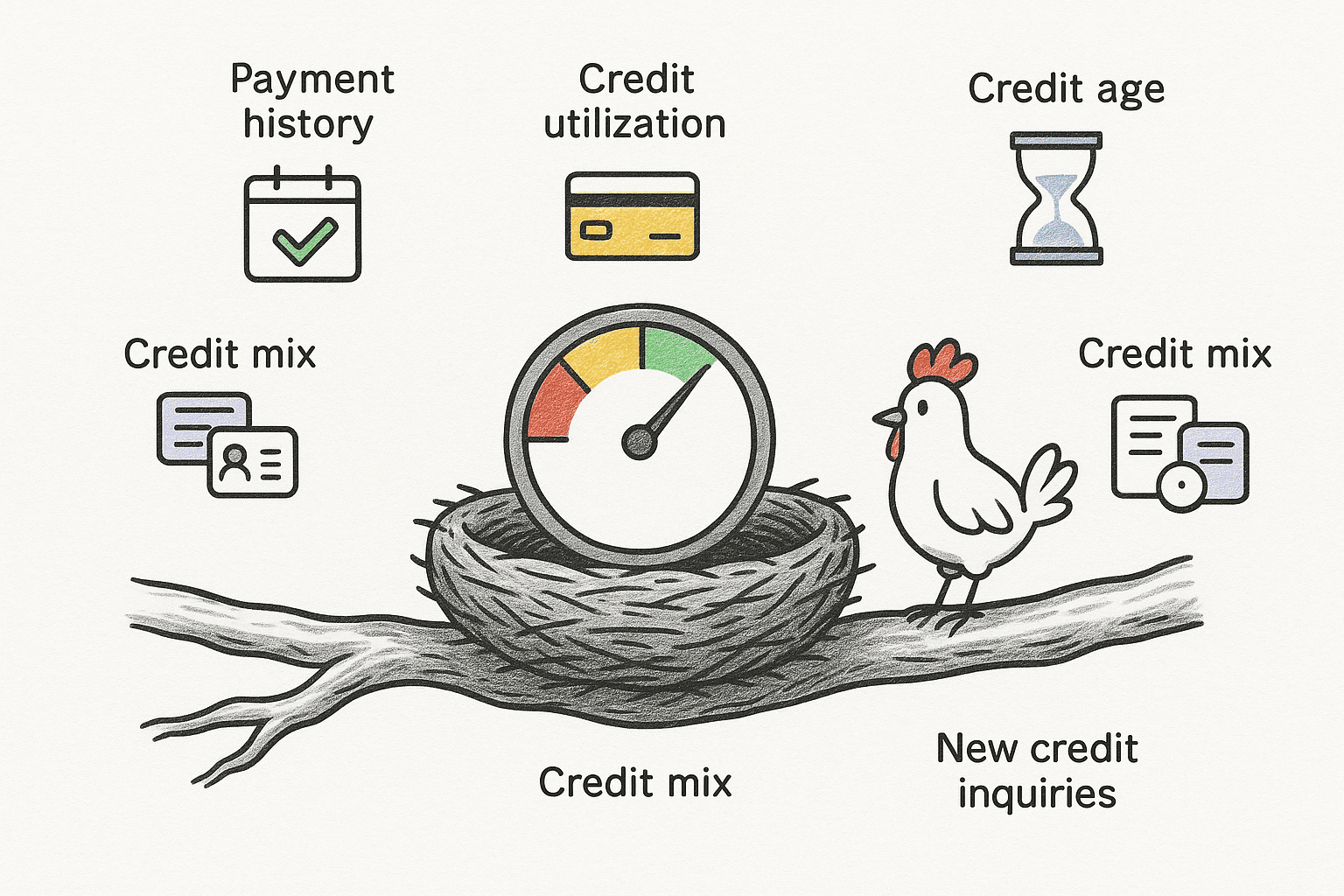
- Your credit score is calculated using five main factors: payment history, credit utilization, credit age, credit mix, and new credit inquiries.
- Payment history, the most significant factor, reflects your consistency in paying bills on time.
- Credit utilization, or the amount of credit you use compared to your total available credit, ideally should be kept below 30%.
- The age of your credit accounts and the variety of credit types (credit cards, loans) also impact your score.
- New credit inquiries can slightly lower your score, so avoid applying for too much credit at once.
- Authorized user (AU) tradelines can accelerate credit age and mix, but responsible spending habits are essential for long-term success.
The 5 Pillars of Credit: Gather Your Building Blocks
Your credit score isn't just a random number; it's a comprehensive assessment of your creditworthiness based on five key factors. Think of these as the main materials you use to build your financial nest. Let's explore each one:
Payment History: The Foundation of a Solid Nest
Think of your payment history as the foundation of your nest. It's the most crucial factor, making up about 35% of your credit score. It reflects your track record of paying bills on time. Lenders want to see that you're reliable and responsible when it comes to repaying debt.
- What counts as payment history? Credit card payments, loan payments (auto, personal, student), mortgage payments, and even utility bills can impact your payment history if they're reported to the credit bureaus. Landlords can also report payments to credit bureaus, with some rent-reporting services also available.
- How does it affect your score? Late payments, even by just a few days, can negatively impact your score. The more recent and frequent the late payments, the greater the damage. On the other hand, a consistent history of on-time payments demonstrates responsibility and builds trust with lenders.
- Example: Nico consistently pays their credit card bills on time and in full each month. Because of this, they have a strong payment history, which significantly boosts their credit score. Riley, on the other hand, has had a few late payments in the past due to forgetting to pay bills on time. This has negatively impacted their credit score.
Credit Utilization: Don't Overcrowd Your Nest
Credit utilization, the second most important factor, accounts for around 30% of your credit score. It refers to the amount of credit you're using compared to your total available credit. Think of it as how much of your nest is already occupied.
- How is it calculated? Credit utilization is calculated by dividing your total credit card balances by your total credit limits. For example, if you have a credit card with a $1,000 limit and a balance of $300, your credit utilization is 30%.
- Why does it matter? Lenders view high credit utilization as a sign of financial distress. It suggests you're relying heavily on credit and may have difficulty repaying your debts. Experts recommend keeping your credit utilization below 30%. Some even suggest aiming for under 10% for the best results. You can delve deeper into this topic by checking out Understanding the 35% Rule and The 30% Rule.
- Example: Nico has a total credit limit of $5,000 across all their credit cards and typically carries a balance of around $500. Their credit utilization is only 10%, which is excellent. Riley, on the other hand, has a total credit limit of $2,000 and often carries a balance of around $1,500. Their credit utilization is 75%, which is hurting their credit score.
Credit Age: A Mature Roost Is a Trusted Roost
The age of your credit history makes up about 15% of your credit score. Lenders want to see that you have a proven track record of managing credit responsibly over time. A longer credit history generally indicates lower risk.
- What factors are considered? The age of your oldest account, the age of your newest account, and the average age of all your accounts are all taken into account.
- How can you build credit age? The best way to build credit age is simply to open accounts and keep them open, even if you don't use them frequently. Avoid closing old accounts, as this can shorten your credit history and negatively impact your score.
- Example: Nico has had a credit card for ten years and another for five years. Their average credit age is 7.5 years, which is a significant advantage. Riley just opened their first credit card six months ago, so they don't have much credit history to speak of.
Credit Mix: A Diverse Nest Shows Financial Savvy
A healthy credit mix contributes about 10% to your overall score. This factor reflects the variety of credit accounts you have, such as credit cards, installment loans (e.g., auto loans, student loans), and mortgages. Lenders like to see that you can manage different types of credit responsibly.
Revolving
Credit cards & lines of credit
Installment
Auto, student, & personal loans
Mortgage
Home loans
-
Why does it matter? Having a mix of credit accounts demonstrates that you can handle various financial obligations. It shows lenders you're not solely reliant on one type of credit.
-
How to diversify your credit mix: If you only have credit cards, consider adding an installment loan, such as a credit-builder loan. If you only have installment loans, consider adding a credit card. Remember, only open accounts that you can realistically manage and repay.
-
Example: Nico has a credit card, an auto loan, and a student loan. This diverse credit mix boosts their credit score. Riley only has a secured credit card. Adding a credit-builder loan could improve their credit mix and potentially increase their score.
New Credit: Avoid Building Too Fast & Crowding
New credit inquiries account for the remaining 10% of your credit score. Each time you apply for credit, such as a credit card or loan, the lender makes a "hard inquiry" on your credit report. Too many hard inquiries in a short period can lower your score, as it suggests you're actively seeking credit and may be a higher risk.
Managing Inquiries
- Space out applications by 6 months
- Use pre-qualification tools (soft pull)
- Apply only for credit you need
- Apply for multiple cards at once
- Open accounts just for the discount
- Panic over a single hard inquiry
-
Soft vs. Hard Inquiries: Soft inquiries, such as when you check your own credit score or when a lender pre-approves you for a credit card, do not affect your score. Hard inquiries only occur when you formally apply for credit.
-
Strategies for minimizing impact: Avoid applying for multiple credit cards or loans at the same time. Space out your applications to minimize the impact on your score. Consider focusing on pre-approved offers, as these often involve soft inquiries.
-
Example: Nico applied for three credit cards and an auto loan within a month. This resulted in multiple hard inquiries and slightly lowered their credit score. Riley only applies for credit when necessary and spaces out their applications.
Tradelines: Supercharging Your Creditbuilding Journey
Now that you understand the five factors that make up your credit score, let's discuss how tradelines can play a role. A tradeline is simply a credit account that appears on your credit report. There are two main types of tradelines: your own accounts and authorized user (AU) accounts.
Tradelines & the 5 Factors: The Domino Effect
AU tradelines primarily impact three of the five factors: payment history, credit utilization, and credit age. They can also influence your credit mix, as they add another credit card account to your credit report. However, they don't directly affect new credit inquiries since you're not applying for credit yourself.
- Important Note: It's essential to remember that while AU tradelines can provide a quick boost, they're not a substitute for building your own credit history. Lenders know the difference between an AU account and an account you've opened yourself. Focusing on your own responsible credit management is crucial for long-term success.
Credit Roost Remodeling: Reallife Success Stories
Let's look at a few scenarios to illustrate how these nesting habits come into play:
-
Nico, the Newcomer: Nico is new to the US and has a thin credit file. They open a secured credit card and become an authorized user on a trusted family member's credit card. Nico consistently pays off their secured credit card balance in full each month and benefits from the positive payment history and increased credit limit from the AU account. This combination helps Nico quickly build a solid credit score.
-
Riley, the Rebuilder: Riley had some financial difficulties in the past and has a few late payments on their credit report. They start by paying all their bills on time and reducing their credit card balances. Riley also takes out a credit-builder loan and makes all payments on time. Over time, Riley's consistent responsible behavior rebuilds their credit score.
-
Maria, the Time-Sensitive Renter: Maria needs to rent an apartment within the next month but has a limited credit history. She becomes an AU on her parents' credit card, which has a long history and a low balance. The AU account quickly improves Maria's credit score, allowing her to qualify for the apartment. Maria then opens a secured credit card to establish her own credit history for the long term.
Cultivating Good Nesting Habits: A Practical How-to
Building a strong credit score is an ongoing process. Here are some practical steps you can take to cultivate good nesting habits:
Nesting Habits Checklist
- Set up autopay for minimum payments
- Pay down balances weekly
- Review credit reports annually
- Keep old accounts open
- Diversify credit mix over time
- Pay all bills on time, every time. Set up automatic payments to avoid late fees and negative marks on your credit report.
- Keep credit utilization low. Aim for under 30% and ideally under 10%. Consider paying down your balances multiple times per month.
- Open a mix of credit accounts. If appropriate for your needs, diversify your credit mix with credit cards, installment loans, or even a secured credit card. You can also look into secured credit cards as a starting point.
- Avoid applying for too much credit at once. Space out your applications to minimize the impact of hard inquiries.
- Monitor your credit report regularly. Check for errors and inaccuracies. You can obtain free copies of your credit reports from each of the three major credit bureaus (Experian, Equifax, and TransUnion) annually. Make sure you are up to date with the information the Meet the Nest Keepers: The 3 Credit Bureaus provide.
Your Financial Nest: Building for the Long Term
Remember, building a strong credit score is a marathon, not a sprint. While AU tradelines can provide a quick boost, the most important thing is to establish your own responsible credit management habits. By paying your bills on time, keeping your credit utilization low, and managing a mix of credit accounts responsibly, you can build a solid credit score and achieve your financial goals.
Explore authorized-user tradelines (your fastest gateway) as you begin, but remember to build long-term strength through secured cards, credit-builder loans, and rent reporting. By doing so, you can create a comfortable and secure financial nest for yourself.
A strong credit score by cultivating good financial habits. With patience, discipline, and a clear understanding of the factors that influence your score, you can achieve your financial goals and build a brighter future.
Frequently Asked Questions
1. What credit score is considered good?
- A good score typically falls between 670 and 739, while 740+ is very good to excellent.
2. How often do credit scores update?
- Typically monthly, as lenders report new balances and payment status to the bureaus.
3. How long does it take to rebuild credit?
- It varies, but you can see improvements within a few months of consistent on-time payments and low utilization.
4. Do all lenders use the same credit score?
- No. Lenders use different models (FICO vs VantageScore) and even different versions of those models.
5. Which factor is the easiest to fix quickly?
- Credit utilization. Paying down a balance is reflected almost immediately (next reporting cycle), whereas payment history takes years to build.
6. Does closing a credit card hurt my score?
- It can. It reduces your total available credit (spiking utilization) and stops the age of that account from growing.
Disclaimer: The information provided in this article is for educational purposes only and does not constitute financial, legal, or professional advice. Credit reporting practices and scoring models may change over time. Please consult a qualified professional for personalized guidance.