Key Takeaways
- Piggybacking is synonymous with becoming an authorized user on a credit card.
- It allows you to ''perch'' on a stronger credit history, gaining immediate visibility.
- Trust between the primary cardholder and authorized user is essential.
- While effective for visibility, durable credit growth requires building your own accounts.
- Be wary of ''buying'' tradelines from strangers, as this practice is increasingly scrutinized by lenders.
- Results vary, and lenders may weigh authorized user accounts differently in their scoring models.
What Exactly is Piggybacking for Credit?
At its heart, piggybacking for credit simply means becoming an authorized user (AU) on another person's existing, well-managed credit card account. When you're added as an authorized user, the account's history, its age, credit limit, and most importantly, its payment history and utilization, typically gets reported to the major credit bureaus (Experian, Equifax, and TransUnion) under your name.
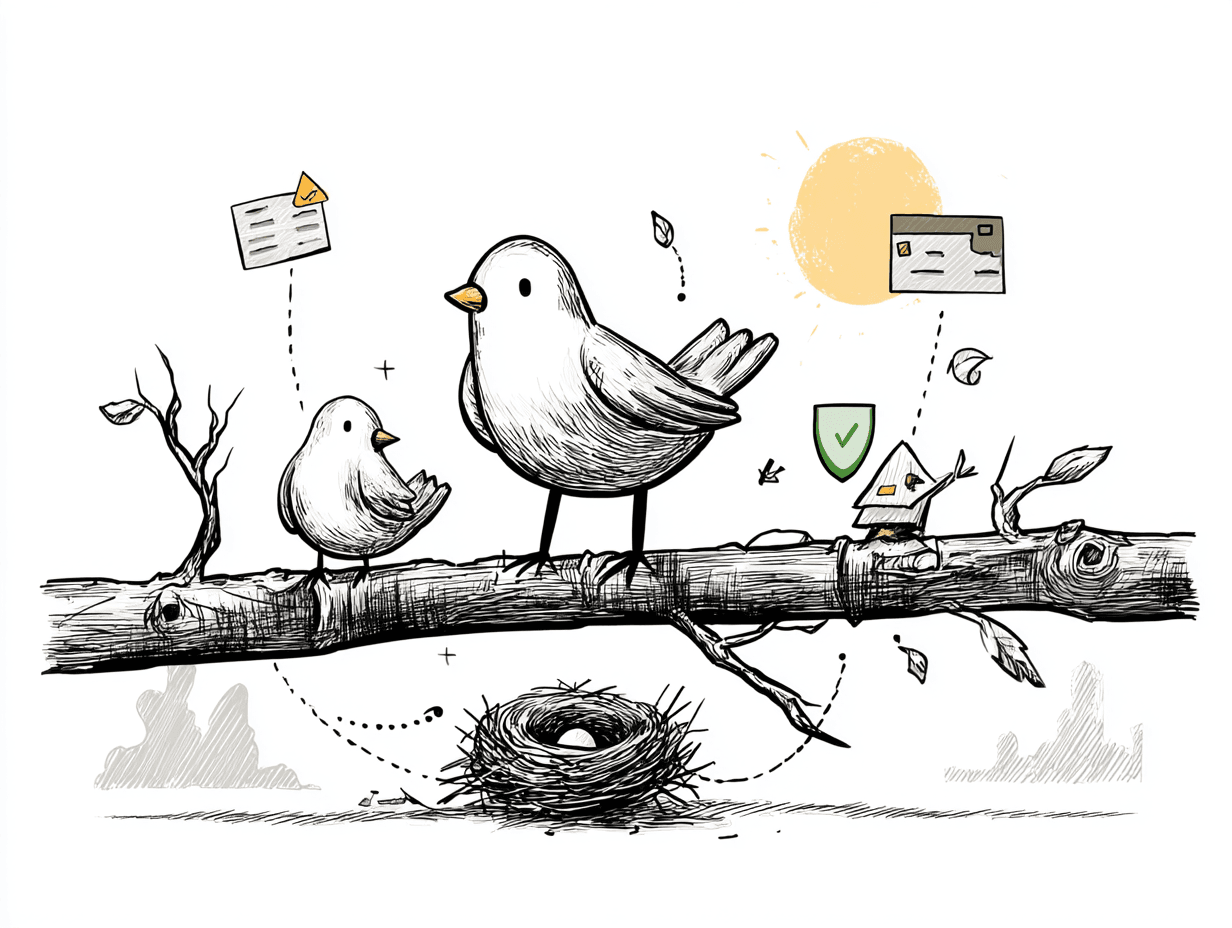
You're 'piggybacking' on the primary account holder's good credit habits. Their responsible financial behavior now reflects on your own credit report. Think of it as a seasoned elder bird lending you a sturdy branch to start your own nest. It provides immediate stability and credit visibility where there might have been none before.
Who Benefits Most from Piggybacking?
For many people, especially those who are credit invisible or have a very thin credit file, piggybacking works well for quickly establishing or improving a credit profile. Take Nico, a young fledgling fresh out of the nest, who needs to rent an apartment or get a cell phone plan. Without a credit history, those essential steps can feel impossible. But if Nico's parent or a trusted relative adds him as an authorized user to an old credit card with a long history of on-time payments and low utilization, that positive history can appear on Nico's report.
That immediate boost can provide the credit visibility needed to open doors that were previously shut. Not all credit scoring models weigh authorized user accounts equally. Some (like certain FICO versions) give them more weight than others (like some VantageScores). Still, the principle holds: positive tradelines help. Understanding how different types of tradelines work and how to read your credit report will help you see the impact clearly.
Important Disclosure: Some lenders and credit scoring models may filter out, discount, or weigh authorized user tradelines differently in their underwriting decisions. Results vary based on lender policies, the specific scoring model used, and your unique credit profile. An AU tradeline does not guarantee loan approval or any specific credit score outcome.
Top 4 Benefits of Piggybacking
Beyond Newbies: Piggybacking for Credit Rebuilders
The benefits extend beyond just new credit builders. Rebuilder Riley, who experienced a financial storm a few years back, might be looking to stabilize their credit score and show lenders a more consistent, positive history. Being added as an authorized user to a relative's impeccably managed card can dilute the impact of past negative marks by adding a strong, positive payment history.
Being an AU adds to the payment history factor (which makes up a significant portion of your credit score). It can even lower your overall credit utilization if the primary account has a high limit and low balance. The method provides rapid exposure to positive credit behaviors and often acts as an efficient gateway to building a stronger credit profile. Meanwhile, you can work on securing your own accounts.
Is this piggybacking opportunity right for you?
The Foundation of Trust: A Cardinal Rule
That said, piggybacking rests entirely on trust. The cardinal rule is simple: trust is everything. You're linking your financial reputation to another person's. For the primary cardholder, there's a risk that an authorized user could misuse the card, though they're generally not legally responsible for unauthorized charges if they report them. More commonly, the risk for the primary user is simply a breach of trust or the potential for their credit utilization to increase if the AU uses the card without careful coordination.
For the authorized user, the risk runs the other direction. The primary cardholder might suddenly mishandle the account, make late payments, max out the card, or close it. Any of those actions could hurt your credit score, just as positive actions would help it. The bottom line: piggybacking can be powerful, but clear communication and existing trust matter.
Trust Rules for Piggybacking
- Choose someone you trust completely
- Set clear communication expectations
- Monitor the account activity regularly
- Have an exit plan if things change
- Pay strangers for tradeline access
- Add someone you barely know
- Ignore changes in account behavior
- Rely solely on AU accounts long-term
Why 'Buying' Tradelines is a Risky Flight
Trust is exactly why 'buying tradelines' has become problematic. The practice involves paying a stranger or company to add you as an authorized user to their credit card, often without any real relationship or intention for you to use the card. While not explicitly illegal in all cases, lenders and credit scoring models are increasingly sophisticated at identifying and often discounting these manufactured relationships. They're designed to reflect genuine financial relationships. When that authenticity is missing, the intended credit boost may be minimal or non-existent, and you risk wasting your money.
For example, some advanced FICO models are designed to identify and filter out 'synthetic' tradelines, recognizing that these don't represent a true credit relationship. This is a practice with significant downsides and should be avoided to protect your financial reputation.
How to Piggyback Wisely: Building Your Nest Strategically
So, if you're considering piggybacking, how do you do it wisely? First, identify a trusted individual, a parent, grandparent, sibling, or close relative, who has a credit card account with a long, positive history. Look for an account that is:
- Aged: Older accounts contribute positively to your average age of accounts.
- High Credit Limit: A higher limit means a lower utilization ratio if the balance is kept low.
- Low Utilization: The primary cardholder consistently uses only a small percentage of their available credit (ideally under 10-30%).
- Perfect Payment History: No late payments, ever. This is the most crucial factor.
The Ideal Piggybacking Account
Gold StandardLook for: 10+ years of age, perfect payment history (never late), high credit limit ($10k+), and consistently low utilization (<10%).
Once you've identified a potential account, have an open and honest conversation with the primary cardholder. Explain your goals and clarify that you understand the responsibility involved. Ensure they are comfortable with the arrangement and that you both agree on terms, even if you never intend to use the card. Remember, this is a gateway to visibility, but true, durable credit growth comes from managing your own accounts. Consider opening a secured credit card or a credit-builder loan simultaneously to start building your own payment history. Setting up AutoPay on your new accounts ensures you never miss a due date.
Piggybacking: A Smart Start, Not a Permanent Roost
Piggybacking is a powerful tool for credit building, offering an accelerated path to credit visibility for many. It's an efficient credible gateway to a visible credit file, providing a strong foundation upon which you can build. However, true long-term strength relies on your own primary accounts and habits. Once you have that initial boost, make sure to layer in your own credit-building activities, such as consistently making on-time payments, keeping your credit utilization low, and eventually diversifying your credit mix. Don't just perch on a branch; start weaving your own nest with the materials you gather yourself. Understanding the five factors that shape your credit score will guide your journey. If you're ready to explore how an authorized user tradeline could be your efficient gateway, or you're curious about building long-term strength with secured cards, credit-builder loans, or rent reporting, we're here to guide you.
Get added as Authorized User
Open your own Secured Card
Build 6+ months of history
Graduate to Unsecured Credit
Diversify Credit Mix
Frequently Asked Questions
1. Does piggybacking always work to improve credit scores?
- While piggybacking on a well-managed account generally helps, results vary by individual, credit bureau, and the specific scoring model used by lenders. Some lenders may weigh authorized user accounts less heavily than primary accounts, especially if they appear to be a 'piggyback' account without other credit history.
2. How long does it take to see results from piggybacking?
- Typically, positive authorized user account information should appear on your credit report within 30 to 60 days after you are added to the account, assuming the primary cardholder's issuer reports AU activity to the bureaus.
3. Can an authorized user be removed from an account?
- Yes, the primary cardholder can remove an authorized user at any time by contacting their credit card issuer. Once removed, the account history associated with the authorized user generally disappears from their credit report.
4. Is piggybacking legal?
- Yes, legitimate authorized user relationships are completely legal. We explore the laws protecting this strategy in Are Tradelines Legal?. Adding a family member or trusted individual to your account is a common practice. The concern arises when individuals buy tradelines from strangers, which can be viewed as an attempt to artificially inflate a credit score and may be discounted by lenders.
5. What's the ideal credit card account to piggyback on?
- The best account to piggyback on has a long, positive payment history, a high credit limit, and very low credit utilization (the primary cardholder uses a small percentage of the available credit).
6. Does being an authorized user mean I'm responsible for the primary cardholder's debt?
- No, as an authorized user, you are typically not legally responsible for the debt incurred on the account. That responsibility falls solely to the primary account holder. However, misusing the card can strain the relationship and cause issues for the primary user.
7. Can I piggyback on multiple accounts?
- While theoretically possible, piggybacking on multiple accounts isn't necessarily more beneficial after a certain point and might even be seen as a red flag by some lenders if it's the only type of credit on your report. Focus on quality over quantity and prioritize building your own primary accounts.
Just as a young bird learns to build its own strong nest after a period of perching and observing, you can use piggybacking as a smart first step. It's a way to gain essential visibility and learn the rhythms of responsible credit management. But remember, the most magnificent, resilient nests are always those you build with your own diligent effort. Use this powerful gateway wisely, and then embark on the journey of strengthening your own credit roost for the long haul. Remember, this information is for educational purposes only and not financial or legal advice. Credit outcomes vary; lenders and models may treat authorized user accounts differently.
Disclaimer: The information provided in this article is for educational purposes only and does not constitute financial, legal, or professional advice. Credit reporting practices and scoring models may change over time. Please consult a qualified professional for personalized guidance.