Key Takeaways
- Begin 6-12 months out by checking all three credit reports for errors and disputing them promptly.
- Prioritize on-time payments and aim for credit utilization below 10-30% across all accounts.
- Consider authorized user tradelines as a potential gateway for credit visibility, especially for thin files, but always pair them with your own durable credit-building accounts.
- Avoid opening new credit or making large purchases in the months leading up to a mortgage application.
- Lenders typically use your middle FICO score, so ensure all three bureaus are optimized.
- Understand and manage your Debt-to-Income (DTI) ratio, as it's crucial for mortgage approval.
The Blueprint for Your Dream Home: A 6-12 Month Credit Preparation Timeline
Before any lender considers extending you a mortgage, they want to see a clear, reliable financial history. Think of this as the architectural blueprint of your financial stability. This process is not a quick fix. It is a 6 to 12-month mission to optimize each part of your credit profile.
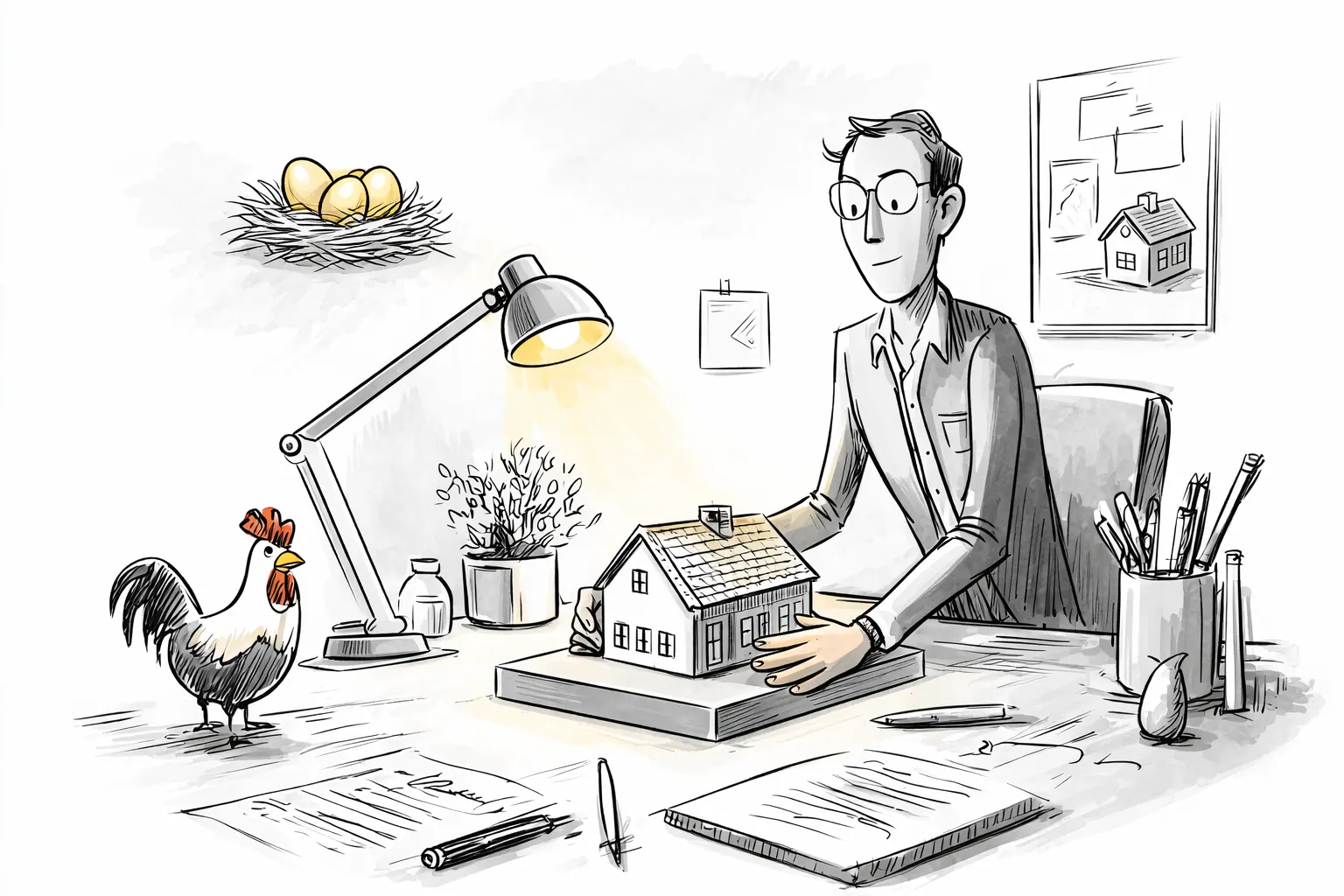
Your first, crucial step is to obtain and review all three of your credit reports from Experian, Equifax, and TransUnion. You can do this for free, once every 12 months, at AnnualCreditReport.com. As you go line by line, look for inconsistencies and errors. Common issues include wrong personal details, unfamiliar accounts, or inaccurate payment statuses. Even small errors can affect your score and your mortgage eligibility.
Set your mortgage application target
Pick your intended application month first, then work backward through each prep milestone.
Once your target month is defined, every credit decision can be sequenced around that date instead of made reactively.
Weaving a Stronger Credit Nest: Key Pillars for Mortgage Success
Once your reports are clean, it’s time to actively build and reinforce the structure of your credit nest. This involves focusing on the core elements that credit scoring models prioritize, ensuring they are as robust as possible for your mortgage application.
Clean your reports
Dispute inaccuracies across all three bureaus.
Stabilize utilization
Lower balances before statement dates.
Protect payment history
Keep every account current each month.
Freeze risk
Avoid new debt before underwriting.
This sequence keeps your profile moving from repair to optimization to stability, which is exactly how lenders evaluate risk.
1. The Power of On-Time Payments: Your Unbroken Record
2. Credit Utilization: Keeping Your Branches Unburdened
To achieve this, you might pay down credit card balances aggressively in the months before applying, or even make multiple payments within a billing cycle to ensure a low reported balance. This demonstrates to lenders that you are not reliant on your credit limits and can manage your debt effectively. This also positively impacts your debt-to-income (DTI) ratio, another critical factor for mortgage lenders, as lower monthly payments on revolving debt means more of your income is available for your new home loan.
3. Length of Credit History: The Wisdom of an Old Oak
4. Credit Mix: A Diverse Ecosystem for Your Home
5. New Credit & Inquiries: Don't Disturb the Branches
In the months leading up to your mortgage application, avoid opening any new credit accounts or applying for loans, unless absolutely necessary. Each new application results in a hard inquiry on your credit report, which can cause a slight dip in your score (typically 5-10 points per inquiry) and signal to lenders that you might be taking on additional debt. While these inquiries usually only impact your score for about a year, multiple inquiries in a short period can raise concerns about your financial stability.
Strategic Boosts for Your Mortgage Nest: The Role of Tradelines and Builder Loans
Even with good planning, some profiles need more immediate support to meet mortgage requirements. That is where tools like authorized user (AU) tradelines and credit-builder loans can help, as supplements to consistent credit habits.
Authorized User (AU) Tradelines: Borrowing a Sturdy Branch
"An AU tradeline by itself guarantees mortgage approval."
A tradeline can strengthen visibility, but lenders still evaluate your own debt load, payment discipline, and DTI.
Why?
Treat AU support as a tactical layer, not a substitute for durable accounts in your own name.
The strongest applications combine tactical boosts with repeatable behavior that underwriters can trust.
Credit-Builder Loans and Secured Cards: Building Your Own Branches
While tradelines offer a quick gateway, durable credit strength comes from building your own accounts. This is where tools like credit-builder loans and secured credit cards shine. A credit-builder loan is designed specifically to help you establish a positive payment history. You make payments into a savings account, and once the loan is paid off, you receive the funds. These consistent, on-time payments report to the credit bureaus, building a solid record of responsibility.
Similarly, a secured credit card requires a cash deposit, which typically acts as your credit limit. This eliminates risk for the issuer and makes it accessible even if you have poor or no credit. By using the card responsibly and paying your balance in full each month, you're actively creating your own positive payment history and utilization record. These accounts are vital for demonstrating to mortgage lenders that you can independently manage credit and are actively cultivating your own strong financial habits. Coupled with rent reporting, which allows your on-time rental payments to contribute to your credit history, these tools lay the groundwork for sustainable credit growth.
Audit tri-bureau reports
Fix errors and establish baseline scores.
Optimize utilization and payment consistency
Lower balances before statement cycles.
Strengthen account mix
Add durable builders only if needed.
Lock profile before underwriting
Avoid new debt and preserve stability.
Real Stories from the Flock: Credit Prep in Action
Let's look at how this preparation plays out for different individuals on their journey from nest to home.
Scenario 1: Nico, the Newcomer, Building from Scratch
Nico had recently moved to the U.S. and, like many newcomers, had a very thin credit file, just a single secured credit card opened six months prior. He dreamed of buying a home in two years, but his current credit score was too low, and his file lacked depth. To accelerate his progress, Nico decided to be added as an authorized user to a family member's long-standing credit card with a high limit and perfect payment history. After one to two reporting cycles, that tradeline appeared across his credit bureaus, increasing his average account age and available credit. Simultaneously, he applied for a credit-builder loan, ensuring he was actively creating his own payment history. He also enrolled in rent reporting. Over the following months, his scores trended upward, and his file, though still young, showed a healthier mix of accounts, which can improve mortgage readiness depending on lender criteria.
Scenario 2: Riley, the Rebuilder, Mending Old Branches
Riley had some financial difficulties a few years back, resulting in a few late payments and a collection account. Now stable, Riley was determined to buy a home. Their 12-month plan began with pulling all three credit reports and immediately disputing an old medical bill that had been inaccurately reported as a collection. Simultaneously, Riley focused ruthlessly on paying down existing credit card debt, ensuring all utilization was below 15%. They kept all existing accounts open to preserve their length of history, even if they had a small balance. Rather than opening new credit, Riley focused on proving consistent, on-time payments on all their active accounts. By the time they applied, their score had improved significantly, which typically supports stronger pricing competitiveness, even with older blemishes still present.
Scenario 3: Tanya, Time-Sensitive, Needing a Possible short-term lift
Tanya found the perfect home and needed to apply for a mortgage within six months. Her credit score was decent but could be better, primarily due to a credit card with high utilization (about 60%). Her primary goal was to lower that utilization dramatically. Tanya took a small personal loan from a trusted relative to pay off the high-balance credit card completely. She then continued to use the card for small, essential purchases, paying it off in full multiple times a month to keep the reported balance at zero. She also set up payment alerts for all her bills. The rapid utilization reduction was followed by score movement over two billing cycles, which may have strengthened her overall mortgage positioning.
Across all three stories, the pattern is consistent:
Mortgage Prep Discipline
- Sequence actions by application date, not emotion
- Keep utilization low before statements report
- Preserve account age and payment consistency
- Track DTI every month before underwriting
- Open new credit lines in the final prep window
- Assume one score or one tradeline solves everything
- Ignore bureau-level differences until application week
- Change spending patterns sharply before loan pull
Use these as guardrails so your profile improves in a controlled way instead of through last-minute improvisation.
Your Action Plan for a Stronger Foundation
The journey from dreaming of a home to holding the keys is a testament to perseverance and smart financial planning. By focusing on these actionable steps, you can cultivate a credit profile that stands strong and resilient, ready to support the weight of your biggest financial aspiration.
- Inspect Your Nest: Pull your three free credit reports and dispute any errors immediately. This is the bedrock of your credit cleanup.
- Payment Punctuality: Make every payment on time, every single time. It's the most impactful habit you can cultivate.
- Lighten the Load: Keep your credit utilization as low as possible, ideally under 10%, across all revolving accounts.
- Strategic Branches: If your credit file is thin or needs additional support, consider an authorized user tradeline as a fast gateway for credit visibility. Remember to pair it with your own durable credit-building efforts.
- Build Your Own Roost: Actively establish your own accounts, such as secured credit cards or credit-builder loans, and utilize rent reporting to build a robust, independent payment history.
- Stay Still: Avoid opening new credit accounts or applying for other loans in the 6-12 months before your mortgage application.
- Know Your Numbers: Understand your DTI ratio and work to lower it by paying down existing debts.
Monthly Mortgage-Readiness Checklist
When this checklist stays consistent for several cycles, underwriting usually feels smoother and more predictable.
Keep this DTI target in view while preserving cash flow; score gains matter most when affordability metrics stay stable.
Discloure
Some lenders and credit scoring models may filter out, discount, or weigh authorized user tradelines differently in their underwriting decisions. Results vary based on lender policies, the specific scoring model used, and your unique credit profile. An AU tradeline does not guarantee loan approval or any specific credit score outcome.
Frequently Asked Questions
What's the ideal credit score for a mortgage?
While FHA loans can accept scores as low as 580 with a 3.5% down payment, and conventional loans often require 620+, an "ideal" score for a mortgage is typically 740 or higher. This range often improves your ability to compete for lower interest rates and stronger loan terms, depending on lender and loan product.
How long does it take to prepare my credit for a mortgage?
It generally takes 6 to 12 months to significantly improve and prepare your credit for a mortgage. This timeframe allows for errors to be disputed, positive payment history to accumulate, and utilization to be strategically lowered without rushing or making impulsive decisions.
Can a tradeline really help with a mortgage application?
An authorized user (AU) tradeline may help, especially for individuals with thin credit files or those needing near-term support around minimum score requirements. It works by adding positive payment history, increased available credit, and older account age to your report. However, impact varies by lender and credit model, and it should always be part of a broader strategy that includes building your own credit accounts.
Should I pay off all my debts before applying for a mortgage?
While paying off all debts is ideal, it's not always necessary. Prioritize paying down high-interest credit card debt to lower utilization and improve your Debt-to-Income (DTI) ratio. Keeping some installment loans (like auto or student loans) open with consistent, on-time payments can actually help your credit mix, as long as the payments are manageable within your DTI.
What is Debt-to-Income (DTI) and why does it matter?
Debt-to-Income (DTI) is a ratio that compares your total monthly debt payments to your gross monthly income. Mortgage lenders use DTI to assess your ability to manage monthly payments and repay debt. A lower DTI indicates you have more disposable income available for your mortgage, making you a less risky borrower. Most lenders prefer a DTI below 36-43%, depending on the loan type.
How many credit inquiries are too many before a mortgage?
While a few hard inquiries can slightly lower your score, multiple inquiries for different types of credit in the months leading up to a mortgage application can be a red flag. For mortgage applications specifically, most credit scoring models allow for "rate shopping," treating multiple mortgage-related inquiries within a certain window (e.g., 14-45 days) as a single inquiry. However, it's best to limit all other new credit applications entirely during your mortgage preparation period.
From Your Nest to Your Forever Home
Securing a mortgage isn't just a financial transaction; it's a pivotal moment in your life, marking the transition from a temporary nest to a permanent home. By taking the time to meticulously prepare your credit, you're not just improving numbers on a report; you're actively building a stronger foundation for that home. You're demonstrating to lenders that you are a reliable, responsible borrower, which can help you compete for stronger rates and terms. For newcomers building a first credit history and rebuilders mending past challenges, the path to homeownership is within reach with diligence and strategic credit building.
Remember, your credit journey is unique. We're here to help you understand your options, whether it's exploring authorized-user tradelines for near-term credit visibility or guiding you toward durable builders like secured cards and credit-builder loans for sustainable, long-term growth. Start weaving that strong foundation today, and prepare to welcome yourself home.