Key Takeaways
- Your statement closing date, not your due date, sets the balance that reaches the credit bureaus.
- Paying down before the statement date is what makes a low number get reported.
- The statement date is the snapshot moment; the due date only protects your payment history.
- A single-digit reported balance (1 to 9 percent) tells the cleanest story to scoring models.
- Timing pays a small balance before the close, then clears the rest before the due date.
Two Dates, Two Jobs: Statement vs Due
"Paying on the due date is the best thing for my score."
The statement date determines the balance reported to bureaus, affecting utilization well before the due date.
Think of it this way: the statement date is when an inspector comes by to see how full your nest currently is. You want that inspector to see a tidy, well-managed home, not an overflowing one. If you wait for the due date to clear a large balance, that large balance was almost certainly reported on the statement date already, so the high number is locked in for the month.
Here is the mechanic in numbers. Say your card has a $1,000 limit and you spent $500 this month. Your statement closes on the 15th, and payment is due on the 10th of the following month. Pay that $500 on the 9th of next month and you stayed on time, but the bureaus already got a report on the 15th showing 50 percent used ($500 / $1,000). The number is set. Pay the same $500 before the 15th, say on the 12th, and the statement closes near $0, and that low figure is what reports. Same spending, same on-time record, very different reported balance. That is the entire tactic.
The Pre-Statement Payment: Reporting a Low Number
The tactic asks for one shift in mindset: pay down your balance before the statement closing date, not just before the due date. That lets your issuer report a lower (or near-zero) balance to the bureaus, which is what a low reported utilization ratio comes down to. The spending can stay the same. Only the timing of the payment changes.
Here’s how to put this into practice:
- Find Your Statement Date: Look at your credit card statement or log into your online account. You'll see a 'statement closing date' or 'billing cycle end date'. Mark this on your calendar. This date often stays the same month-to-month, but it's good to double-check.
- Monitor Your Spending: Throughout your billing cycle, keep an eye on how much you're spending. Don't let your balance creep too high, especially as you approach the statement date.
- Make Mid-Cycle Payments: Instead of waiting for the due date, make a payment (or multiple payments) a few days before your statement is scheduled to close. This doesn't have to be the full balance; even paying down a significant portion can make a big difference.
For example, if your limit is $2,000 and you charged $1,000, that is 50 percent. If your statement closes on the 20th, make a $900 payment on the 17th. When the statement closes on the 20th, it shows a $100 balance ($100 / $2,000 = 5 percent), far below 50. You then clear the remaining $100 before the due date. Two payments, one number reported.
Cycle Starts
Spending period begins.
Strategic Payment
Pay balance down to 1-9% BEFORE statement closes.
Statement Closes
Issuer reports this low balance to bureaus.
Due Date
Pay any remaining small balance to avoid interest.
What Number Should You Aim to Report?
Once you control the snapshot, the next question is what figure to land on. The 30 percent guideline is a floor, not a target. When you are timing payments deliberately, you can do better, because you decide what the statement shows.
Scoring models tend to favor a very low reported balance, ideally in the 1 to 9 percent range. A small reported number signals that you have room to spare and are not leaning on credit to get by. Since the timing tactic lets you choose the figure, aim the snapshot at single digits rather than just squeaking under 30.
Real-World Scenarios: Nico, Riley, and the Timely Payer
Let’s see how this payment timing plays out for different people building or rebuilding their credit nests.
- Time-Sensitive Tasha: Tasha is applying for a mortgage in three months and wants the cleanest possible file before lenders pull her score. One card tends to carry a higher balance. For the next three cycles she pays each card down to a small balance a week before its statement date, so every snapshot reports a low number. By the time her lender pulls credit, the recent statements all show tidy figures. The spending did not change. The timing did.
Payment Timing Scenarios
The Newcomer (Nico)
New card, $500 limit. Spends $250 (50%).
The Rebuilder (Riley)
High utilization dragging score down.
Mortgage Prep (Tasha)
Needs peak score for loan application.
Potential Pitfalls and Practical Tips
While highly effective, implementing this strategy requires a bit of awareness:
- Don't Forget the Due Date: Even with pre-statement payments, always ensure your minimum payment (at least) is made by the actual due date to avoid late fees and negative marks on your payment history.
- Consider a Small Reported Balance: As mentioned, sometimes reporting a very small balance (1-2%) is better than 0% for some scoring models, as it shows active, responsible use. If you pay everything off before the statement closes, you might report 0% utilization, which is still excellent but potentially not peak optimization for every model.
- Automate Reminders: Set up calendar alerts a few days before each card's statement closing date to review your balance and make a strategic payment. Most credit card apps also allow you to see your current balance easily.
- Don't Overextend: This strategy helps report low utilization, but it doesn't mean you should spend more than you can afford. Always ensure you can comfortably pay off the balance you're accumulating.
- Multiple Cards: If you have several cards, spread your spending, or apply this strategy to your cards individually to ensure overall low utilization.
- Pay strategic balance before statement date
- Set calendar alerts
- Keep small balance (1%) for activity
- Wait until due date for large balances
- Spend more than you can repay
- Report 0% on every single card forever
Where Timing Fits in the Bigger Picture
Timing your payments around the statement date is a precise, repeatable habit that gives you control over one number lenders rely on. It works on every revolving card you hold, and the effect shows up within a cycle or two.
Disclosure
Some lenders and credit scoring models may filter out, discount, or weigh authorized user tradelines differently in their underwriting decisions. Results vary based on lender policies, the specific scoring model used, and your unique credit profile. An AU tradeline does not guarantee loan approval or any specific credit score outcome.
The Calendar Is the Lever
The single move worth remembering: find your statement closing date, pay the balance down a few days before it, then clear the rest by the due date. Meeting deadlines protects your payment history. Beating the statement date controls the number lenders see. Those are two separate jobs, and the timing tactic handles the second one.
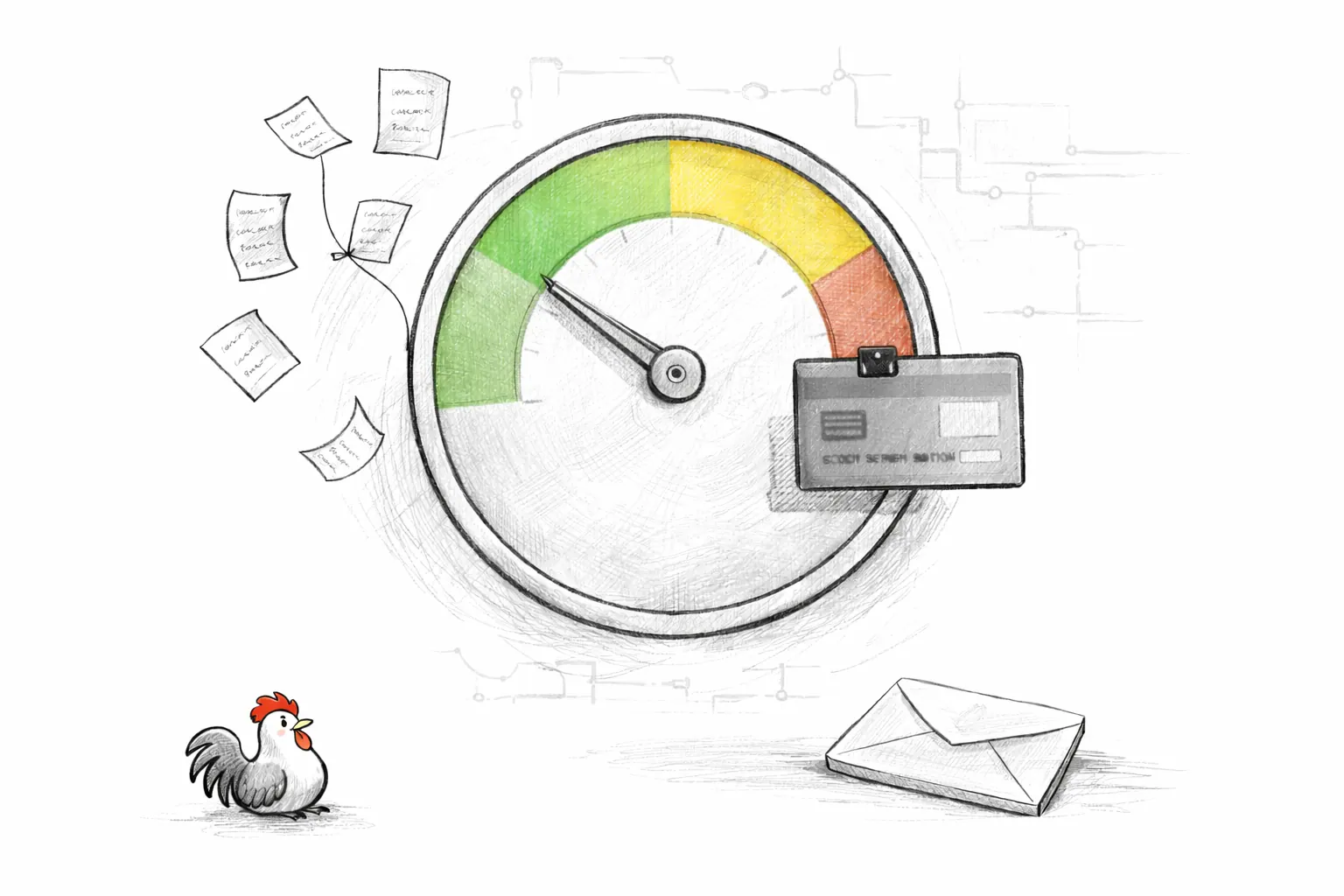
Nico, Riley, and Tasha all did the same simple thing: they paid before the snapshot, not just before the deadline. Mark the date, set the reminder, and the reported number stops being a surprise.
Frequently Asked Questions
1. What's the difference between statement date and due date?
- Your statement date is when your credit card issuer closes your billing cycle and reports your balance to credit bureaus. Your due date is the deadline to make your minimum payment (or full payment) to avoid late fees and negative marks on your payment history.
2. Does paying my credit card bill multiple times a month help?
- Yes, absolutely! Making multiple payments throughout the month, especially before your statement closing date, can significantly reduce your reported balance and thus lower your credit utilization, leading to a better credit score.
3. Is zero utilization good for my credit score?
- While very low utilization is excellent, consistently reporting 0% utilization on all your cards might not always be the absolute best for your score. Some credit scoring models prefer to see a small amount of reported utilization (e.g., 1-9%) to show active, responsible use. However, 0% is still far better than high utilization.
4. How often do credit card companies report to credit bureaus?
- Most credit card companies report to the credit bureaus once a month, typically around your statement closing date. This is why paying before this date is so critical for managing your utilization.
5. What if I can't pay my entire balance before the statement date?
- Even if you can't pay the entire balance, pay down as much as you can before the statement date. Every dollar you reduce lowers your reported utilization, which will still be beneficial for your credit score compared to letting a higher balance report.
6. How can I find my credit card's statement closing date?
- You can find your statement closing date on your monthly credit card statement, usually labeled as 'statement closing date' or 'billing cycle end date,' or by logging into your online credit card account.