Key Takeaways
- A 30-day late, 60-day late, and 90-day late are not minor label changes. Each stage usually signals a more serious risk to lenders and scoring models.
- The best response depends on the stage of delinquency, whether the account is now current, and whether the reporting is accurate.
- A 30-day late may still leave room for goodwill in the right case, while 60 and 90-day lates usually require a more defensive recovery plan.
- As a late payment ages into deeper delinquency, the risk expands beyond score loss into fees, collections, denials, and tougher underwriting.
- The strongest recovery pattern usually comes from current payments, lower balances, accurate reporting, and durable accounts in your own name.
What 30, 60, and 90 Days Late Usually Signal
People get into trouble when they treat these stages like cosmetic updates. In practice, each one tells lenders something different.
A 30-day late usually says one of two things: either the payment slipped once, or the borrower was already struggling and the first visible crack has now appeared. That is bad, but it can still look recoverable if the account is brought current quickly and the rest of the file is solid.
A 60-day late usually tells the lender the problem did not stop after the first miss. The account stayed unresolved long enough for the lender to see a continuing issue. That tends to look less like an accident and more like real stress or disorganization.
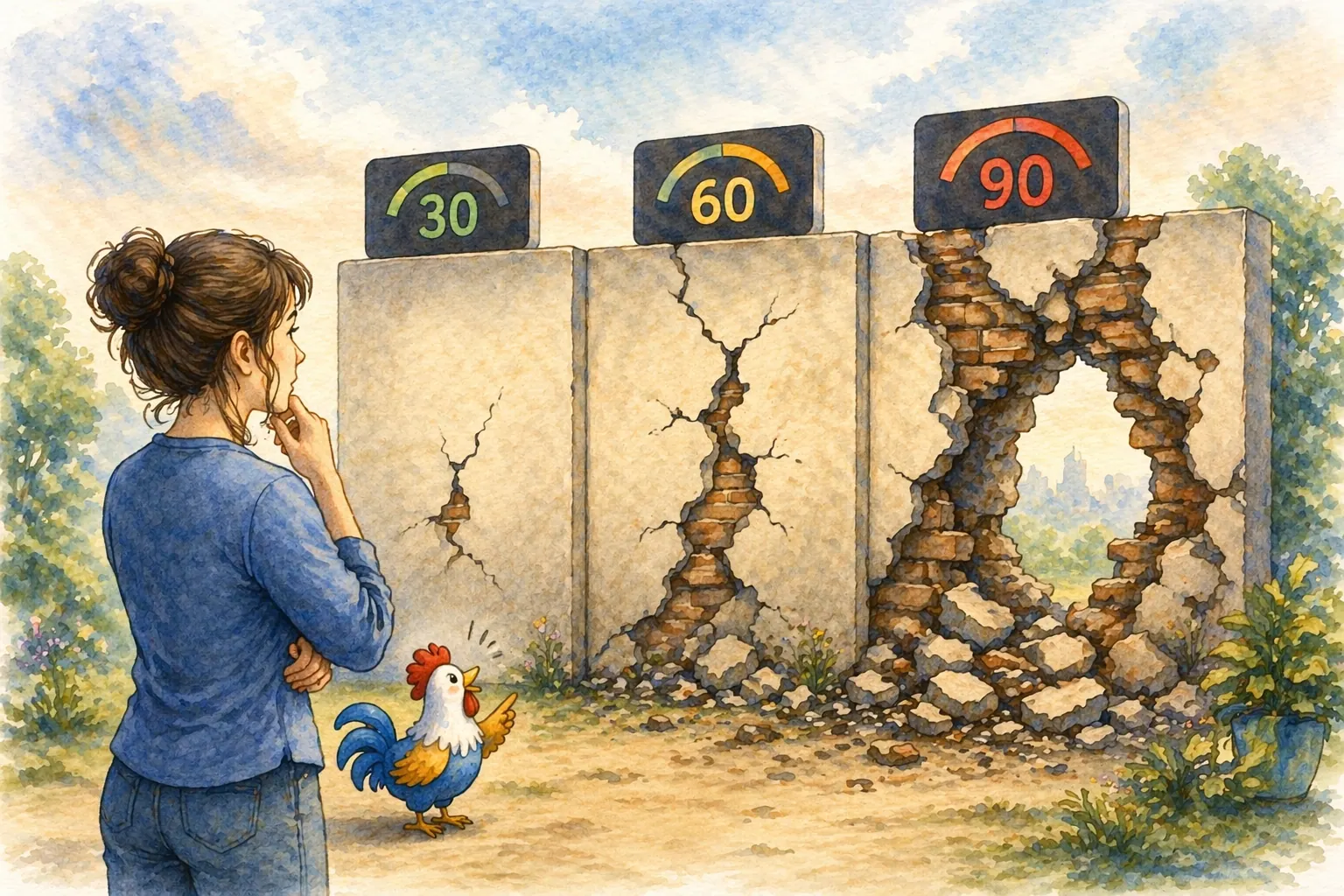
A 90-day late often moves the file into a much more serious zone. At that point, the lender may start internal recovery steps, reduce trust sharply, or prepare for collections or charge-off activity depending on the account type and the broader history.
It also helps to be precise about the timeline. A 30-day late means the account crossed the first real reporting threshold. A 60-day late means another cycle passed unresolved. A 90-day late means many lenders start reading the file very differently. The mark may stay on the report for years either way, but the deeper stage usually carries more weight up front.
Stage 1
The file now shows a real delinquency, but the account may still look recoverable if the issue is isolated and corrected quickly.
Stage 2
The account stayed unresolved through another cycle, which often signals higher risk to scoring models and underwriters.
Stage 3
The delinquency now looks severe, and the risk of collections, charge-off activity, or hard denials usually rises further.
Stage 4
Recovery often becomes less about a quick fix and more about damage control, documentation, and rebuilding.
That does not mean every file gets hit in exactly the same way. Outcomes depend on what else is in the report, how strong the file was before the delinquency, and whether the account has now stabilized. Still, the pattern is clear. The later the delinquency, the harder the file usually is to defend.
Why the Score Damage Usually Escalates
People want a neat point-drop formula, but credit does not work that neatly. There is no honest universal rule that says every 30-day late costs exactly one number, every 60-day late costs another, and every 90-day late costs a third. Files are too different for that.
What you can say with confidence is this: a deeper delinquency usually creates a worse scoring event because it reflects a longer and more serious break in payment behavior.
The damage also tends to feel bigger when the borrower started with decent credit. A cleaner profile has more room to fall, so the delinquency can look especially harsh at first. Prior good behavior may help later, but it rarely prevents the initial hit.
That is also why generic point-drop examples only go so far. They are only illustrations. The exact hit depends on the file you started with, what else is reporting, and whether the account has already stabilized.
How the Real-World Cost Often Grows After 60 and 90 Days
The score hit is only part of the story.
The deeper the delinquency gets, the more likely you are to see secondary damage:
- late fees stack up
- penalty APRs or tougher account terms can show up
- approvals for new credit get harder
- landlords and underwriters may get more cautious
- the lender may escalate internally or send the debt toward collections
That is why a 90-day late can feel much worse than the score drop alone. It is not just a number problem anymore. It can affect borrowing cost, flexibility, housing options, and the tone of every future underwriting review.
A lot of people make the same mistake here. They act like there is still time after the account has already rolled forward twice. That delay is often what turns a rough month into a much more expensive file problem.
The Right Response Is Different at Each Stage
A lot of online advice treats every late payment like the same problem. That usually backfires.
Decision Rule
Treat a 30-day late as a fast-response problem, a 60-day late as a stabilization problem, and a 90-day late as a damage-control problem. The tactics should change with the stage.
If you are dealing with a 30-day late, the account may still be close enough to the incident that a fast correction, a clean payment streak, and in the right case a goodwill request can matter. That does not guarantee removal, but the file may still support a narrower recovery strategy.
If the account is now 60 days late, the priority shifts. At that point you need to focus on bringing the account current, stopping further progression, and getting very clear on whether the reporting is accurate. If the account is wrong, dispute it. If it is right, stop pretending it is just a small oversight and move into a more serious recovery plan.
At 90 days late, the problem is usually no longer about a quick adjustment. It is about containment. You need to know whether the account is headed toward collections, whether a balance remains unresolved, and what written documentation you need before you pay, settle, or negotiate anything.
Before you choose any of those moves, figure out why the late payment happened. Sometimes it was a one-time miss. Sometimes it came from job loss, medical bills, or a budget already breaking down. If you do not separate oversight from deeper strain, you can fix the symptom and miss the real problem.
Fix a 30-day miss quickly
Stabilize a 60-day delinquency
Contain a 90-day delinquency
Rebuild after the account is current
What To Do With a 30-Day Late
The key with a 30-day late is speed and clarity.
The goodwill path usually makes the most sense when:
- the account is current now
- the late payment was isolated
- your broader history with that creditor is solid
- you can explain the miss briefly and credibly
- the issue has not repeated
If the late payment is accurate, keep your written explanation consistent and focus on the best realistic result available. If it is inaccurate, stop treating it like a goodwill problem and treat it like a reporting problem.
What To Do With a 60 or 90-Day Late
Once the delinquency reaches 60 or 90 days, the file usually needs a firmer and more defensive response.
Start by confirming the basics:
- is the account still open and active
- is the balance still unpaid
- is the lender still the reporting furnisher
- has the account moved toward collections
- is every delinquency marker accurate across the bureaus
If the reporting is wrong, dispute it. If the reporting is right, the plan usually turns toward stabilization, written documentation, and preventing the account from getting worse.
Two expensive mistakes show up over and over here. First, people pay before they understand the written terms. Second, they speak too loosely with collectors or creditors and rely on phone promises they cannot verify later.
The method matters too. Pull all three reports. Start with the newest and most severe negatives. Get promises in writing. If you dispute something, track the dates and bureau responses. A messy recovery usually comes from acting in fragments instead of working through the file in order.
What Not To Do When You See a Deep Late Mark
Some moves look active on paper and still make the file worse:
- applying for new credit impulsively while the file is unstable
- ignoring the late payment and hoping time alone fixes it
- closing old accounts without understanding the tradeoff
- paying before you have written terms when collections are involved
- disputing accurate information because you want it gone
- trusting fast score-promise marketing
Those are the moves that turn a difficult recovery into a sloppy one.
The better approach is slower and more disciplined. Verify the reporting. Separate a 30-day issue from a 90-day issue. Keep your documents. Resolve the account status. Then rebuild from there.
How To Rebuild After a 60 or 90-Day Late
Most people want to skip this part, but it is usually the part that matters most.
Even if a late payment stays on the report, the file can still recover if the pattern after the event improves. That usually means:
- every account paid on time from this point forward
- revolving balances kept under control
- new negative reporting avoided at all costs
- a stronger mix of durable accounts in your own name
Sometimes people look at tradelines here because they want faster visible support while the file heals. That can be reasonable to research, but it has to be framed correctly. An authorized user tradeline does not erase an accurate 60 or 90-day late. At most, it may add positive age, limit, and history while you rebuild your own accounts.
That broader plan should still be practical. Keep utilization low while you rebuild. Use automatic payments if oversight was part of the problem. If your file is thin, secured cards, credit-builder accounts, and even rent reporting can help add positive history in your own name over time.
Disclosure
Some lenders and credit scoring models may filter out, discount, or weigh authorized user tradelines differently in their underwriting decisions. Results vary based on lender policies, the specific scoring model used, and your unique credit profile. An AU tradeline does not guarantee loan approval or any specific credit score outcome.
The strongest recovery mindset is not "How do I erase this instantly?" It is "How do I stop further damage, clean up what is inaccurate, and build a stronger file from here?"
A Practical Action Plan for 30, 60, and 90-Day Lates
Late-Payment Recovery Checklist
What matters is not just reacting to the number of days late. You need to understand what that stage says about the account, then respond at the right level.
That is what most people underestimate. A 30-day late is not a 90-day late with a smaller number. It is a different stage of risk, a different underwriting signal, and often a different recovery problem.
Recovery is not an overnight project. A deep late can keep affecting the file long after the immediate crisis is over. The goal is to move from damage control into durable growth, where new positive history slowly outweighs the old event.
Frequently Asked Questions About 30, 60, and 90-Day Lates
1. Is a 30-day late much better than a 60-day or 90-day late?
- Yes. A 30-day late is still serious, but it usually looks less severe than a delinquency that kept rolling for another one or two billing cycles.
2. Can a 60-day or 90-day late ever be removed?
- Sometimes, but the path is usually narrower than with a single 30-day late. If the reporting is inaccurate, dispute it. If it is accurate, the realistic options depend on the creditor, the account history, and whether collections are involved.
3. Does paying the account automatically erase the late mark?
- No. Payment may resolve the balance, but it does not automatically remove accurate late-payment history from the report.
4. Should I apply for new credit to offset the damage?
- Usually not while the file is unstable. New applications can add hard inquiries and make a stressed file look riskier.
5. What matters most after the late payment stops getting worse?
- Current on-time payments, lower utilization, accurate reporting, and durable accounts in your own name matter most over time.
6. Are tradelines enough to recover from a 90-day late?
- No. They may support visibility in some cases, but they do not replace account stabilization, accurate reporting, and a stronger payment pattern in your own file.
The damage of a late payment is not just about whether you were late. It is about how late, how long the problem lasted, and what happened next. Once you see the stages that way, the difference between 30, 60, and 90 days stops looking minor. It starts looking like the strategy decision it really is.