Key Takeaways
- Authorized user tradelines are legal. They are supported by the Equal Credit Opportunity Act.
- The Fair Credit Reporting Act governs how tradeline information appears on credit reports.
- Lenders and credit bureaus may weigh AU tradelines differently. This does not negate their legality.
- Paying for a service to become an authorized user is legal if there is no fraud.
- Always prioritize transparency. Combine tradelines with your own primary accounts.
- Beware of services promising guaranteed score increases. Results always vary.
The Legal Bedrock: Why Tradelines Are Protected
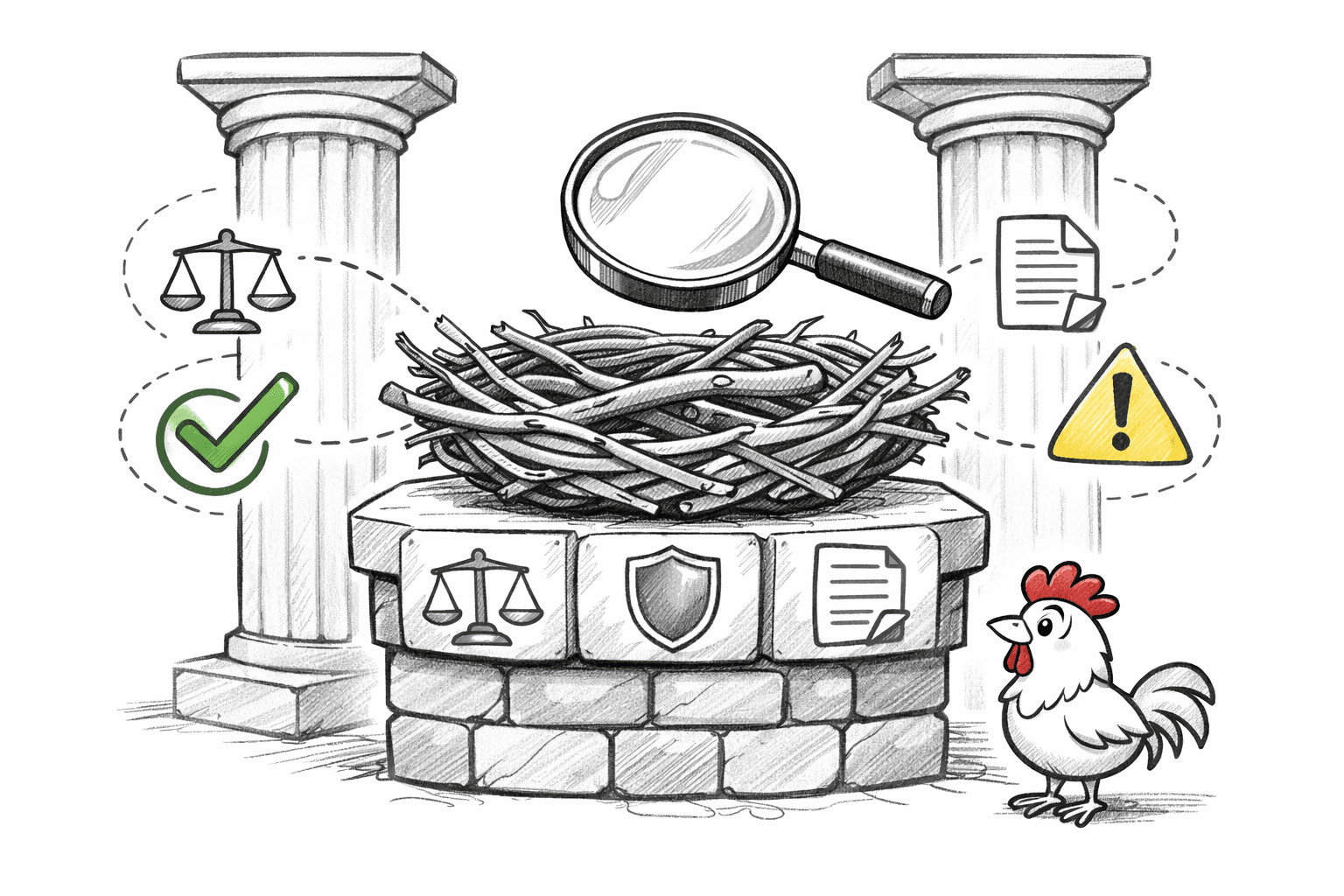
Tradelines are not a "loophole" or a "hack" that slipped through the cracks. They stand on the firm foundation of established consumer protection laws designed to ensure fairness and accuracy in lending. Two mighty pillars support their existence.
1. The Equal Credit Opportunity Act (ECOA)
Passed in 1974, the ECOA (Regulation B) was a landmark victory for equality. Before this law, creditors could discriminate based on marital status, gender, or race. Why does this matter for tradelines?
A crucial outcome of the ECOA was the requirement for creditors to report the history of joint accounts and authorized users. The original intent was to protect spouses—historically women—who might have spent years managing household finances on their husband's card but had no credit history of their own.
By mandating that authorized user activity be reported, the ECOA ensured these individuals could establish a "credit identity" based on their shared responsibility. This legal framework remains in place today. It is the very reason why, when you are added to a card, its history flows onto your report. It wasn't an accident; it was a right granted to ensure fair access to credit.
2. The Fair Credit Reporting Act (FCRA)
If the ECOA gave you the right to be on the account, the FCRA governs how that information is told to the world.
The FCRA is the rulebook for credit bureaus. It mandates accuracy, fairness, and privacy. When a tradeline appears on your report, it must follow FCRA guidelines. The creditor reports the data—credit limit, payment history, account age—as a factual record.
When you become an authorized user, the creditor is simply reporting the truth: You are an authorized user on this account. As long as the data is accurate, the reporting is compliant.
When we talk about a 'tradeline,' we refer to an account on your credit report. This can be a credit card, a loan, or an authorized user account. For more on the specifics, read our guide on What is a Tradeline?.
Shifting Winds: Lender Policies and Scoring Models
While the legality is solid as an oak, the impact can be as variable as the wind. Just because a tradeline sits in your nest doesn't mean every lender will admire it equally.
Lender Discretion
Every lender—whether a bank, credit union, or mortgage broker—has their own unique "underwriting criteria." They are the gatekeepers. While they must comply with federal laws, they have the freedom to decide how much risk they are willing to take.
Some lenders might look at an authorized user tradeline and treat it with the same respect as a primary account. Others, specifically in the mortgage industry, might apply a "filter." If they see you are an authorized user on a stranger's account with no clear relationship (like a spouse or parent), they might choose to ignore that tradeline when calculating your debt-to-income ratio or approval odds. This is not because the tradeline is illegal; it's because the lender is exercising caution.
The Evolution of Scoring Models
The algorithms that calculate your score—FICO and VantageScore—are constantly evolving, like nature adapting to a changing environment.
- Older Models: Historically, models gave significant weight to authorized user accounts, regardless of the relationship.
- Newer Models (FICO 8, VantageScore 3.0+): These modern algorithms are sharper. They use sophisticated logic to detect "tradeline renting" behavior. If the algorithm suspects a tradeline is synthetic (purchased purely for score inflation without a real relationship), it might "dampen" the impact or ignore it entirely.
This means a tradeline might boost your score on one version of FICO but have less impact on another. See our breakdown in 'The FICO Score vs. VantageScore: What’s the Difference?'.
Important Disclosure: Some lenders and credit scoring models may filter out, discount, or weigh authorized user tradelines differently in their underwriting decisions. Results vary based on lender policies, the specific scoring model used, and your unique credit profile. An AU tradeline does not guarantee loan approval or any specific credit score outcome.
The "Buying Tradelines" Question: Legitimacy vs. Fraud
The concept of "buying" a tradeline can sound like buying a fake ID. It feels taboo. So, let’s clear the air. Is it legal to pay a third party to become an authorized user?
Yes. No federal statute forbids one individual from paying another to be added to a credit account. It is a private transaction. The distinction between a legitimate strategy and a crime lies in truthfulness.
The Anatomy of a Legitimate Transaction In a legal tradeline transaction:
- Real Account: The card exists. It has real history.
- Real Person: The cardholder is a real human being.
- Real Reporting: You are actually added to the bank's system as an authorized user.
- Truthful Data: The credit bureaus receive accurate data saying "Jane Doe is an authorized user on this account."
Nothing is faked. The bank knows you are there. The bureau knows you are there.
The Predator in the Nest: Fraudulent Intent
The line is crossed when deception enters the picture. This happens with "Credit Repair" scams that promise to create a "new you." Beware of:
- CPNs (Credit Privacy Numbers): Scammers will tell you to use a CPN instead of your Social Security Number to "hide" your bad credit. This is mortgage fraud and a federal crime.
- Synthetic Identity Fraud: Creating a fake persona using a mix of real and fake data.
- Jamming: Flooding the bureaus with false dispute letters to temporarily remove negative items.
Legitimate tradeline companies want nothing to do with these practices. They operate in the daylight. For a look at the ethics, see 'Are Authorized User Tradelines Ethical?'.
Scouting for Safety: How to Spot a Legitimate Service
If you decide to use this strategy, you must be as vigilant as a hawk. The industry has both responsible stewards and dangerous predators. Here is how to tell the difference.
5 Signs of a Legitimate Service
Real-World Scenarios: Different Birds, Different FLights
How does this look in practice? Let's watch three different credit builders navigating their journey.
Nico (The Fledgling)
Recent grad. Zero credit history. Uses an AU tradeline to generate a credit score, then immediately opens a secured card to build his own file.
Riley (The Rebuilder)
Score damaged by medical bills. Adds a high-limit AU line to lower utilization while setting up AutoPay to heal her own history.
Tessa (The Entrepreneur)
Needs a business loan. Uses a tradeline to boost her personal score just enough to qualify, utilizing the loan to grow her company.
Beyond the Shortcut: Building a Roost that Lasts
Tradelines are powerful, but they are temporary. Think of them as a tailwind—they can help you gain altitude quickly, but they cannot keep you flying forever. To stay airborne, you need your own strong wings.
Authorized user tradelines are a gateway, not a destination. Once you have that initial boost, you must immediately pivot to building your own primary accounts.
Boost Score with AU Tradeline
Apply for Primary Accounts (Secured Card/Loan)
Set Up AutoPay for All New Accounts
Keep Utilization Below 30% Forever
Monitor Your Nest (Credit Report) Monthly
Your Legal Perch
So, are tradelines legal? Yes. They are a federally recognized, chemically pure part of the US credit system. The "fine print" isn't about whether you can use them—it's about how you use them.
When approached with transparency and realistic expectations, they are a safe, effective tool to accelerate your journey. We invite you to build your roost with eyes wide open.
Ready to spread your wings? Explore authorized-user tradelines to see how they can help you take flight. For long-term strength, look into secured cards and credit-builder loans.
Frequently Asked Questions
-
Are authorized user tradelines legal? Yes. They are supported by federal laws like the ECOA and FCRA. They allow individuals to establish credit history by being added to an existing account.
-
Is it legal to pay for a tradeline service? Yes. Paying a transparent third-party service is legal. The reported information must be truthful. It becomes fraudulent only if identities or data are falsified (like CPNs).
-
Do all lenders treat tradelines the same? No. Impact varies. Some lenders weigh them heavily. Others may filter them out if there is no clear relationship between users.
-
What should I look for in a service? Look for transparency and realistic promises. Avoid guarantees. Ensure they use real accounts with verifiable histories.
-
How do tradelines fit into a long-term strategy? They are a starting point. For long-term health, complement them with primary accounts, on-time payments, and low utilization.
Disclaimer: The information provided in this article is for educational purposes only and does not constitute financial, legal, or professional advice. Credit reporting practices and scoring models may change over time. Please consult a qualified professional for personalized guidance.