Key Takeaways
- A 401(k) works best when contributions fit your real monthly cash flow.
- Employer matching is often the first retirement contribution priority.
- Contribution increases are easier to sustain when they happen gradually as income rises or debt falls.
- Traditional and Roth 401(k) options shift when you pay taxes, so the right choice depends on your broader plan.
- Loans, withdrawals, and job changes can weaken long-term growth if you handle them carelessly.
Why a 401(k) Matters Even When Retirement Feels Far Away
The biggest advantage of a 401(k) is not that it feels exciting. It turns retirement saving into a repeatable system.
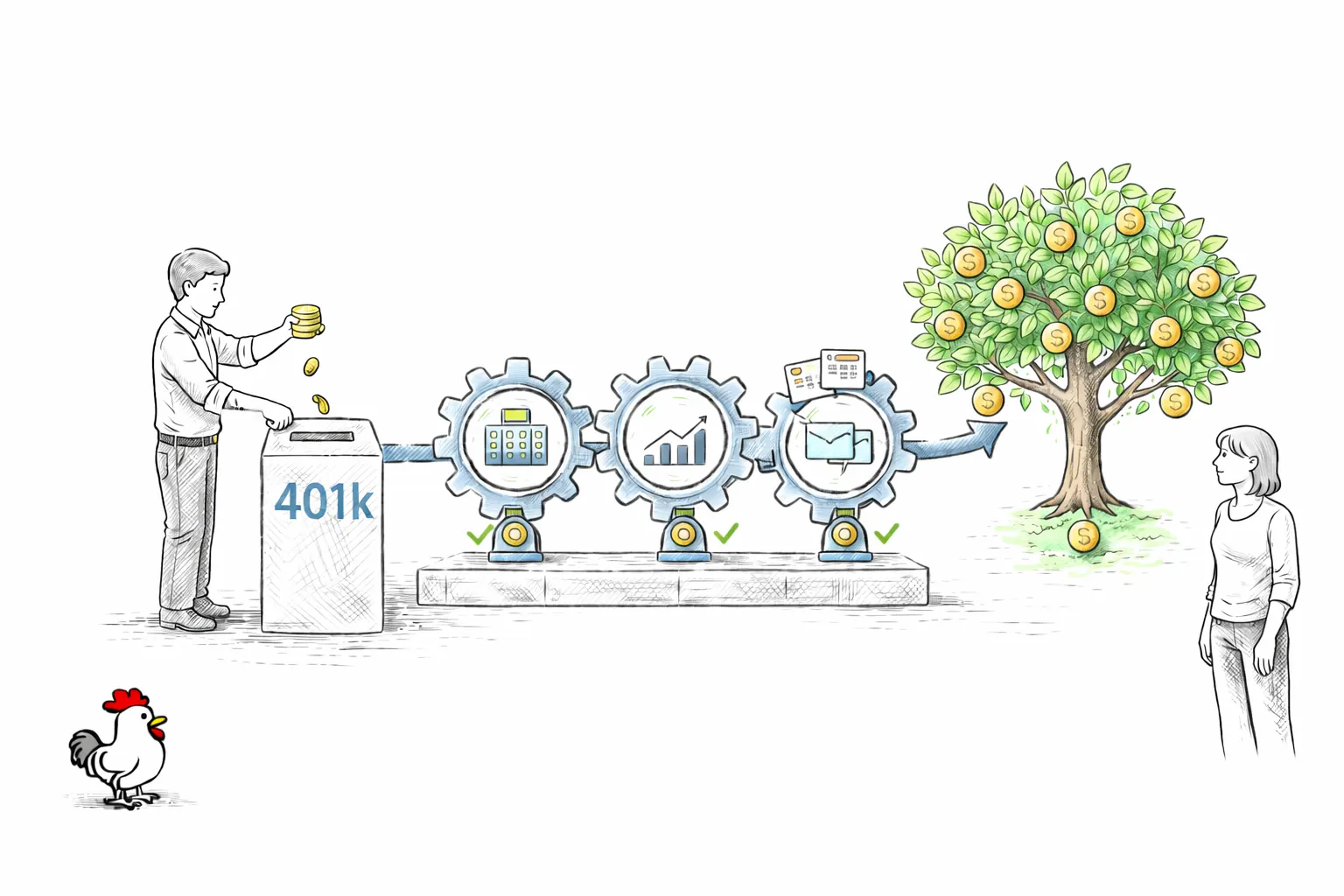
Money usually moves into the account directly from each paycheck, which removes a lot of the friction that causes people to delay saving. That automatic structure matters because retirement is one of the easiest goals to postpone. When the contribution happens first, the habit has a better chance of surviving busy months, lifestyle changes, and the constant temptation to wait until later.
Those are the core mechanics that make the account useful long before retirement actually arrives.
401(k)
A workplace retirement plan that lets you contribute part of your paycheck for long-term investing, often with tax advantages and sometimes with employer matching.
The earlier the system starts, the more time the account has to grow. That does not mean you need to contribute the maximum right away. It means consistency matters more than chasing a perfect number you cannot sustain.
What Makes a 401(k) Powerful
The main strength of a 401(k) is not one big contribution. It is the ability to keep investing automatically over many years without having to restart the decision every month.
Retirement saving also has to be planned alongside your current obligations instead of treated as a separate universe. If the contribution level is too aggressive for your actual budget, the pressure usually shows up somewhere else: rising card balances, missed savings goals, or the constant feeling that the plan is not sustainable.
The First Priority: Employer Match Before Bigger Goals
If your plan includes an employer match, that is usually the first 401(k) milestone to target.
An employer match means your company contributes additional money when you contribute enough to qualify. That extra contribution can make early saving far more efficient than many people realize, which is why it often makes sense to reach the match before stretching toward more aggressive retirement targets.
It also helps to understand the plan's vesting schedule. In some plans, employer contributions become fully yours over time rather than immediately. That detail can matter if you expect a job change, because the match is still valuable, but the timing can affect how much of it you keep.
If your budget can support it, this is usually the clearest early 401(k) target.
From there, the rest of the contribution order becomes much easier to evaluate.
A Practical 401(k) Contribution Order
| Step | Why it comes first |
|---|---|
| Capture the employer match | It increases your retirement savings immediately if your plan offers one. |
| Stabilize short-term cash flow | A retirement plan works better when your current bills still remain manageable. |
| Increase contributions gradually | Steady increases are easier to keep than one large jump that strains the budget. |
This does not mean every other goal stops until retirement contributions are perfect. It means the match is often the clearest high-priority starting point if your monthly budget can handle it.
If cash flow is still unstable, it may make more sense to contribute enough to secure the match and then focus on keeping the rest of the system healthy. A retirement contribution does a lot less for you if it forces you to rely on expensive debt every time an ordinary bill arrives.
How to Increase Contributions Without Creating Budget Whiplash
The most durable way to raise 401(k) contributions is usually the least dramatic one. Increase them in small steps when income rises or another financial burden falls.
That can happen after a raise, after paying off a loan, after reducing a recurring expense, or after building enough cash that your monthly plan feels less fragile. Small increases may look unimpressive at first, but they are easier to keep.
Start
Choose a contribution level that does not create immediate pressure in the rest of your budget.
When income improves
Raise the percentage gradually instead of forcing a jump you may undo later.
After debt falls
Move part of that newly available money toward retirement instead of absorbing it all into lifestyle creep.
Review regularly
Check whether the contribution still fits your real income, bills, and savings needs.
Do not worry about maximizing one month. What matters is keeping the contribution active year after year.
Traditional vs. Roth 401(k): What the Choice Really Changes
The decision between a Traditional 401(k) and a Roth 401(k) is mostly about when you pay taxes, not whether taxes exist.
A Traditional 401(k) usually lowers your taxable income now because the contribution goes in before current taxes are taken from that portion of pay. A Roth 401(k) usually does not lower current taxable income in the same way, but qualified withdrawals later are generally handled differently because the tax cost was paid earlier.
That still does not make one option universally better. The better fit depends on what the contribution does to your current paycheck and what you expect later.
Do you need more breathing room in your current paycheck, or are you prioritizing tax treatment later?
This choice is not always permanent in spirit. You can revisit it as your income, tax situation, and long-term expectations change. What matters most is understanding that the decision affects how the contribution feels in your paycheck today and how you expect it to work for you later.
The right answer is usually the one that fits the rest of your plan, not the one that sounds smartest in the abstract.
Investment Choices, Fees, and the Cost of Ignoring the Details
Once money is inside the 401(k), the next question is where it actually goes.
Many plans offer a menu of investment options. Some people choose a simple all-in-one option. Others build a mix of funds that matches their risk tolerance and time horizon. The exact mix depends on the plan and the person, but the basic point is simple: your contribution amount matters, and so do the underlying investments.
Two details deserve special attention:
- Your asset mix should match how long the money is meant to stay invested and how much volatility you can realistically tolerate.
- Fees matter because recurring costs can quietly reduce long-term growth year after year.
The fee number to watch is often the expense ratio. It can look small, but a higher expense ratio keeps taking a percentage every year, and that drag compounds over decades. When your plan offers them, low-cost index funds are often the cleaner starting point.
401(k) Review Checklist
This is not about perfect market timing. It is about making sure the account is actually doing the job you think it is doing.
Loans, Withdrawals, and Job Changes: Where Good Plans Lose Momentum
Many 401(k) plans become less effective not because people never start, but because the money gets disrupted.
A loan against the account, an early withdrawal, or a poorly handled job transition can slow long-term growth more than people expect. Sometimes those decisions are unavoidable. Often they are expensive because they interrupt the compounding you were relying on.
In many cases, taking money out before age 59 1/2 can trigger ordinary income taxes plus an additional penalty unless you qualify for a specific exception. Early withdrawals should be treated as a last resort, not a casual backup plan.
Protecting Long-Term Growth
- Use emergency reserves before touching retirement money when possible.
- Review loan terms carefully before borrowing against the account.
- Plan job transitions early so rollover decisions stay orderly.
- Treat the 401(k) like your default source for short-term cash.
- Assume a loan is risk-free just because you are borrowing from yourself.
- Cash out the account quickly without checking taxes, penalties, and lost growth.
Retirement savings should not be treated like your first emergency resource. If every short-term crisis leads back to the 401(k), the long-term plan never gets enough uninterrupted time to work.
When you change jobs, the transition deserves extra attention. The account still matters even if the paycheck source changes. If you handle the move carefully, the savings can keep growing without losing momentum. If you handle it carelessly, the friction, tax consequences, or simple delay can create lasting drag.
If your plan allows a 401(k) loan, that can look safer than a withdrawal because you are borrowing from yourself. But if you leave the job, the repayment window can become short, and any unpaid balance may be treated like a taxable distribution. That is a real risk, especially if job stability is already uncertain.
Current financial stability matters here for the same reason. Stronger cash management today makes it less likely that you will need to raid tomorrow's money to solve this month's problem.
How a 401(k) Fits Into Your Bigger Financial System
A 401(k) is one part of a larger structure. It should work with your budget, your debt plan, your short-term savings, and your overall tolerance for risk.
That means retirement saving is strongest when:
- You know how much room the contribution leaves in the rest of the month.
- You still have some protection against short-term emergencies through cash reserves.
- Your debt load is not constantly forcing you to reverse course.
- Your contribution strategy can continue even when life gets slightly more expensive.
Retirement savings works best as part of a stable system, not as a standalone goal that ignores everything else.
Frequently Asked Questions
1. What should I do first if my employer offers a 401(k)?
- Usually, start by understanding whether your employer offers a match and what contribution level is needed to receive it, then choose a contribution amount that still fits your real monthly cash flow.
2. Should I prioritize my 401(k) or paying off debt?
- It depends on the debt cost and your cash-flow stability. Many people aim to capture an employer match first, then balance retirement saving with the need to reduce more expensive debt and keep the budget stable.
"I should wait to use the 401(k) until every other money goal is fully solved."
Most people do better with a balanced approach that protects today's cash flow while still keeping retirement contributions active.
Why it matters
A full pause can delay compounding for years, but overcontributing too early can also strain the budget. What matters is a contribution level you can actually keep.
3. How often should I increase my contribution rate?
- A practical rhythm is to review it when income rises, when debt falls, or when your monthly plan becomes more stable. Small increases are often easier to sustain than big jumps.
4. Does a 401(k) help my credit score?
- Not directly. But strong retirement planning can support broader financial stability, which may make it easier to avoid borrowing pressure and protect your credit habits.
5. Why do fees and investment choices matter so much?
- Because long-term growth depends on what your money is invested in and how much friction recurring fees create over time. Small differences can add up over many years.
6. What should I do with a 401(k) when I change jobs?
- Usually, review whether you should leave it in the old plan, roll it into a new employer plan, or move it into an IRA. The main goal is to keep the money invested and avoid a cash-out that can trigger taxes, penalties, and lost compounding.
The best 401(k) strategy usually looks less dramatic than people expect. It is a system you can keep. That is where the account gets its real power.
When the contribution fits your budget, the investment choices match the goal, and short-term emergencies are less likely to interrupt the plan, retirement saving becomes far easier to sustain.
Disclosure
This guide is educational and does not constitute tax, legal, investment, or financial advice. Retirement-plan rules, tax treatment, penalties, employer matching formulas, vesting schedules, and rollover options vary by plan and by individual circumstances. If you are considering a withdrawal, a loan, or a rollover, consider reviewing the plan documents or speaking with a CPA, fiduciary advisor, or benefits specialist before acting.