Key Takeaways
- No law creates or recognizes CPNs, and no agency issues them; they are fabricated numbers or stolen Social Security numbers, frequently belonging to children, the elderly, the deceased, or the incarcerated.
- Putting a CPN on a credit application can violate 42 U.S.C. 408(a)(7) and 18 U.S.C. 1028 and 1028A, and the buyer who signs the form, not just the seller, is exposed.
- Calvin Wayne Cade Jr. received 18 months in federal prison and $112,924.54 in restitution for using children's stolen Social Security numbers as CPNs; Turhan Lemont Armstrong received 259 months for a $3.3 million scheme.
- The honest path, a consenting authorized-user tradeline under your real identity, a secured card, low utilization, and on-time payments, builds credit without hiding who you are.
The Late-Night Ad That Promises a Clean Slate
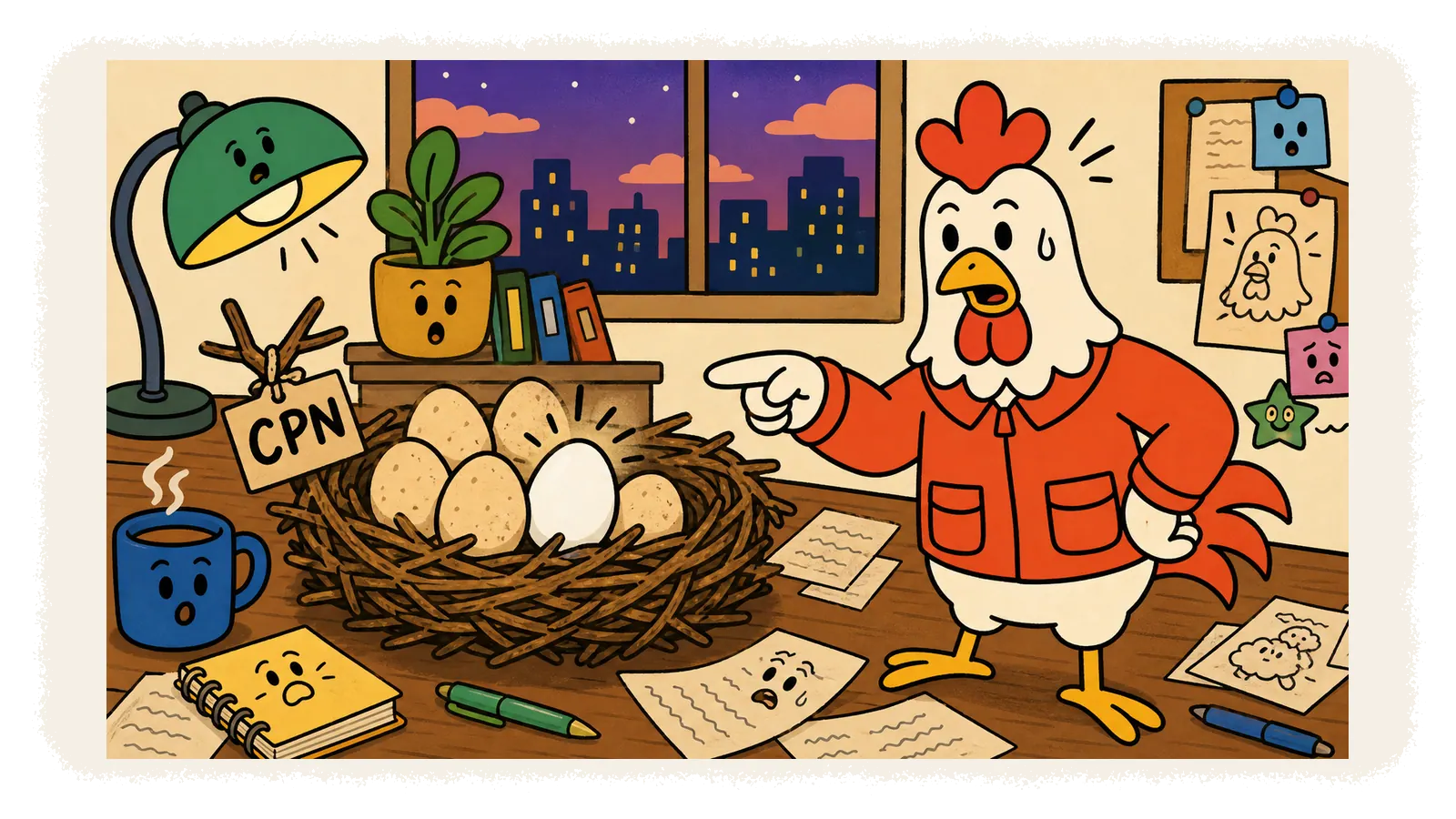
Imagine Marisol, two years past a hard divorce and finally ready to rebuild. Her nest, the credit profile she is slowly reassembling twig by twig, still looks thin to a lender, and she knows it. Late one night an ad promises something that sounds like a miracle: a brand-new nine-digit number, a clean slate, a way to leave the old file behind and start over.
The pitch has a name. It is called a CPN, short for Credit Privacy Number or Credit Profile Number, and the seller swears it is perfectly legal, a little-known loophole the banks would rather you never hear about. Pair it with a purchased tradeline, they say, and you will look like a brand-new borrower who somehow already has a seasoned account on file.
Here is the calm truth, and we will spend the rest of this article backing it up: there is no loophole. A CPN is not a privacy tool. In case after case it turns out to be a stolen Social Security number, and using one on a credit application is a federal crime that has sent real people to real prison. Let us walk through what these numbers are, where they come from, and why the legitimate path, the one that actually builds your nest, is the only one worth your money.
What a CPN Actually Is
Start with the part the sales pages leave out. No law creates or recognizes a CPN, and no government agency issues one. There is no federal office, no bureau, no quiet program that hands out an alternative to your Social Security number for everyday credit. When a website tells you a CPN is a lawful, government-sanctioned identifier, it is describing something that simply does not exist.
CPN (Credit Privacy Number)
A nine-digit number marketed as a private substitute for your Social Security number. No law creates it and no agency issues it. In practice it is either a fabricated number or a real Social Security number stolen from someone else.
That is the whole trick. A CPN only works as a blank credit slate if it belongs to someone whose file is empty or unwatched, and the emptiest, least-watched files tend to belong to the most vulnerable people among us.
Why a Decades-Old Scam Keeps Finding Buyers
If a seller ever tells you to stop using your Social Security number, to apply under a different nine-digit number, or to describe yourself as a brand-new borrower with no history, that is not privacy. That is the crime, described out loud.
"A CPN is just a privacy tool that keeps your real Social Security number off applications."
There is no private, legal nine-digit alternative to your Social Security number for consumer credit. A CPN is either invented or stolen, and applying with one is fraud, not privacy.
Why It Matters
If a seller tells you to stop using your Social Security number, apply under a different number, or call yourself a brand-new borrower with no history, that is the crime described out loud.
The Statutes That Turn a Number Into a Felony
The legal exposure here is not vague or theoretical, so it is worth naming the actual statutes. Swapping a CPN in for your real Social Security number on a credit application can implicate 42 U.S.C. 408(a)(7), the federal law against Social Security number misuse, which carries a penalty of up to five years in prison. It can also trigger 18 U.S.C. 1028 and 1028A, the identity-theft and aggravated-identity-theft statutes, and aggravated identity theft adds mandatory prison time on top of whatever else is charged. Bank fraud and wire fraud frequently ride along, because a credit application is a statement sent to a lender in order to obtain money.
Notice what all of these have in common. They do not punish you for having a thin file or a low score. They punish the act of putting a false or stolen identifier on a form to obtain credit. Intent and paperwork are the whole case, and a purchased CPN supplies both.
We are not here to tell you whether any particular thing you have done crosses a line. Only a criminal-defense attorney can assess your specific situation, and if you are worried, that is exactly who to call.
The Sentences Are Real, and So Are the Victims
These cases are not hypothetical, and the sentences are real. In a prosecution brought by the Department of Justice (DOJ) in the Western District of Oklahoma, Calvin Wayne Cade Jr. of Oklahoma City received 18 months in federal prison and was ordered to pay $112,924.54 in restitution. The CPNs he used were the stolen Social Security numbers of children, kids born in 2006 and 2008, who had done nothing but exist.
He was not alone. Timatress Tenaka Cade, of the same city, received 12 months plus three years of supervised release and $68,637.74 in restitution. And in a far larger case, Turhan Lemont Armstrong received 259 months, more than 21 years, for a $3.3 million scheme built on stolen identities, again primarily children's, with $3,305,609 ordered in restitution.
Real CPN prosecutions and sentences
| Defendant | Sentence | Restitution |
|---|---|---|
| Calvin Wayne Cade Jr. | 18 months in federal prison | $112,924.54 |
| Timatress Tenaka Cade | 12 months plus 3 years supervised release | $68,637.74 |
| Turhan Lemont Armstrong | 259 months (over 21 years) | $3,305,609 |
Sit with those numbers for a second. A restitution order does not disappear when you leave prison; it follows you for years. And the children whose numbers were used can spend a long time untangling debts and denials attached to a Social Security number they were far too young to protect. This is what the friendly fresh start looks like from the other side.
The Buyer Is Not a Bystander
A common misread of these stories is that only the sellers go to prison. That is not how the statutes work. The person who buys a CPN and then writes it on an application is the one making the false statement to the lender, and that act is squarely what the identity-theft and Social Security laws reach. The seller may be running the larger operation, but the buyer is not a bystander, they are the one whose signature sits on the fraudulent form.
Think about how ordinary the exposure becomes. Every apartment application, auto loan, credit card, and utility account opened under that number is a separate potential count. There is no version where you use the number successfully and quietly; success means the false identifier worked, which is precisely the harm the law is designed to punish.
This is why the reassurance that it is legal and everyone does it is so dangerous. It shifts your attention away from the one question that actually matters. Is the number I am about to use real, and is it mine? The seller replaces that question with a comforting story told by the person profiting from your signature.
Does the credit strategy only work if the lender cannot tell it is really you?
Building a Thin File the Honest Way
- Apply for credit only under your own real Social Security number
- Ask a consenting family member to add you as an authorized user
- Use a secured card lightly and pay it in full each month
- Keep utilization low and payments on time, month after month
- Buy a CPN, credit profile number, or fresh-start file
- Apply as a brand-new borrower with no history
- Bundle a purchased tradeline with a fabricated identity
- Trust anyone who calls the technique a legal loophole
Here is a rule of thumb worth taping to the fridge: if a strategy only works when a lender cannot tell it is you, it is not a credit strategy. It is a fraud waiting for a name.
What the FTC Told Consumers in December 2025
Regulators have kept the warning current. On December 29, 2025, the Federal Trade Commission (FTC) published a consumer alert steering people away from illegal scams that sell a "new" credit identity, or that coach you to file a false identity-theft report in order to scrub accurate negative information from your file. The alert speaks about new-credit-identity scams in general terms rather than singling out any one product name, but the pattern it describes is the very one we have been tracing.
Use that pattern as your filter. Be wary of anyone who tells you to apply with a number other than your Social Security number, who promises to make truthful negative marks vanish, who coaches you to report an identity theft that never happened, or who insists the technique is a private loophole the banks are hiding. Legitimate credit help will never ask you to lie about who you are.
When a claim about your credit sounds like a shortcut around your own identity, treat that as your signal to slow down and check it against a source that is not trying to sell you anything.
The Fresh Start With Your Own Name on It
Come back to Marisol and that late-night ad. The pitch offered her a way out of a thin file, but what it actually offered was someone else's Social Security number, maybe a child's, and her own signature on a federal crime. The clean slate was never clean; it was borrowed from a person who could not say no.
If you have already used a CPN, or you are being pressured to, this is not the place for a verdict on your situation. Talk to a criminal-defense attorney who can look at the specifics. And if you are just now standing where Marisol stands, choose the version of a fresh start that has your own name on it. That is the nest that lasts.
Disclosure
Some lenders and credit scoring models may filter out, discount, or weigh authorized user tradelines differently in their underwriting decisions. Results vary based on lender policies, the specific scoring model used, and your unique credit profile. An AU tradeline does not guarantee loan approval or any specific credit score outcome.
Frequently Asked Questions
1. Is a CPN legal to use instead of a Social Security number?
- No. No law creates or recognizes Credit Privacy Numbers or Credit Profile Numbers, and no agency issues them. Using a CPN in place of your Social Security number on a credit application is a federal crime that can implicate 42 U.S.C. 408(a)(7) and 18 U.S.C. 1028 and 1028A.
2. Where do the numbers sold as CPNs come from?
- They are either fabricated nine-digit strings or real Social Security numbers stolen from other people, frequently children, the elderly, the deceased, or the incarcerated, whose files are empty or unlikely to be checked.
3. Can the buyer of a CPN be prosecuted, or only the seller?
- The buyer who writes a CPN on an application is the one making the false statement to the lender and is directly exposed under the identity-theft and Social Security misuse statutes, not only the seller.
4. What is a legal alternative to a CPN for building credit?
- Building credit under your real identity carries none of the criminal exposure of a CPN: a consenting authorized-user tradeline, a secured card used lightly and paid in full, low utilization, and consistent on-time payments.
5. How much prison time have people actually received in these cases?
- In the Western District of Oklahoma, Calvin Wayne Cade Jr. received 18 months in federal prison and $112,924.54 in restitution; Timatress Tenaka Cade received 12 months plus three years of supervised release and $68,637.74 in restitution; and Turhan Lemont Armstrong received 259 months for a $3.3 million scheme with $3,305,609 in restitution.
6. What did the FTC warn about in December 2025?
- On December 29, 2025, the FTC published a consumer alert warning against companies that promise a "new" credit identity or that coach consumers to file a false identity-theft report to scrub accurate negative information from a file. It describes new-credit-identity scams in general terms rather than naming any one product.
7. If a seller says a CPN is just for privacy, is that true?
- No. If a seller tells you to stop using your Social Security number, apply under a different nine-digit number, or describe yourself as a brand-new borrower with no history, that is not privacy, that is the crime described out loud. If you have already used a CPN or are being pressured to, talk to a criminal-defense attorney who can assess your specific situation.